Tariffs, Costs, and Housing: A $10,900 Price Tag on New Homes
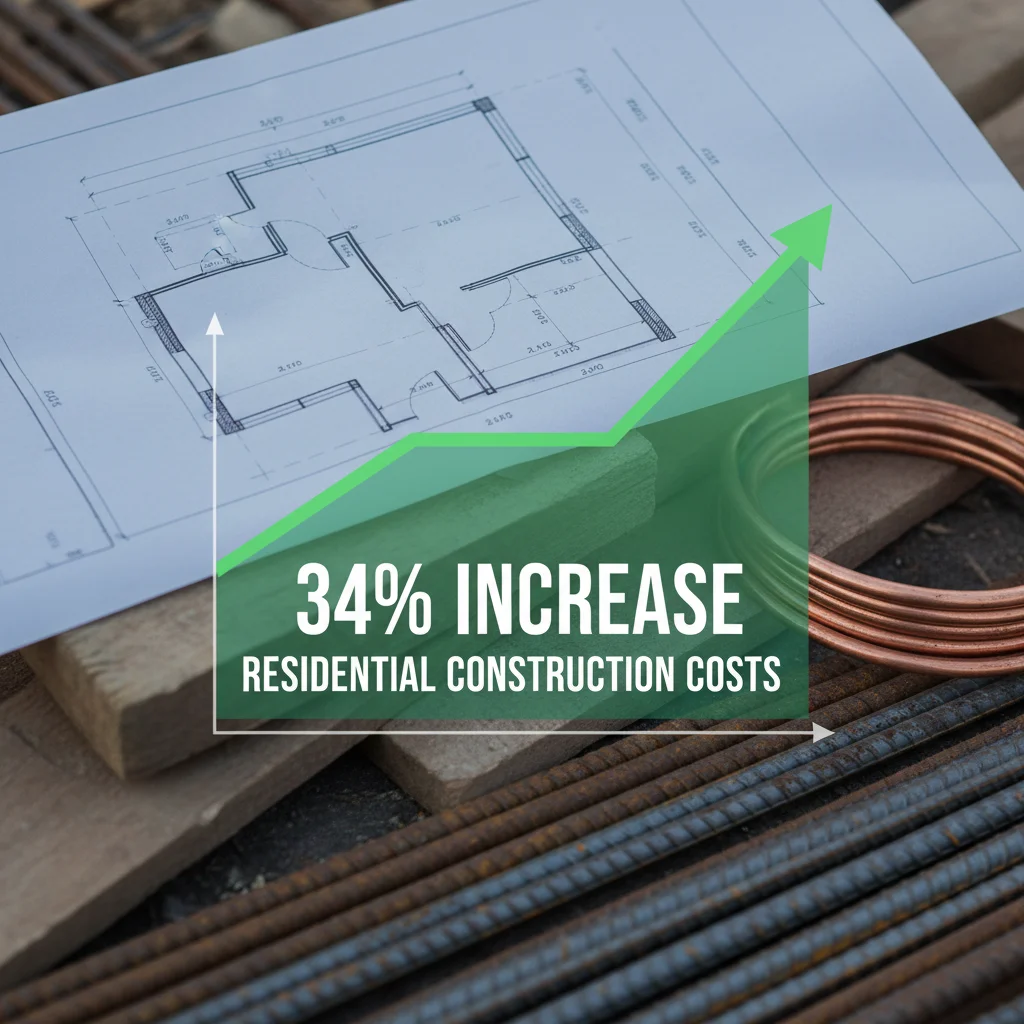
Residential construction costs in the US have escalated by an unprecedented 34% since the beginning of 2020, a surge driven significantly by material price inflation and trade policies, notably tariffs, which are estimated to contribute $10,900 to the final price of a newly constructed single-family home.
Since the onset of the pandemic and the subsequent supply chain dislocations, the financial pressure on the housing sector has been immense, culminating in the stark reality that Construction Costs Up 34% Since 2020: How Tariffs Add $10,900 Per Home. This dramatic increase is not merely an inflationary headwind but a structural challenge, directly impeding housing affordability and constraining inventory growth across the United States. The critical question for policymakers, homebuilders, and prospective buyers is how these compounding costs—ranging from raw material spikes to punitive import duties—are redefining the economics of homeownership. The implications reverberate through the entire economy, affecting everything from municipal tax bases to the Federal Reserve’s inflation fight.
The anatomy of the 34% cost surge since 2020
The 34% rise in residential construction costs since January 2020 represents one of the steepest and most sustained inflationary periods for the sector in modern history, according to data compiled by the National Association of Home Builders (NAHB) and the Bureau of Labor Statistics (BLS). This escalation far outpaced general consumer price index (CPI) inflation during the same period, underscoring unique pressures within the building materials market. The primary drivers are multifaceted, blending macroeconomic forces with specific trade policy consequences.
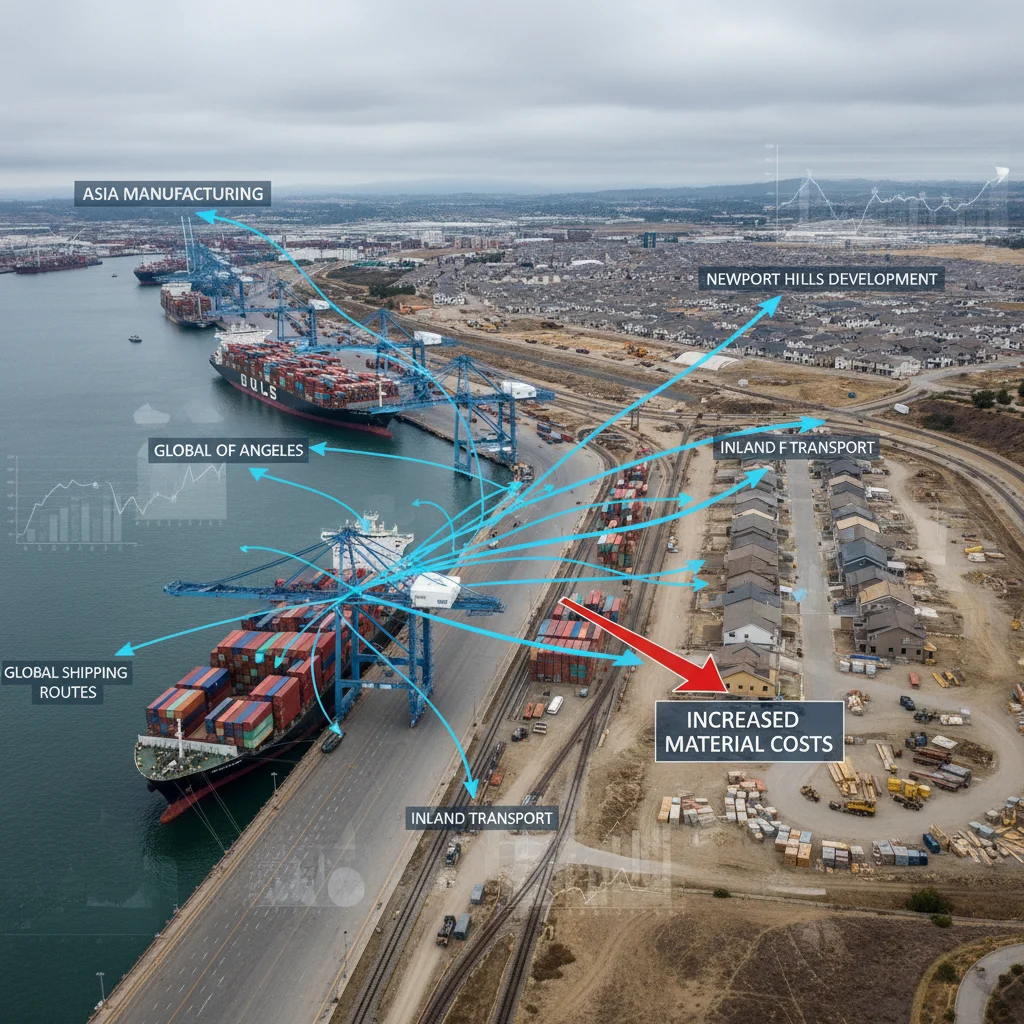
Initially, the surge was fueled by pandemic-induced supply shocks—factory closures, port congestion, and labor shortages—which created a massive mismatch between rapidly increasing demand for housing and constrained production capacity for essential inputs. As of the end of 2023, while some supply chain bottlenecks have eased, the underlying cost structure remains elevated, locked in by higher labor wages, rising energy costs for transportation and manufacturing, and persistent trade barriers.
Material price volatility and the inflation cycle
The volatility in key construction inputs has been extreme. Lumber prices, for instance, experienced an unprecedented spike in mid-2021, briefly hitting over $1,600 per thousand board feet, up from pre-pandemic levels near $350. Although prices have moderated, they remain structurally higher than historical norms. Similarly, the cost of steel, copper, and gypsum products saw double-digit percentage increases year-over-year throughout 2021 and 2022. This inflation is sticky, meaning even as demand slightly cools, manufacturers are reluctant to lower prices due to their own elevated input costs and tight profit margins.
- Lumber: Prices stabilized around $500-$600 per thousand board feet in late 2023, still significantly above the 2018-2019 average, heavily influenced by US tariffs on Canadian imports.
- Steel and Iron: Costs remain high, reflecting global energy prices and tariffs on foreign steel, impacting structural components and appliances.
- Labor Wages: Construction sector wages grew approximately 5.8% year-over-year in 2023, according to BLS data, driven by severe shortages of skilled tradespeople.
- Transportation Costs: Energy price fluctuations and capacity constraints in freight shipping continue to add friction and cost to the material supply chain.
The cumulative effect of these inputs means that the baseline cost for framing, roofing, and foundational components of a new home has fundamentally reset at a higher level. This cost increase is inevitably passed directly to the consumer, making the entry point for new construction significantly higher than just three years prior. This dynamic is central to understanding the current crisis in housing affordability, particularly for first-time buyers.
The $10,900 tariff burden: A direct calculation
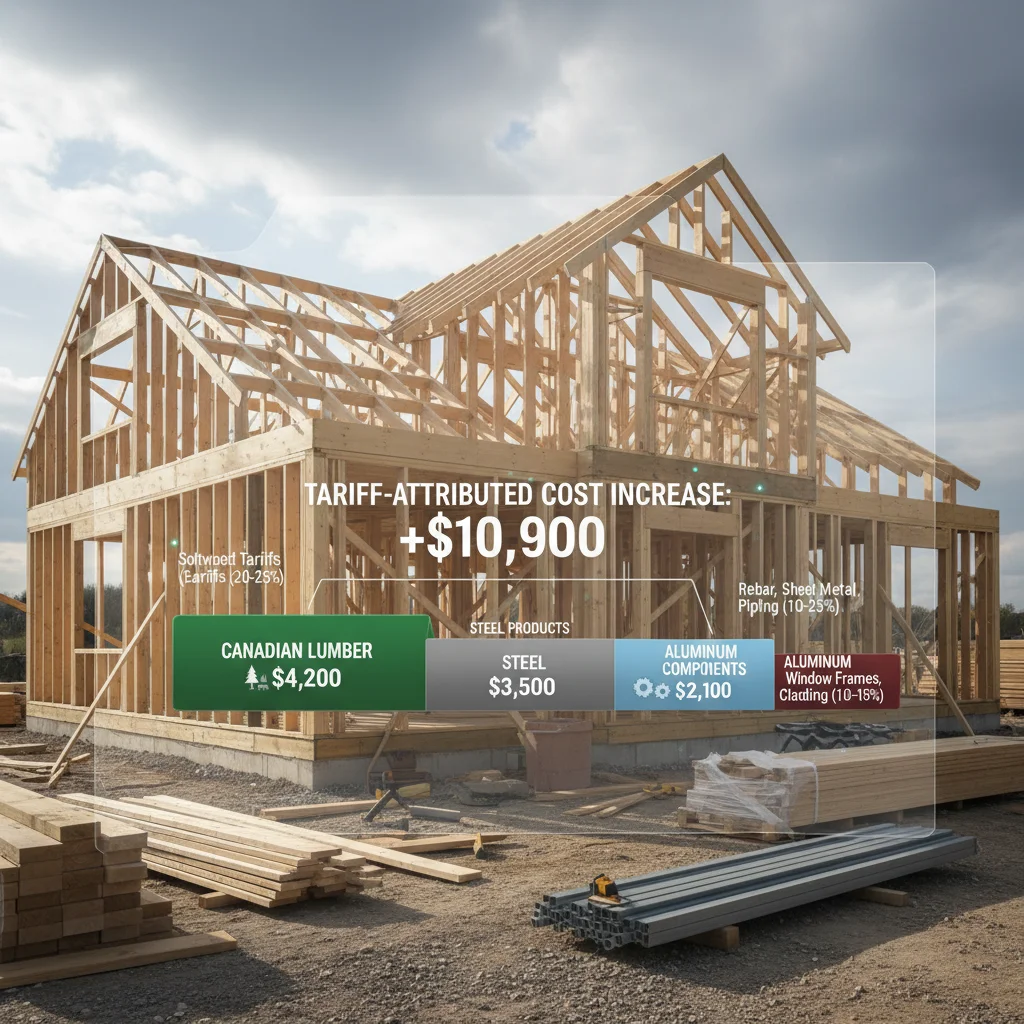
The estimated $10,900 added to the price of an average new single-family home due to tariffs is a conservative figure derived from analyzing the duties imposed on key imported materials. This burden primarily stems from tariffs on Canadian softwood lumber, steel, aluminum, and certain finished goods like cabinets and flooring originating from specific trading partners. These tariffs act as a direct tax on imported materials, which builders must purchase to meet demand, given that domestic production capacity is insufficient to cover US housing needs.
The most impactful tariff in residential construction remains the duties on Canadian softwood lumber. Despite fluctuating rates, these tariffs have ranged as high as 20% and are frequently cited by the NAHB as a primary driver of cost instability and inflation. Canada traditionally supplies a substantial portion of the lumber used in US home construction, making the tariffs an unavoidable cost for builders. For a typical 2,500 square-foot home, the lumber component alone can see thousands of dollars added due to these duties.
Tariffs on steel and aluminum: Expanding the cost base
While lumber tariffs grab headlines, the Section 232 tariffs on imported steel and aluminum also contribute significantly to the total cost. Steel is crucial for structural elements, reinforcing bar (rebar), appliances, and HVAC systems. Aluminum is used extensively in windows, siding, and electrical wiring. The imposition of duties on these metals increases the cost of manufactured housing components, a cost that cascades down the supply chain.
- Steel Rebar: Used in foundations and concrete structures; tariffs increase the initial cost of concrete work.
- HVAC Systems: These systems rely heavily on steel and aluminum components, subjecting them to tariff-related price hikes.
- Nails and Fasteners: Even small, ubiquitous items like nails and screws, often imported, carry increased costs due to metal tariffs.
- Finished Goods: Tariffs on imported cabinets, flooring, and other decorative materials from specific Asian countries further inflate the interior finishing costs.
Economists at the Peterson Institute for International Economics suggest that tariffs, unlike general inflation, represent a fixed, policy-driven cost that is less likely to dissipate even if global commodity markets cool. This structural cost increase of approximately $10,900 per home translates directly into higher mortgage principal, increased property taxes, and a larger down payment requirement, effectively locking out potential buyers who are already grappling with high interest rates.
The compounding effect on housing affordability
When construction costs rise by 34% over a short period, the ramifications for housing affordability are immediate and severe. The median sales price of a new single-family home in the US has risen concomitantly, driven by both land costs and construction expenses. The added $10,900 from tariffs, while perhaps seeming modest in the context of a $400,000+ home, represents a critical barrier for marginal buyers.
For a buyer utilizing a Federal Housing Administration (FHA) loan requiring a 3.5% down payment, the tariff-driven increase alone necessitates an additional $381.50 in upfront cash. More significantly, when financed over a 30-year term at the current average mortgage rate of 7.0%, that $10,900 translates into approximately $72 per month in extra mortgage payments. For households already straining to meet debt-to-income ratios, this seemingly small monthly increase can be the deciding factor between qualifying for a mortgage and being priced out of the market entirely.
The supply-side dilemma for homebuilders
Homebuilders face an acute dilemma: absorb the costs and erode already thin profit margins, or pass the full cost onto the consumer, risking demand destruction. Most publicly traded builders, such as D.R. Horton and Lennar, have opted for the latter, focusing on margins and reducing the number of lower-priced entry-level homes they construct. This shift exacerbates the shortage of affordable housing, pushing more demand into the existing home market, which in turn drives up prices there.
The uncertainty introduced by fluctuating tariffs and material prices also complicates project financing and risk management. Lenders are more cautious when underwriting construction loans, requiring higher collateral or imposing stricter covenants, as the final cost of the asset becomes less predictable. This added financial friction slows the pace of new construction, perpetuating the supply shortage that underpins the current high-price environment.
Macroeconomic implications: Inflation and monetary policy
The sustained inflation in construction costs, partially attributable to trade policies, presents a significant challenge for the Federal Reserve’s efforts to achieve its 2% inflation target. Shelter costs—which include both rent and the imputed rent for owner-occupied housing—constitute a major component of headline inflation metrics like the Consumer Price Index (CPI) and the Personal Consumption Expenditures (PCE) price index.
While the Fed focuses primarily on demand-side tools (interest rates), tariffs represent a supply-side shock that is unresponsive to higher rates. Raising the federal funds rate does little to reduce the cost of imported Canadian lumber or Chinese steel; instead, it increases the carrying cost for builders and developers, potentially stalling projects without solving the underlying cost inflation. This is a classic example of cost-push inflation, where policy decisions outside of monetary control drive up prices.
The structural nature of residential inflation
Analysts at Goldman Sachs have noted that the shelter component of CPI often lags real-time housing costs by 12 to 18 months. This means that the 34% cost surge experienced by builders from 2020 to 2023 is still filtering through official government inflation data, keeping measured inflation higher than many market participants might expect based on easing commodity prices. The persistence of high construction cost tariffs ensures that this inflationary pressure will remain sticky.
- Fed Dilemma: Monetary policy must balance cooling aggregate demand without crushing the housing supply pipeline, which is necessary to lower long-term shelter inflation.
- Policy Feedback Loop: High construction costs lead to higher home prices, which translate into higher imputed rents, reinforcing the inflation cycle measured by the BLS.
- Producer Price Index (PPI): The PPI for construction materials serves as an early indicator, and its sustained elevation confirms that cost pressures are originating at the producer level, before reaching consumers.
Addressing housing affordability requires a coordinated effort that goes beyond the Federal Reserve’s mandate. It necessitates evaluating the efficacy of trade barriers that directly increase the cost of essential building components, particularly when domestic supply cannot meet demand efficiently.
Comparative analysis: US vs. global construction costs
The US experience of a 34% cost increase since 2020 is severe, but it reflects a global trend amplified by specific US trade policies. While most developed nations experienced pandemic-related material inflation, the reliance of the US housing market on imported inputs, particularly softwood lumber and metals subject to tariffs, made it uniquely vulnerable to trade-policy-driven cost escalation.
In the European Union, construction material costs also rose sharply, driven primarily by energy prices and the war in Ukraine affecting steel and cement production. However, the absence of high, politically charged tariffs on key structural materials softened the final blow compared to the US market. The Canadian housing market, which is the source of much of the tariffed lumber, saw similar material cost inflation, yet their builders did not face the same import duties on their primary material inputs.
The impact on commercial vs. residential sectors
While this analysis focuses on residential construction, commercial and industrial construction sectors have also faced significant cost inflation. However, the percentage increase in residential costs has been particularly acute because residential building heavily relies on lumber, which has been subject to the most volatile price swings and the highest sustained tariff rates. Commercial projects, relying more on concrete and structural steel, have been affected by metal tariffs, but the exposure differs.
The critical difference lies in the end-user implication. Commercial cost increases are often absorbed by large corporations or institutional investors, who can manage the risk and amortize costs over long-term leases. Residential cost increases, however, are immediately borne by individual homeowners, impacting household balance sheets and national measures of wealth and equality. The $10,900 tariff cost is therefore disproportionately felt by the average American family attempting to purchase a home.
Policy paths forward: Mitigating the tariff impact
Market analysts and industry groups, including the NAHB and the National Retail Federation (NRF), have consistently advocated for the removal or suspension of tariffs on construction materials to alleviate inflationary pressures and boost housing supply. The argument centers on the economic principle that tariffs, intended to protect domestic industries, result in higher prices for consumers when domestic supply cannot meet total demand.
A temporary suspension of the remaining duties on Canadian softwood lumber, for instance, could provide immediate relief to builders, potentially reducing the cost of the lumber package in a home by several thousand dollars. This could encourage builders to accelerate the construction of entry-level and mid-range housing, providing much-needed inventory.
Long-term supply chain resilience
Beyond immediate tariff relief, the long-term solution involves diversifying and strengthening the domestic supply chain for building materials. This includes investment in domestic timber production, advanced manufacturing techniques for steel and aluminum, and incentivizing the training of skilled construction labor. Relying on a complex, globalized supply chain for essential housing inputs will always leave the US vulnerable to geopolitical instability and trade policy shifts.
- Domestic Forestry Investment: Increasing sustainable harvesting and milling capacity within the US to reduce reliance on Canadian imports.
- Advanced Manufacturing: Utilizing technologies like 3D printing and modular construction to reduce material waste and labor hours.
- Trade Policy Review: Systematic review of tariffs that contribute to essential cost-of-living increases, particularly those where the domestic industry cannot meet demand.
- Labor Training: Government and industry partnerships to fund vocational training programs to mitigate the wage inflation driven by labor shortages.
The policy choice is clear: either maintain trade barriers that demonstrably add over $10,000 to the cost of a new home, thus prioritizing specific domestic industries, or adjust those policies to prioritize broad housing affordability and inflation control. The current high-interest rate environment only amplifies the urgency of reducing these input costs.
Risk management for builders and buyers
For homebuilders, managing the extreme volatility associated with material costs and tariffs requires sophisticated hedging and procurement strategies. Forward contracts for lumber and steel, though complex, can lock in prices and provide certainty, but they also require capital and risk tolerance. Smaller builders often lack the scale and financial sophistication to effectively hedge against these material price risks, making them the most vulnerable segment of the industry.
Prospective homebuyers must adjust their financial planning to account for these elevated costs. The 34% cost increase means that a house planned in 2020 for $350,000 might now cost $470,000 or more, before considering land acquisition costs. Buyers must factor in the structural reality that construction costs are unlikely to revert completely to pre-2020 levels, even if tariffs are eventually removed.
Financial strategies for navigating high construction costs
Market participants are increasingly looking towards alternative construction methods and materials that are less reliant on tariffed imports. Modular and prefabricated homes, which maximize factory efficiency and minimize on-site labor and material waste, are gaining traction. Furthermore, institutional investors and private equity funds are exploring investments in building material futures to mitigate the financial risk associated with price volatility.
For individuals building custom homes, incorporating escalator clauses in contracts is standard practice, but this shifts the risk directly to the buyer. Financial prudence dictates setting aside a larger contingency budget—at least 15% to 20% of the initial construction estimate—to absorb potential material cost overruns driven by global logistics or sudden changes in trade policy. The era of predictable construction budgets, unfortunately, appears to be on hiatus.
| Key Factor/Metric | Market Implication/Analysis |
|---|---|
| Construction Cost Increase (2020-Present) | 34% surge, significantly outpacing general CPI and driven by supply shocks and trade policy; represents sticky inflation. |
| Tariff-Driven Cost Per Home | Estimated $10,900 added to a new single-family home price, primarily from Canadian lumber and steel duties. |
| Affordability Barrier | The tariff cost translates to an approximately $72 increase in monthly mortgage payments, critical for marginal buyers. |
| Policy Impact on Supply | Tariffs are a non-monetary supply shock, requiring policy intervention (suspension of duties) to complement Fed’s demand-side management. |
Frequently Asked Questions about Construction Costs and Tariffs
The primary drivers are a combination of pandemic-related supply chain shocks, persistent labor shortages driving up wages, and elevated material prices, particularly lumber and steel, which are further inflated by US tariffs on key imports.
This figure is the estimated direct cost passed on to the buyer from duties imposed on essential imported building materials, primarily Canadian softwood lumber, steel, and aluminum, which builders cannot avoid due to insufficient domestic production capacity.
While some material prices, like lumber, have moderated from their 2021 peaks, a significant decline is unlikely. Structural costs—including high labor wages, energy prices, and persistent tariffs—suggest that the cost baseline for construction has permanently reset at a higher level.
Tariffs contribute to cost-push inflation, a type of inflation that monetary policy (rate hikes) is ill-equipped to combat effectively. High shelter costs, partly tariff-driven, keep the CPI elevated, complicating the Fed’s efforts to return inflation to its 2% target.
Builders can utilize financial instruments to hedge against material price volatility, diversify sourcing away from tariffed imports, and adopt cost-saving methods like modular or prefabricated construction to reduce reliance on expensive on-site labor and materials.
The bottom line: Policy intersects the pocketbook
The narrative surrounding the 34% increase in construction costs since 2020 is a potent demonstration of how global supply dynamics, domestic labor market pressures, and explicit trade policies converge to shape the economic landscape for the average American. The estimated $10,900 added to a new home’s price tag due to tariffs is more than a statistic; it is a direct measure of policy friction against the goal of widespread housing affordability. As long as trade barriers on essential building materials remain in place while domestic production lags demand, the financial pressure on the housing sector will persist, reinforcing the upward trajectory of home prices. Investors and policymakers must recognize that tackling housing inflation requires a holistic approach that includes monetary stability, labor force expansion, and a critical evaluation of tariffs that function effectively as a tax on shelter. The future stability of the US housing market hinges on removing these structural cost burdens.
