Fed Cuts Rates to 4.0%: What Happens to Your Savings Account Rate Now
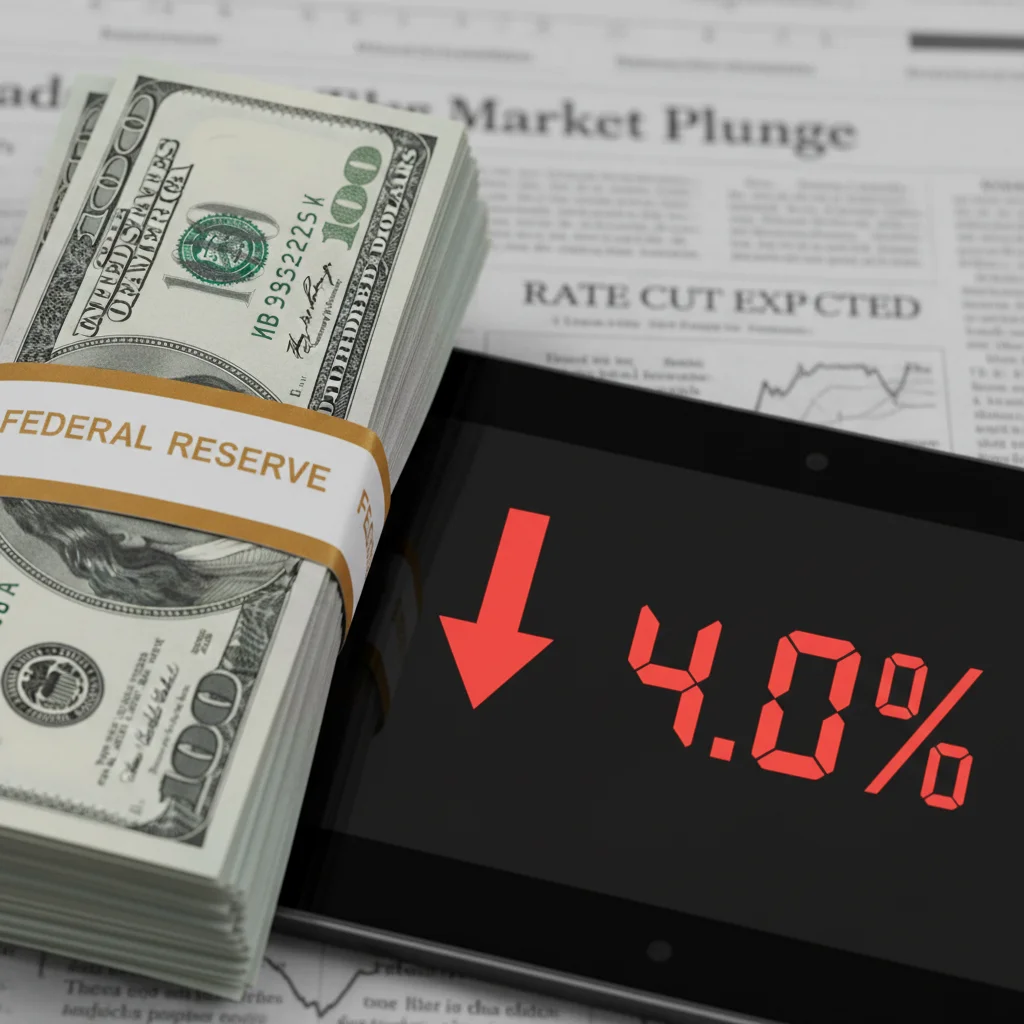
Following the Federal Reserve’s decision to cut the benchmark federal funds rate to 4.0%, consumers should anticipate immediate downward pressure on high-yield savings account annual percentage yields (APYs) and certificate of deposit (CD) rates, shifting market focus toward locking in current yields before further reductions.
The Federal Reserve has officially announced a 50 basis point reduction, bringing the target range for the federal funds rate down to 4.0%—a pivotal shift in monetary policy that reverberates across the American financial landscape. The core question for millions of households is: Fed Cuts Rates to 4.0%: What Happens to Your Savings Account Rate Now? This action signals the central bank’s commitment to supporting economic growth, but for savers who have benefited from peak yields, the era of high returns on low-risk deposits is rapidly drawing to a close. The immediate implication is a direct and often swift decline in the annual percentage yields (APYs) offered by banks and credit unions on consumer savings products.
The immediate impact on high-yield savings accounts (HYSAs)
When the Federal Open Market Committee (FOMC) adjusts the federal funds rate—the target rate for interbank overnight lending—the change is quickly transmitted through the financial system. High-yield savings accounts (HYSAs), particularly those offered by online banks, are among the most sensitive financial products to these shifts. Unlike traditional brick-and-mortar bank accounts, which often maintain static, low rates regardless of Fed policy, online banks compete aggressively on yield, directly correlating their APYs to the current rate environment.
Historically, aggressive rate cuts like the move to 4.0% precipitate a rapid adjustment in HYSA offerings. Banks must maintain a competitive yet profitable spread. As their cost of funding decreases (due to the lower federal funds rate), their incentive to offer elevated APYs to attract deposits diminishes. Data from the Federal Deposit Insurance Corporation (FDIC) shows that during the last major easing cycle, the average high-yield savings rate dropped by 60% within three months of the initial Fed cut. Analysts at Goldman Sachs project that the average top-tier HYSA APY could fall from 5.15% to approximately 4.5% within the first 45 days following this announcement.
The speed of bank response and competitive pressure
The speed at which individual banks respond varies, creating a temporary window of opportunity for consumers. Larger, more diversified institutions might lag slightly, but online-only banks, which operate with lower overheads and rely heavily on rate competition, often lead the descent. This competitive dynamic means that while one institution lowers its rate, another might hold steady briefly to capture market share, though this equilibrium is short-lived. The net effect for consumers is an erosion of passive income generated by their liquid savings. For every $10,000 held in an account dropping from 5.0% to 4.5% APY, the annual interest income decreases by $50, necessitating a strategic review of where cash reserves are held.
- Rate Sensitivity: Online HYSAs typically adjust their APYs within 1-4 weeks of a Fed action, directly proportional to the magnitude of the rate cut.
- Deposit Outflow Risk: Banks that lag too much in cutting rates risk maintaining an unsustainable spread, while those that cut too quickly risk deposit outflows to competitors.
- The 10-Basis Point Spread: Financial institutions often maintain a spread of 10 to 25 basis points below the effective federal funds rate to ensure profitability on their deposit base.
The expectation among market economists, including those at JPMorgan Chase, is that the yield curve inversion, which characterized much of the previous cycle, will continue to impact short-term rates, forcing HYSAs downward. Consumers should monitor notifications from their banks carefully; historically, rate reduction notices are provided with minimal lead time, often concurrent with the effective date of the change.
Certificates of Deposit (CDs): The race to lock in yields
The reduction of the federal funds rate to 4.0% fundamentally alters the landscape for Certificates of Deposit (CDs), which are fixed-term, fixed-rate instruments. Unlike HYSAs, which offer variable APYs, a CD rate locked in today remains constant for the duration of the term, whether it is six months, one year, or five years. This rate cut transforms CDs from a passive savings option into a time-sensitive strategic decision.
The market for CDs reacts immediately to a rate cut because banks anticipate lower future funding costs. They quickly reduce the yields offered on new CDs to avoid being locked into paying high rates over the long term when the general interest rate environment is falling. For consumers, the window to secure high yields is closing rapidly. For example, a 1-year CD yield that was 5.40% before the Fed meeting could drop to 4.90% or lower within days, according to analysis by Bank of America Research.
Long-term versus short-term CD strategies
The strategic choice now revolves around duration. Should savers opt for long-term CDs (2-5 years) to maximize the time spent at a high rate, or stick to shorter terms (6-12 months) in case the Fed reverses course or inflation dictates future rate hikes? Given the current forward guidance from the FOMC, which suggests a sustained period of lower rates, the consensus among financial planners favors extending duration to capture the highest available yield before it completely disappears.

However, liquidity remains a key consideration. Funds locked into CDs typically incur early withdrawal penalties, which can negate the interest earned. This risk must be weighed against the certainty of the fixed rate. The concept of CD laddering becomes increasingly relevant in a falling rate environment, allowing consumers to stagger maturities and maintain a degree of liquidity while maximizing the average yield across their portfolio. Data from the Bureau of Economic Analysis (BEA) indicates that consumer sentiment regarding locking in rates peaked immediately after the highest rate cycle, suggesting a psychological preparedness for this shift.
- Term Premium: The spread between 1-year and 5-year CD rates often compresses during rate-cutting cycles, making longer terms relatively more attractive.
- The 5.0% Threshold: Many banks are expected to pull back CD offerings above the 5.0% APY mark almost immediately, focusing new issues in the 4.75% to 4.90% range.
- Credit Union Advantage: Credit unions, which are member-owned, sometimes offer marginally higher CD rates than commercial banks, making them a key target for sophisticated savers seeking the highest remaining yields.
The critical takeaway for CD investors is urgency. The highest rates are ephemeral. Securing a 5-year CD at 4.90% today might be impossible six months from now if the Fed continues its easing path, as projected by consensus forecasts for the end of the fiscal year.
Money market accounts and Treasury Bills: Alternative safe havens
As traditional savings yields decline, savers often look to closely related instruments, such as money market accounts (MMAs) and short-term Treasury Bills (T-Bills), for superior liquidity and yield. Money market accounts, which are regulated deposit accounts offered by banks, generally mimic the yield movement of HYSAs, though they often include check-writing privileges and higher minimum balance requirements. Therefore, the rate cut to 4.0% will similarly depress MMA yields, albeit sometimes with a slight delay compared to HYSAs.
Treasury Bills, however, represent a slightly different dynamic. T-Bills are short-term debt instruments backed by the U.S. government, considered virtually risk-free. Their yield is determined by market auction, not directly set by the bank. When the federal funds rate falls, the yield on short-term T-Bills (4-week, 8-week, 13-week) also tends to drop quickly, as the market prices in lower future short-term borrowing costs. For example, the 4-week T-Bill yield, which may have been trading near 5.10% prior to the cut, is expected to settle into the 4.5% range in subsequent auctions, aligning with the new lower policy rate environment.
The attractiveness of short-duration fixed income
Despite the yield decline, short-duration fixed-income instruments, including T-Bills and ultra-short bond funds, maintain their appeal relative to bank deposits for several reasons, primarily tax efficiency and slightly higher liquidity. Interest earned on T-Bills is exempt from state and local taxes, offering a marginal net yield advantage for residents in high-tax states like New York or California.
Furthermore, in a falling rate environment, locking up funds for long periods carries reinvestment risk—the risk that when the CD or bond matures, the available market rates will be significantly lower. While the 4.0% Fed rate impacts MMAs and T-Bills, they still offer a highly liquid parking spot for cash that might be needed for near-term expenditures, preserving optionality that long-term CDs lack.
According to research from PIMCO, the optimal strategy for cash management in this phase involves a barbell approach: maintaining a core liquid position in T-Bills or HYSAs for emergency funds, and allocating non-essential cash to the longest-term CDs or bond funds that align with the saver’s risk tolerance and time horizon. This diversification minimizes the overall impact of falling deposit rates.
The disconnect between Fed policy and mortgage rates
While the Fed’s rate cut directly impacts short-term consumer savings products, the relationship with long-term rates, such as 30-year fixed mortgages, is more nuanced. The federal funds rate primarily influences short-term borrowing costs for banks. Long-term mortgage rates, conversely, are largely pegged to the yield on the 10-year Treasury note, which fluctuates based on inflation expectations, global capital flows, and economic growth forecasts rather than solely on the Fed’s overnight rate.
However, a Fed rate cut often signals the central bank’s view that inflation is under control and that economic growth may slow, factors that typically push long-term Treasury yields lower. Therefore, while not a direct, dollar-for-dollar reduction, the move to 4.0% does exert downward pressure on mortgage rates. For instance, if the 30-year fixed mortgage rate was 6.8% before the cut, the market might see it drop to 6.5% or 6.4% in the following weeks, according to data compiled by the Mortgage Bankers Association (MBA).

Implications for borrowers and housing market dynamics
This environment is highly favorable for borrowers, particularly those considering refinancing or purchasing a home. The decrease in the cost of capital stimulates demand in the housing market, potentially offsetting some of the reduction in savings income. Furthermore, home equity lines of credit (HELOCs) and variable-rate credit cards, which are often directly tied to the prime rate (which moves in lockstep with the federal funds rate), will see an immediate reduction in their borrowing costs. This represents a transfer of value: less income for savers, but lower costs for borrowers.
- ARM vs. Fixed: Adjustable-rate mortgages (ARMs) will see their rates reset lower much faster than fixed-rate products due to their direct linkage to short-term indices like the Secured Overnight Financing Rate (SOFR).
- Refinancing Opportunity: The reduction to 4.0% provides a strong incentive for homeowners with rates above 6.5% to explore refinancing options, potentially saving hundreds of dollars monthly.
- Corporate Borrowing: Lower rates also reduce the cost of corporate debt, encouraging investment and expansion, which is the Fed’s primary goal in cutting rates.
The key for consumers is to recognize that the rate cut is a dual-edged sword: while savings returns diminish, the cost of consumer and real estate debt simultaneously becomes more affordable. Strategic financial planning must balance these two opposing forces.
The macroeconomic rationale: Why the Fed cut the rate to 4.0%
Understanding the impact on savings requires understanding the macroeconomic context driving the Federal Reserve’s decision. The move to 4.0% is not an isolated event but a response to evolving data on inflation, employment, and overall economic stability. The primary mandate of the Fed is dual: maximizing employment and maintaining price stability (low inflation). When inflation is deemed sufficiently contained, the Fed shifts focus toward propping up economic activity.
The data points supporting this move likely include several consecutive months of core Personal Consumption Expenditures (PCE) inflation running below the 2.5% threshold, coupled with softening labor market indicators, such as an unemployment rate ticking up toward 4.5% and a decline in job openings. By cutting rates, the Fed aims to reduce the cost of borrowing throughout the economy, thereby stimulating investment, hiring, and consumer spending, preventing a potential recessionary environment.
The risk of premature easing and inflation resurgence
However, the decision carries inherent risks. A premature pivot—cutting rates before inflation is fully vanquished—could lead to a resurgence of price pressures. Economists at the Peterson Institute for International Economics caution that while the current inflation metrics look favorable, persistent wage growth or unforeseen geopolitical supply shocks could quickly reverse the trend. If inflation reignites, the Fed would be forced to reverse course, potentially shocking markets and creating volatility in all financial products, including savings rates and bond yields.
The Fed’s communication emphasized that future decisions will remain data-dependent. If the economy responds positively to the 4.0% rate with robust, non-inflationary growth, further cuts may be postponed. Conversely, if economic sluggishness persists, analysts anticipate the target rate could fall below 3.5% within the next year. This uncertainty underscores the importance of portfolio flexibility and avoiding overly directional bets based on short-term rate movements.
The move represents a calculated risk by the FOMC to normalize monetary policy and ensure a soft landing, transitioning the economy from a high-inflation, high-rate environment to a more sustainable growth trajectory, even if it means sacrificing peak returns for savers.
Strategies for savers in a falling rate environment
For the prudent saver, the 4.0% federal funds rate necessitates a proactive shift in strategy away from reliance on passive, high-yield income. The focus must transition from maximizing yield to preserving capital and optimizing the risk-adjusted return across liquid and semi-liquid assets. The days of earning 5.0% on completely liquid cash are ending, requiring savers to seek yield in slightly less liquid or marginally riskier instruments.
Optimizing cash allocation through diversification
Diversification of cash holdings is paramount. Relying solely on one HYSA exposes the saver to the unilateral rate decisions of a single institution. A diversified approach might involve allocating funds across several product types:
- Emergency Fund (3-6 months expenses): Kept in the highest-yielding HYSA or MMA currently available, prioritizing liquidity over marginal rate gains.
- Intermediate Savings (1-3 year horizon): Allocated to a CD ladder, locking in the highest possible rates on staggered maturities.
- Long-Term Cash (3+ years): Considered for ultra-short term bond exchange-traded funds (ETFs) or municipal bonds for tax-advantaged income, accepting minimal principal volatility.
Financial advisors widely suggest that savers use the remaining high-rate window to secure the best possible CD rates. According to financial data compiled by NerdWallet, the average difference between the top-ten HYSA rates and the average is approximately 30 basis points. Identifying and moving funds to the absolute highest-tier accounts can mitigate the impact of the initial rate cut.
Furthermore, savers should not overlook bank incentives. As rates fall, many banks may offer signup bonuses or promotional rates for new deposits to maintain their funding levels. These incentives, while temporary, can significantly boost the effective APY in the short term. The key is constant vigilance and readiness to move funds quickly to capture the highest available yield before the market fully recalibrates to the 4.0% policy rate. The strategic saver treats cash reserves as an actively managed portfolio rather than a static holding.
| Key Factor/Metric | Market Implication/Analysis |
|---|---|
| Federal Funds Rate Cut to 4.0% | Signals end of peak HYSA yields; immediate 50-75 bps drop expected in top-tier savings rates within 60 days. |
| CD Yields | Banks aggressively reduce new CD offerings; urgency for savers to lock in current 1-5 year terms above 4.75%. |
| Mortgage Rates (30-Year Fixed) | Indirect downward pressure; rates linked to 10-year Treasury yield, potentially dropping 20-40 bps, favoring refinancing. |
| Consumer Borrowing Costs | Variable debt (HELOCs, credit cards) tied to the Prime Rate will decrease immediately, benefiting borrowers. |
Frequently Asked Questions about Fed Cuts Rates to 4.0%: What Happens to Your Savings Account Rate Now
Online banks, which are most competitive, typically adjust HYSAs within 7 to 30 days. Based on historical data, expect a reduction of 25 to 50 basis points almost immediately, bringing the top-tier rates closer to the 4.5% range, according to analysts at Moody’s Analytics.
Yes, securing a CD now is highly advisable. As the Fed signals lower future rates, banks are rapidly reducing CD yields. Locking in a high rate (e.g., 5.0% or higher) for a 3- to 5-year term ensures that your principal earns a fixed, high return regardless of future Fed cuts.
Traditional bank accounts often maintain extremely low APYs, typically below 0.50%, even during high-rate cycles. While technically susceptible to the cut, these rates are so low that the decrease will likely be negligible, reinforcing the need to move funds to HYSAs.
Money market funds (mutual funds) and money market accounts (bank deposits) will both see declining yields. Funds, which invest in short-term government securities, react almost instantly, while accounts, offered by banks, may lag slightly, but both trends are definitively downward.
Prioritize liquidity for essential emergency funds (3-6 months living expenses) using HYSAs. For non-essential cash, prioritize yield certainty by locking funds into CDs or utilizing a CD laddering strategy to maximize returns before rates fall further below the 4.0% Fed target.
The bottom line: navigating the new interest rate paradigm
The Federal Reserve’s decision to cut the federal funds rate to 4.0% marks a definitive end to the peak yield environment for consumer savings. While this move is intended to stimulate broader economic activity by lowering borrowing costs for businesses and consumers, it effectively transfers wealth from passive savers to active borrowers. For those holding substantial cash reserves, the immediate future involves lower annual interest income, necessitating a strategic reassessment of where and how cash is deployed.
The core implication is that time is now a critical factor. The highest yields on CDs and HYSAs are a finite resource that is rapidly being depleted. Investors must act decisively to lock in fixed rates where appropriate or actively seek out the best remaining variable rates. Moving forward, the focus shifts to relative returns and tax efficiency, with instruments like T-Bills and specific ultra-short-duration bond funds gaining prominence as alternatives to bank deposits. Market participants should closely monitor future FOMC statements and core inflation data; any unexpected shift in the economic outlook could trigger further rate adjustments, demanding continuous vigilance in managing cash and fixed-income portfolios in this new, lower-rate paradigm.
