Retail Sales Slowdown: 0.2% Growth Signals Consumer Spending Fatigue
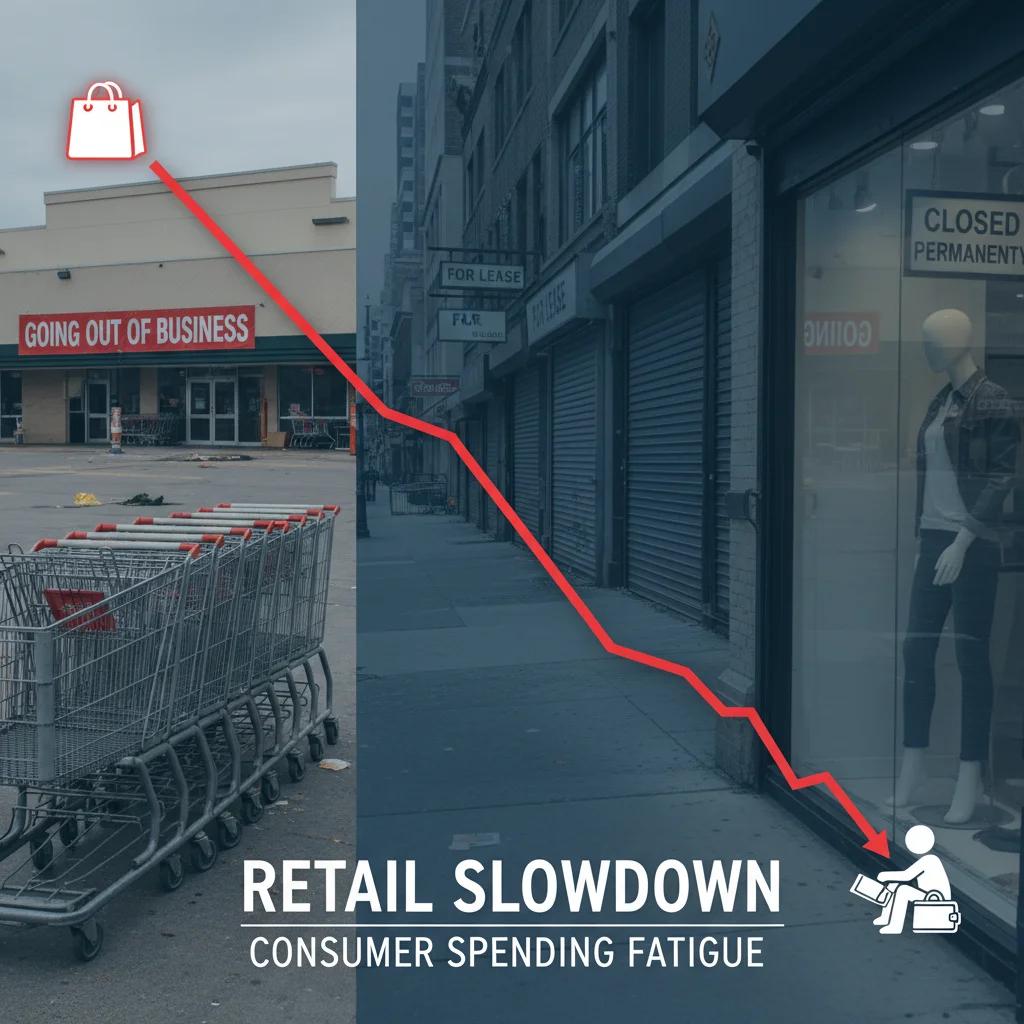
The deceleration of retail sales growth to a mere 0.2% monthly rise indicates significant consumer fatigue, potentially signaling a shift in economic momentum and raising concerns about the sustainability of corporate revenue growth in the face of persistent inflation and high interest rates.
The latest data release confirming that retail sales growth slowdown stalled to just a 0.2% monthly increase has sent a decisive signal through financial markets: the American consumer, the engine of the US economy, is showing fatigue. This marginal rise, far below the consensus estimate of 0.5% and a sharp deceleration from the previous month’s revised 0.7% gain, suggests that the cumulative effect of elevated inflation, high borrowing costs, and depleted savings is finally constraining household spending power. The critical question for investors, policymakers, and corporate executives is what this declining consumer spending signals for the trajectory of the broader economy in the latter half of the fiscal year.
The immediate impact of marginal retail growth on GDP forecasts
Retail sales data serves as a crucial, timely barometer for consumption, which typically accounts for nearly 70% of US Gross Domestic Product (GDP). When retail growth slows dramatically, as evidenced by the 0.2% figure, it directly pressures forecasts for economic expansion. Analysts at major investment banks, including Goldman Sachs and Morgan Stanley, have already begun revising their Q3 GDP growth projections downward, citing this deceleration as a primary factor. The marginal increase suggests that even nominal sales growth is barely keeping pace with core inflation, meaning real (inflation-adjusted) retail spending may have effectively contracted.
Analyzing the components of the retail slowdown
A granular look at the Census Bureau’s report reveals where the consumer retrenchment is most pronounced. While non-store retailers (e-commerce) showed modest resilience, several key discretionary categories experienced flat or negative growth. This compositional shift provides vital insight into consumer priorities and distress levels. The data points toward a consumer prioritizing essential expenditures and reigning in non-essential purchases.
- Motor Vehicle Sales: Declined by 0.8% month-over-month, highlighting the impact of high auto loan rates, which have soared past 7% for new vehicles, according to Federal Reserve data.
- Furniture and Home Furnishings: Fell by 1.1%, signaling a cooling housing market and reduced investment in large, durable goods tied to home improvement cycles.
- Electronics and Appliance Stores: Showed a 0.5% contraction, suggesting consumers are extending the lifespan of existing technology rather than upgrading, a typical recessionary behavior.
- Gasoline Stations: Sales rose slightly, primarily due to higher average prices rather than increased volume, minimizing the underlying strength of the headline number.
The concentration of weakness in high-ticket, interest-rate-sensitive sectors underscores the effectiveness of the Federal Reserve’s restrictive monetary policy. The transmission mechanism from higher benchmark rates to reduced consumer demand is clearly functioning, albeit perhaps more aggressively than policymakers intended.
The erosion of household financial buffers
The resilience of the US consumer throughout the post-pandemic recovery was largely attributed to two factors: accumulated excess savings and a robust labor market. The current slowdown in retail sales growth slowdown indicates that these financial buffers are rapidly diminishing, leaving households more vulnerable to economic headwinds. According to data from the Federal Reserve Bank of New York, aggregate credit card debt has reached record highs, surpassing $1.1 trillion, while the delinquency rate continues a slow but steady ascent.
Depleted pandemic-era savings
The bulk of the excess savings accumulated during the pandemic, estimated by the San Francisco Fed to be several trillions of dollars, has been largely drawn down by the end of Q2. This depletion removes a significant source of discretionary spending power. Households are now relying more heavily on current income and credit, which is increasingly expensive due to the Fed’s rate hikes. This dynamic creates a challenging environment for retailers who benefited from the liquidity surge of the past three years.

Economists at Bank of America Global Research suggest that the slowing wage growth, coupled with sticky core inflation, means real disposable income growth is nearly flat for the median American household. The marginal 0.2% retail growth figure is a direct reflection of this fiscal squeeze. Companies relying on middle-income consumers for growth, particularly in apparel and general merchandise categories, face significant pressure on their profit margins and sales volumes moving into the holiday season. The structural shift away from goods consumption back towards services, while still present, is now being overshadowed by broader purchasing restraint.
Implications for inflation and Federal Reserve policy
For monetary policymakers at the Federal Reserve, the weak retail sales data presents a complex, two-sided challenge. On one hand, cooling consumer demand is precisely what the Fed has aimed for to bring inflation back down to its 2% target. Reduced demand alleviates pricing pressure, particularly in core goods. On the other hand, the rapid deceleration increases the risk of an economic hard landing, potentially pushing the economy into a recession.
The Fed’s dual mandate dilemma
The Federal Open Market Committee (FOMC) must balance its mandate of maximum employment and price stability. The retail sales growth slowdown suggests that the ‘price stability’ component is being addressed through demand destruction. However, if this translates quickly into corporate layoffs, the ‘maximum employment’ mandate will be jeopardized. Analysts are now debating whether this weak data point provides sufficient justification for the Fed to pause or even pivot on its rate hike cycle.
- Policy Outlook Shift: The probability of another rate hike in the upcoming meeting decreases significantly when consumer data shows palpable weakness, according to CME FedWatch Tool probabilities.
- Inflationary Lag: While core goods inflation may ease, sticky services inflation (rent, healthcare) remains high, complicating the Fed’s decision-making process.
- Terminal Rate Debate: Weak consumption data reinforces the argument that the current federal funds rate is likely near its terminal peak, shifting focus to the timing of future cuts rather than further hikes.
The market reaction has been telling: Treasury yields initially dipped as investors priced in a less aggressive Fed, while recession-sensitive stocks, particularly those in the consumer discretionary sector, faced immediate selling pressure. This correlation confirms the market’s interpretation of the 0.2% retail growth as a harbinger of potential economic contraction.
Corporate earnings vulnerability in the retail sector
The marginal retail sales growth slowdown translates directly into significant vulnerability for corporate earnings, especially among non-essential retailers. Companies that relied on volume growth to offset margin compression are now faced with a double whammy: difficulty in passing on higher input costs (inflation) and lower sales volume (demand fatigue). This dynamic forces retailers to engage in deep discounting, further eroding profitability.
Inventory management and discounting pressures
During the peak of the supply chain crisis, many retailers aggressively built up inventory to mitigate delays. Now, with demand faltering, they are sitting on excess stock. The need to clear these inventories before the crucial holiday shopping season necessitates heavy promotional activity. Target and Walmart, for example, have publicly acknowledged the need for strategic discounting to manage inventory levels, a trend that will suppress gross margins across the sector.
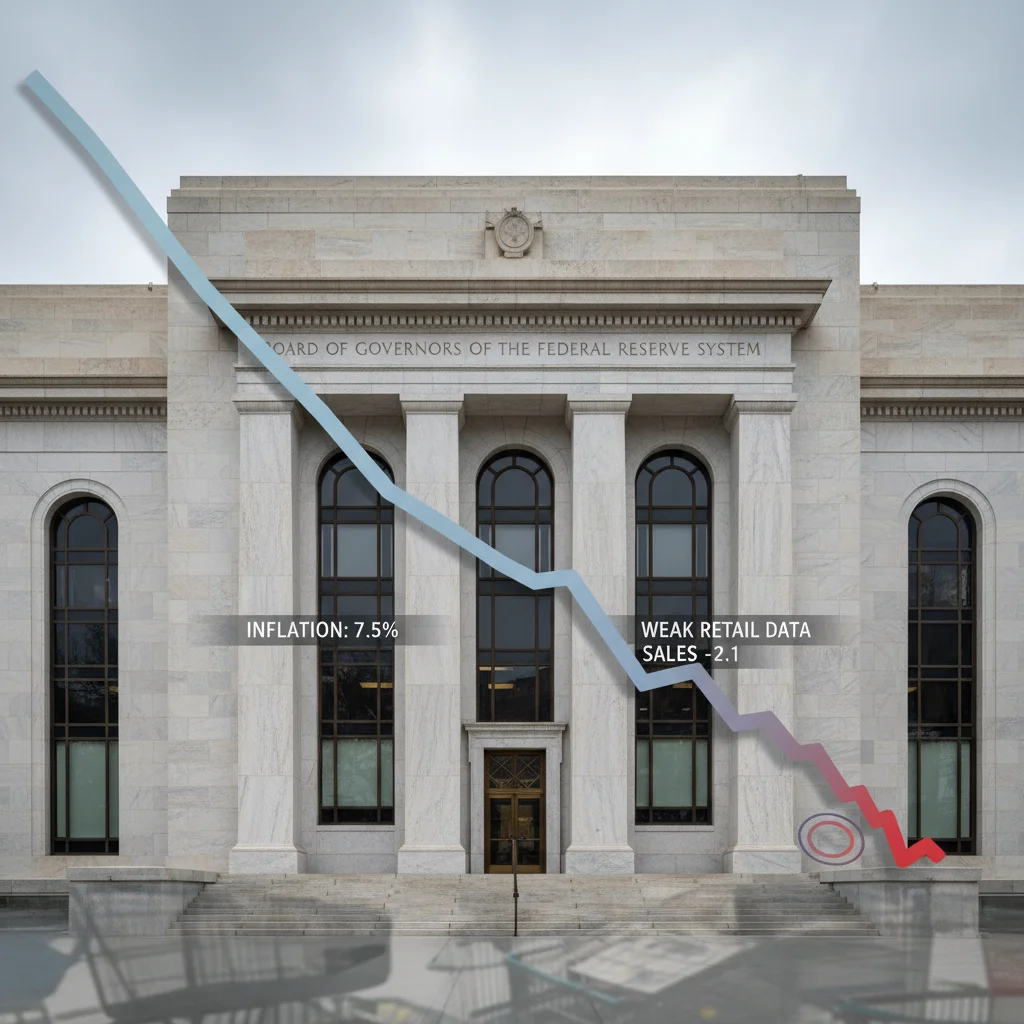
According to Q2 earnings reports, several mid-tier retailers reported higher-than-expected inventory-to-sales ratios, a metric that typically precedes aggressive markdowns. This is not merely a cyclical issue; it reflects a fundamental miscalculation of consumer capacity and willingness to spend. The 0.2% retail figure validates the cautious guidance many retailers provided during their earnings calls, suggesting that the second half of the year will be characterized by intense competition for fewer consumer dollars. Companies with strong balance sheets and efficient supply chains are better positioned to navigate this environment, while highly leveraged firms face potential liquidity challenges.
Geographic and demographic segmentation of spending shifts
Economic analysis demands precision beyond aggregate numbers. The retail sales growth slowdown is not uniform across the United States or demographic groups. Regional economic variations, particularly in housing markets and employment sectors, dictate differential spending behaviors. States heavily reliant on manufacturing or volatile energy prices might be experiencing sharper declines in consumer confidence and retail activity compared to established tech hubs.
The K-shaped recovery divergence deepens
The latest spending patterns accentuate the K-shaped economic recovery. High-income consumers, who generally hold less debt and benefited more from asset appreciation, continue to maintain higher spending levels, particularly on luxury goods and high-end services. Conversely, low- and middle-income households, who spend a larger proportion of their income on necessities and carry higher revolving credit balances, are responsible for the bulk of the deceleration in discretionary categories.
- Luxury Retailers: Companies catering to the top 10% of income earners often maintain robust sales, demonstrating the bifurcated nature of the consumer landscape.
- Discount Stores: Value-oriented retailers and dollar stores are seeing increased traffic as cost-conscious consumers trade down, but this volume gain often comes with lower average transaction values.
- Regional Disparities: Data from regional Fed surveys indicates that consumers in the Northeast and Midwest are exhibiting greater pessimism regarding future financial conditions than those in parts of the South and West, potentially leading to more cautious spending in those regions.
Understanding these segmentations is crucial for investors. A broad bet against the entire retail sector based solely on the 0.2% figure would overlook the pockets of strength in the luxury and deep-value segments. The narrative is shifting from general consumer strength to targeted consumer resilience, making stock selection increasingly important.
Forward-looking analysis: Navigating the deceleration risk
The 0.2% monthly increase in retail sales is a clear signal that the economic momentum built up earlier in the year is dissipating. This deceleration risk is the key challenge facing the US economy in the near term. For financial market participants, the focus must shift from how fast the economy is growing to how quickly it is slowing, and whether policy tools are sufficient to manage a soft landing.
Key economic indicators to monitor
While retail sales are foundational, investors must track corollary data to confirm the trend and gauge the depth of the slowdown. The relationship between employment, inflation, and spending will dictate the market narrative for the next two quarters. The confluence of these indicators will ultimately determine if the retail sales growth slowdown is a temporary pause or the precursor to a more severe downturn.
- Personal Consumption Expenditures (PCE) Index: The Fed’s preferred inflation gauge, particularly the core services component ex-housing, will indicate if reduced demand is translating into lower prices.
- Nonfarm Payrolls and Unemployment Rate: A sharp rise in unemployment would confirm the hard landing scenario, rapidly accelerating the decline in consumer spending.
- Consumer Confidence Surveys: Metrics like the Conference Board Consumer Confidence Index provide qualitative insight into future spending intentions, which often precede changes in actual retail activity.
The current environment requires a high degree of vigilance. If subsequent data points confirm a sustained trend of weak consumption and increasing labor market slack, the likelihood of a recession starting within the next 12 months, currently estimated by Bloomberg Economics at around 60%, will likely rise further. Conversely, a rebound in the next retail report could suggest the 0.2% figure was merely an anomaly, though the underlying pressures of debt and high interest rates remain undeniable.
| Key Factor/Metric | Market Implication/Analysis |
|---|---|
| Monthly Retail Sales Growth (0.2%) | Indicates consumer fatigue; real (inflation-adjusted) spending likely contracted, leading to downward revisions in Q3 GDP forecasts. |
| High Household Debt ($1.1T Credit Card) | Erosion of financial buffers forces reliance on expensive credit, sustaining pressure on discretionary spending and increasing default risk. |
| Weakness in Durable Goods Sales | Rate-sensitive sectors (Autos, Furniture) confirm the effectiveness of tight monetary policy; signals consumer postponement of large purchases. |
| Federal Reserve Policy Response | Deceleration increases the probability of a rate pause, shifting focus from inflation fighting to managing recession risks. |
Frequently Asked Questions about Retail Sales Growth Slowdown
The slowdown signals reduced revenue growth for consumer discretionary sectors. Investors should review exposure to non-essential retail stocks, favoring defensive sectors like healthcare and utilities, or retailers focused on deep value, which often perform better during consumer retrenchment periods.
The primary driver is the combined effect of high persistent inflation, which erodes purchasing power, and the high cost of credit, with the Federal Funds Rate near its peak. Furthermore, the expiration of pandemic-era excess savings has removed a key buffer for household budgets.
No, weak retail sales do not guarantee a recession, but they significantly increase the probability. Consumption is a major GDP component; a sustained contraction in real retail spending, especially if coupled with rising unemployment, would strongly suggest an approaching economic downturn.
Sectors selling high-ticket durable goods, such as furniture, electronics, and motor vehicles, are most vulnerable due to their sensitivity to interest rates and consumer confidence. Apparel and specialized leisure goods also face acute pressure from reduced discretionary spending.
The Fed may interpret the weak 0.2% growth as evidence that its tightening policies are working to cool demand. This increases the likelihood of maintaining the current rate level, adopting a ‘wait-and-see’ approach rather than implementing further rate hikes, unless inflation unexpectedly surges.
The bottom line: A pivotal moment for economic policy
The analysis of the retail sales growth slowdown to 0.2% monthly confirms that the US economy is entering a pivotal phase, transitioning from robust post-pandemic expansion to a period of palpable deceleration. This marginal growth is not merely a statistical blip; it is a profound signal of consumer vulnerability driven by the inescapable pressures of high interest rates and sticky inflation. For the Federal Reserve, this data validates their efforts to cool the economy, but it simultaneously amplifies the difficulty of achieving a soft landing. The margin for error in monetary policy has narrowed considerably. Investors must recognize that corporate earnings reliance on volume growth is now severely challenged, necessitating a defensive posture and a focus on companies with pricing power and resilient balance sheets. The next few months will determine whether this consumer fatigue is a necessary correction that helps tame inflation without triggering mass unemployment, or the first definitive sign of a looming recessionary environment. Market participants should prioritize monitoring employment trends and core PCE inflation data, as these indicators will confirm the ultimate trajectory signaled by the weak retail numbers.
