Consumer Spending Growth Slows 2025: Weakness Signals
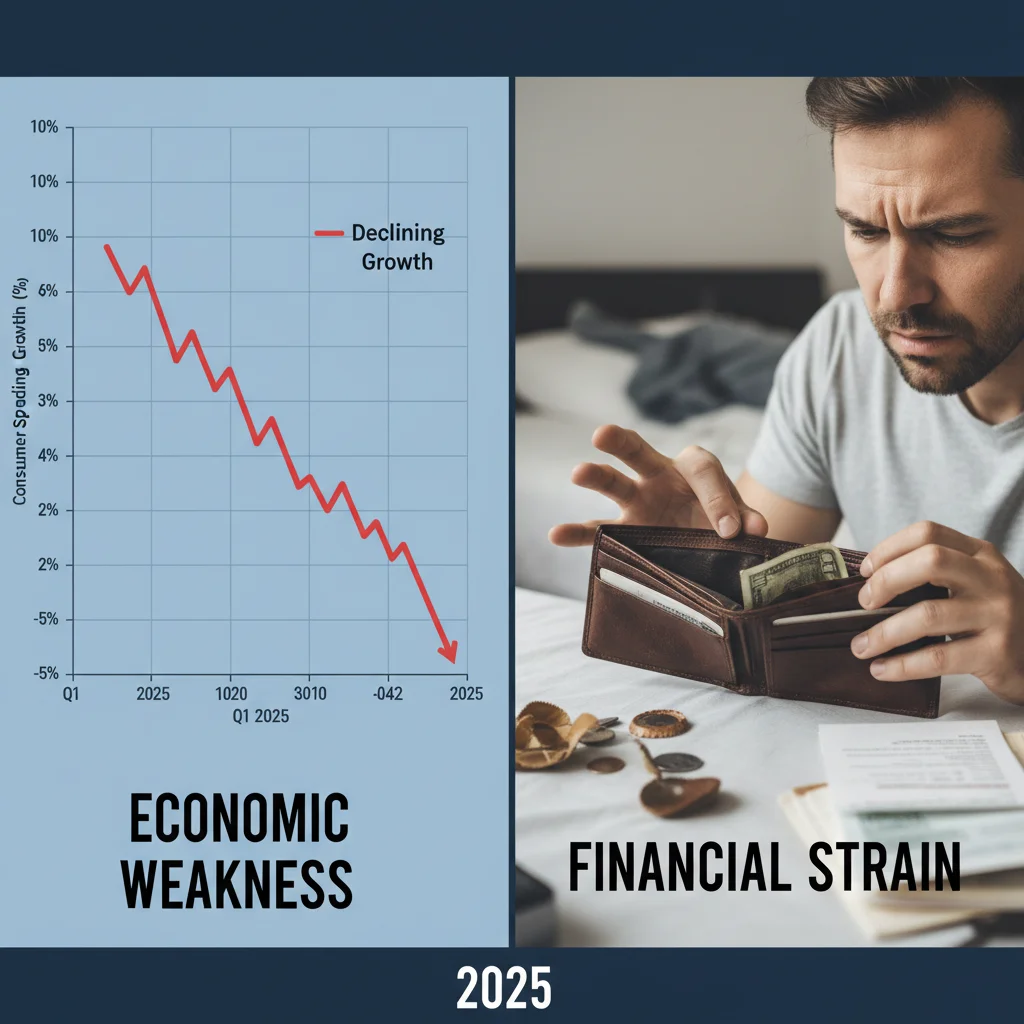
Forecasters project a deceleration in US consumer spending growth in 2025, largely due to the exhaustion of pandemic-era excess savings and the sustained pressure of high interest rates, translating directly into dampened GDP forecasts.
After several years of robust post-pandemic expansion, fueled initially by fiscal stimulus and later by a tight labor market, the trajectory of U.S. consumer activity is shifting dramatically; projections for 2025 indicate that consumer spending growth slows significantly, acting as a definitive signal of underlying economic weakness. This anticipated slowdown, which some economists at major institutions such as Goldman Sachs and JPMorgan Chase are pegging below 1.5% real growth, down from over 2.5% in 2024, poses a critical challenge to corporate revenue outlooks and the overall resilience of the U.S. economy, which relies on consumption for nearly 70% of its GDP.
The exhaustion of excess savings and rising debt burdens
The primary driver behind the projected moderation in consumption is the depletion of the substantial pool of excess savings accumulated by U.S. households during 2020 and 2021. The Federal Reserve Bank of San Francisco estimated that these savings, which peaked near $2.1 trillion, were largely exhausted by mid-2024 for the median household. This phenomenon removes a crucial buffer that sustained spending resilience even as inflation eroded real wages through 2023. Without this cushion, consumers are becoming acutely sensitive to prevailing financial conditions, particularly the cost of debt.
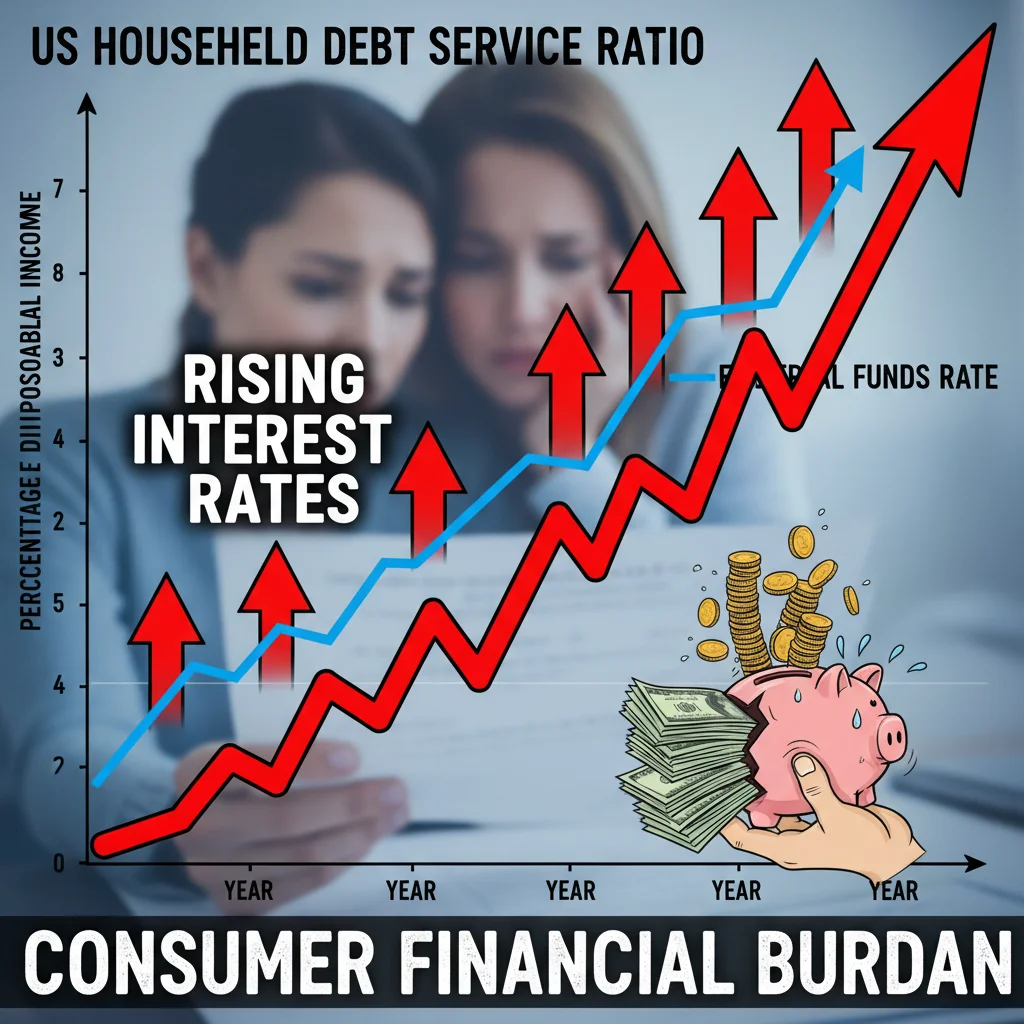
Simultaneously, the high interest rate environment engineered by the Federal Reserve to combat inflation has translated into higher borrowing costs for consumers. The average interest rate on credit card debt currently hovers near historical highs, exceeding 21% as of the end of Q3 2024, according to Federal Reserve data. This increased cost of financing, coupled with rising balances, means a larger share of disposable income is being diverted to debt service rather than new consumption, directly contributing to why consumer spending growth slows in forward projections.
The widening gap in household financial health
The impact of depleted savings and high debt is unevenly distributed, creating a bifurcated consumer landscape. High-income earners, who generally benefited from asset appreciation and were less reliant on stimulus checks for day-to-day spending, maintain relatively healthy balance sheets. Conversely, the bottom 60% of income earners, who had lower initial savings and higher exposure to variable-rate debt, are showing significant signs of financial strain. Delinquency rates for auto loans and credit cards, particularly among younger and subprime borrowers, are rising above pre-pandemic levels, a trend that typically precedes broader consumption weakness.
- Subprime Delinquencies: Credit card delinquency rates for subprime borrowers hit a 12-year high of 9.2% in the second half of 2024, according to the New York Fed Consumer Credit Panel, stressing the fragility of lower-income consumer bases.
- Real Wage Growth Stagnation: While nominal wages are rising, real average hourly earnings growth, adjusted for inflation, remains sluggish or negative in key sectors, limiting the ability of workers to increase purchasing power.
- Housing Cost Pressure: Elevated mortgage rates and persistently high rental costs consume a greater proportion of household budgets, reducing discretionary spending capacity.
This divergence in financial health suggests that discretionary categories—such as non-essential retail, travel, and high-end durable goods—will face the steepest headwinds as 2025 unfolds. Companies catering to middle- and lower-income demographics, particularly those relying on installment payments, must prepare for higher default rates and reduced sales volumes.
Monetary policy friction and the lag effect on demand
Federal Reserve policy actions, which saw the federal funds rate climb from near zero to the current 5.25%–5.50% range, operate with a significant time lag, typically 12 to 18 months, before their full effect is felt in the real economy. As the economy enters 2025, it is expected to absorb the cumulative impact of these restrictive policies, which is a major factor in why consumer spending growth slows. Higher rates increase the cost of capital for businesses, leading to reduced hiring, slower wage growth, and, eventually, lower consumer confidence.
The tightening of credit standards
Responding to the Fed’s signals and increasing economic uncertainty, banks have progressively tightened lending standards for commercial and industrial loans, as well as for consumer installment loans. The Senior Loan Officer Opinion Survey (SLOOS) consistently showed a net percentage of banks tightening standards throughout 2024, making it harder and more expensive for both consumers and small businesses to secure financing. This reduction in the availability of credit acts as a secondary brake on spending, especially for big-ticket items like automobiles and major home appliances, which are often financed.
Analysts at Moody’s Analytics project that the combined effect of high rates and tighter credit conditions could shave up to 1.0 percentage point off potential GDP growth in 2025. This deceleration is consistent with historical patterns where sustained monetary restriction eventually dampens aggregate demand, proving that the Fed’s tools are effective, albeit slow-acting. The ultimate success of the Fed’s soft-landing attempt hinges on whether the slowdown in consumption can cool inflation without triggering a sharp rise in unemployment.
Sectoral analysis: winners and losers in a slowing environment
The deceleration of consumption growth will not affect all industries equally. Essential goods and services—such as groceries, healthcare, and utility providers—tend to be more resilient (inelastic demand), though even these sectors may see consumers shift to private-label or discount brands. Conversely, sectors dependent on discretionary spending, particularly those reliant on consumer credit or wealth effects, are expected to suffer the most significant revenue erosion.
Discretionary retail and durable goods under pressure
Companies specializing in durable goods, such as furniture, electronics, and recreational vehicles, face a double whammy: high interest rates make financing purchases expensive, and consumers, feeling less wealthy, defer these large, non-essential expenditures. Major retailers that thrived during the pandemic boom, often by selling home improvement and electronics, are now reporting bulging inventories and increasing promotional activity—a clear indicator of waning demand. For instance, Q3 2024 earnings reports demonstrated a 5% year-over-year decline in sales volume for non-essential home goods across several major U.S. chains, indicating stress in the sector.
- Automotive Sector: High financing costs (average new car loan rate exceeding 7.5%) are sidelining potential buyers, leading to reliance on fleet sales and rising inventories at dealerships.
- Travel and Leisure: While high-end luxury travel remains robust due to persistent high-income resilience, mid-market and budget travel segments may experience softening demand as household budgets tighten.
- Technology Hardware: Demand for personal computing devices and certain consumer electronics, which saw peak sales in 2021, is normalizing quickly, leading to inventory corrections and price competition.
Conversely, discount retailers and providers of value-oriented services are likely to outperform the broader retail index. As consumers trade down, the focus shifts to maximizing value and minimizing expenditure, benefiting companies with strong supply chain management and competitive pricing models, confirming that even when consumer spending growth slows, opportunities exist for strategic positioning.
Corporate guidance and the earnings recession risk
The projected slowdown in consumer spending is translating directly into cautious corporate guidance for fiscal year 2025. Financial analysts are increasingly modeling for a mild ‘earnings recession’—defined as two consecutive quarters of negative year-over-year earnings growth—for non-financial S&P 500 companies. This anticipated weakness is fundamentally tied to the revenue deceleration stemming from the consumer pullback.
Corporate executives are citing several compounding factors in their outlooks: persistent labor cost inflation, the inability to pass on price increases due to consumer sensitivity (known as ‘price resistance’), and the diminishing impact of pricing power that characterized the 2022–2023 inflationary period. Companies that aggressively built inventory during the supply chain crisis are now facing the painful reality of markdowns, further compressing profit margins. This scenario is particularly visible in sectors like apparel and general merchandise, where excess inventory requires significant promotional spending to clear, impacting the gross margin percentage.
Investment implications of demand destruction
For investors, the impending slowdown necessitates a shift toward defensive positioning. Attention is turning away from high-growth, cyclical stocks that are heavily dependent on robust consumption and toward companies with stable cash flows, strong balance sheets, and inelastic demand profiles. Utilities, healthcare providers, and select consumer staples companies (those selling necessity items) are generally considered defensive havens during periods when consumer spending growth slows.
Furthermore, analysts are scrutinizing companies’ exposure to international markets. If the U.S. consumer weakness is mirrored globally—particularly in Europe and China, where economic growth is already strained—the risk to multinational corporate earnings amplifies. The diversification of revenue streams and operational efficiency, measured by metrics like free cash flow generation and return on invested capital (ROIC), will be crucial differentiators for stock performance in 2025.

The geopolitical and external risk factors
While domestic financial conditions are the primary driver of the consumption slowdown, external factors introduce volatility and uncertainty that could either accelerate or partially offset the trend. Geopolitical instability, particularly in Eastern Europe and the Middle East, continues to pose risks to energy prices and global supply chains. A sharp spike in oil prices—say, West Texas Intermediate (WTI) crude surpassing $100 per barrel for a sustained period—would function as a tax on the consumer, immediately eroding purchasing power and deepening the spending slowdown.
Conversely, an unexpected rapid easing of global supply chain pressures, especially from Asia, could lead to a faster disinflationary trend in goods prices. If the core Personal Consumption Expenditures (PCE) price index, the Fed’s preferred inflation gauge, drops consistently below 2.5% early in 2025, it might give the Federal Reserve sufficient justification to initiate interest rate cuts sooner than currently expected. Rate cuts, even anticipated ones, could provide a much-needed psychological and financial boost to housing and credit markets, potentially mitigating the severity of the consumer spending decline.
The role of the labor market in mitigating risk
The U.S. labor market remains the single most important variable in determining the depth and duration of the economic weakness signaled by slowing consumption. As of Q4 2024, the unemployment rate has hovered near 4.0%, historically low. If this rate remains stable, even with slower job creation, the ability of households to service debt and maintain essential spending will be preserved. However, if the consumption slowdown forces companies to initiate significant layoffs—pushing the unemployment rate toward 4.5% or 5.0%—the economic outlook shifts rapidly toward a recessionary scenario.
Economists at the Federal Reserve Bank of St. Louis highlight the relationship between job security and consumer confidence. A stable job market encourages consumers to draw down modest savings or take on marginal debt, whereas widespread layoffs trigger a precautionary saving motive (the ‘fear factor’), causing spending to seize up instantly. Monitoring weekly jobless claims and the monthly Non-Farm Payrolls report for sustained negative trends will be crucial indicators for market participants throughout the first half of 2025, offering real-time insight into whether consumer spending growth slows moderately or collapses.
Navigating the shift: strategies for businesses and investors
In an environment where consumption is contracting or stagnating, businesses must pivot from growth-at-any-cost strategies to those emphasizing efficiency, cost control, and customer retention. Inventory management becomes paramount; reducing stock levels minimizes the risk of obsolescence and forced markdowns, thereby protecting capital. Companies with flexible operating models, strong pricing power remaining in niche areas, and low debt leverage are best positioned to weather the cyclical downturn.
For investors, the focus should be on quality. This means prioritizing companies with high-quality earnings (less susceptible to accounting manipulation), sustainable competitive advantages (moats), and a track record of dividend growth, which often indicates financial stability. The market historically rewards businesses that demonstrate capital discipline during economic contractions, as they are often able to acquire distressed assets or gain market share when competitors falter.
Furthermore, fixed income markets become increasingly attractive. As economic growth slows and inflation risks subside, long-term Treasury yields may compress, offering capital appreciation potential alongside stable income. The yield curve inversion, which has persisted, often signals recessionary conditions, but it also creates opportunities for investors to lock in historically high rates in shorter-term instruments while awaiting potential Fed rate cuts later in 2025, a move that would provide liquidity and potentially reflate certain asset classes.
The consensus among leading economic institutions is that while a severe recession is not the base case, the shift from robust growth to stagnation is undeniable. The trajectory of the U.S. economy in 2025 is less about expansion and more about navigating contractionary forces, directly resulting from the anticipated slowdown in consumer spending.
| Key Factor/Metric | Market Implication/Analysis |
|---|---|
| Excess Savings Depletion | Removes consumer spending buffer; forces reliance on current income, increasing sensitivity to inflation and debt costs. |
| High Credit Card Rates (21%+) | Diverts disposable income towards debt service, negatively impacting discretionary retail and durable goods sales. |
| S&P 500 Earnings Forecasts | Increased probability of an ‘earnings recession’ in 2025 due to revenue slowdown and margin compression from markdowns. |
| Stable Unemployment Rate (~4.0%) | Key mitigating factor; prevents a severe consumption collapse but does not offset the deceleration in growth momentum. |
Frequently Asked Questions about Consumer Spending Growth Slows in 2025: Economic Weakness Signals
Slowing consumer spending primarily reduces top-line revenue growth for companies, especially in discretionary sectors. Coupled with persistent cost inflation and the need for markdowns to clear inventory, this revenue weakness translates quickly into lower profit margins and potential earnings misses for the S&P 500.
Investors should prioritize the monthly Retail Sales report and the Personal Consumption Expenditures (PCE) report, focusing particularly on real (inflation-adjusted) spending figures. Additionally, monitoring credit card delinquency rates provides a critical leading indicator of financial stress among lower- and middle-income consumers.
A significant slowdown in consumer spending acts as a natural disinflationary force by reducing aggregate demand. If the slowdown persists and core PCE inflation trends toward 2.5%, it increases the likelihood that the Federal Reserve will pivot to interest rate cuts in the latter half of 2025 to prevent a deeper economic contraction.
Financial analysts suggest pivoting toward defensive sectors like healthcare, utilities, and consumer staples, which are less sensitive to economic cycles. Reducing exposure to highly cyclical consumer discretionary stocks and focusing on companies with strong balance sheets and consistent free cash flow generation is a prudent risk management strategy.
The resilience of high-income earners may sustain luxury segments, although growth will moderate. However, the financial strain on lower- and middle-income segments strongly favors discount retailers and value-oriented service providers, as consumers actively trade down to preserve capital and maximize value in their essential purchases.
The bottom line: navigating constrained demand
The anticipated deceleration in consumer spending growth slows the engine of the U.S. economy in 2025, moving the narrative away from overheating inflation and toward cyclical weakness. This shift is not a sudden collapse but a deliberate, policy-induced deceleration driven by the exhaustion of savings and the high cost of capital. For corporate America, the era of easy revenue growth is over, requiring renewed focus on operational efficiency and margin preservation. Investors must adopt a disciplined, quality-focused approach, recognizing that the market will increasingly reward stability and defensive positioning over speculative growth. While the labor market remains the key bulwark against a severe recession, the trajectory of consumption clearly signals that the economy is entering a more challenging phase, demanding heightened vigilance from all financial market participants.
