Consumer Confidence Falls to 88.7: Household Worry Analysis
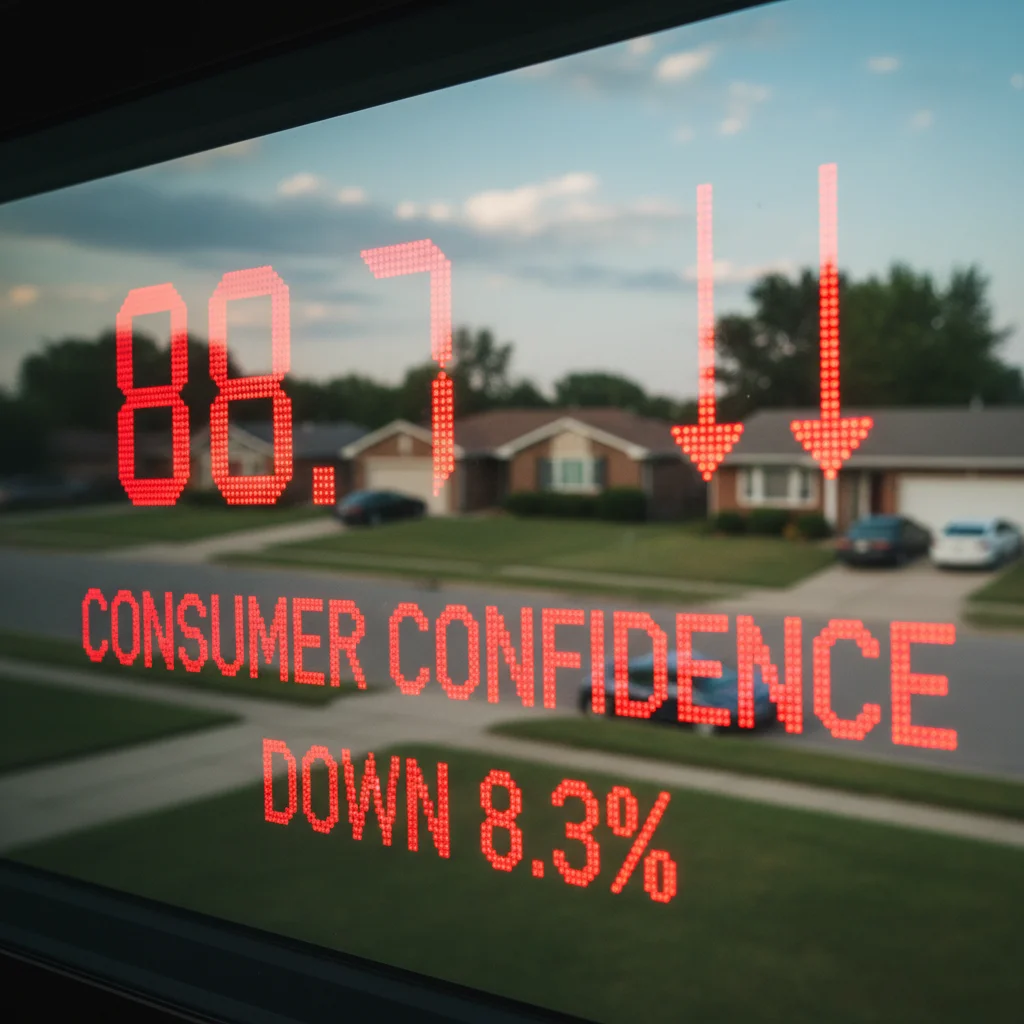
The recent drop in consumer confidence to 88.7, driven primarily by persistent inflation fears and moderated job growth expectations, indicates a measured, yet growing, anxiety among American households regarding near-term economic stability and future purchasing power.
The headline figure is unambiguous: the latest reading for consumer confidence decline has fallen to 88.7, a significant contraction from the previous quarter’s revised 93.5 reading. This metric, closely watched by economists and market participants as a harbinger of future spending, suggests that American households are beginning to reassess their economic security. This is not merely a statistical tremor; it is a critical signal that the resilience observed in consumer spending is facing headwinds, primarily stemming from persistent price pressures and a cooling, albeit still tight, labor market. Understanding this shift is paramount, as consumer consumption accounts for approximately 70% of U.S. gross domestic product (GDP).
The 88.7 threshold: differentiating anxiety from panic
While a drop to 88.7 is concerning, especially when compared to the 100 benchmark often associated with robust pre-pandemic sentiment, it is crucial to analyze the components driving this decline. The index is generally broken down into two critical parts: the Present Situation Index and the Expectations Index. According to the latest data from the Conference Board, the Present Situation Index, which reflects current business and labor market conditions, saw a moderate dip, suggesting that current employment conditions remain perceived as relatively strong. However, the Expectations Index, which gauges consumers’ six-month outlook for income, business, and labor market conditions, experienced a steeper fall, indicating that the future is where the primary worry lies.
The divergence between the present assessment and future expectations highlights a key dynamic in the current financial landscape: households feel secure in their current jobs but distrust the trajectory of the economy. This sentiment misalignment is critical for corporate strategists, as it suggests consumers may pull back on large discretionary purchases—such as appliances, vehicles, and home renovations—even if their current income remains stable. This preemptive spending reduction is often the first tangible sign of a slowdown in demand.
The role of persistent core inflation in shaping expectations
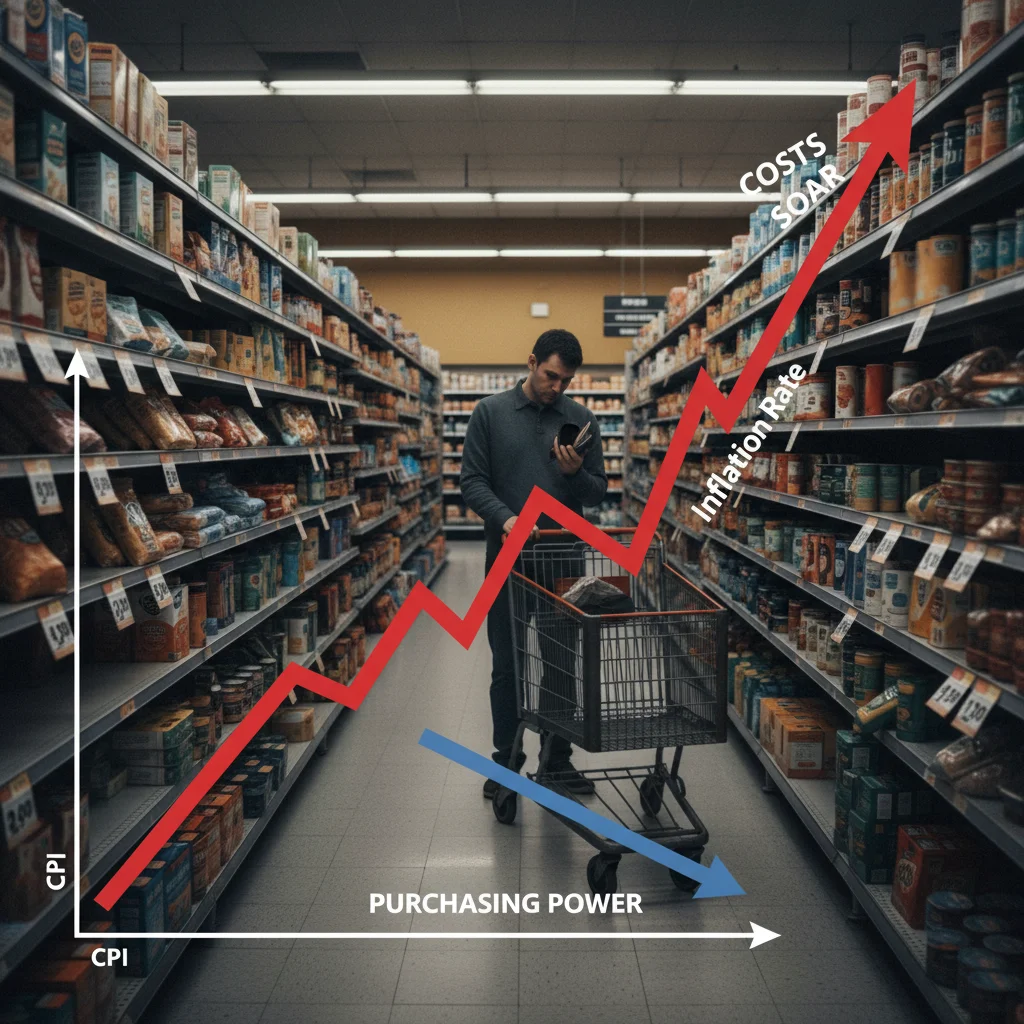
The primary antagonist in the erosion of the Expectations Index remains sticky inflation. While the headline Consumer Price Index (CPI) has moderated from its peak, core inflation (excluding volatile food and energy components) has proven stubbornly resistant to the Federal Reserve’s aggressive rate hikes. As of the last monthly report, core CPI stood at 3.8% year-over-year. This persistence means that the purchasing power of wages, even those that have seen increases, continues to be eroded. This reality hits low- and middle-income households particularly hard, as essential goods and services consume a larger portion of their budgets.
- Erosion of Real Wages: Despite nominal wage growth averaging 4.5% over the past year (according to Bureau of Labor Statistics data), the 3.8% core inflation rate means real wage growth is marginal, fueling the perception that households are running just to stay in place financially.
- High Cost of Credit: Elevated benchmark interest rates, currently maintained within the 5.25% to 5.50% range by the Federal Reserve, translate directly into higher costs for revolving credit and mortgage rates, further straining household budgets and dampening the desire for new debt.
- Savings Rate Decline: The personal savings rate has fallen to 3.2% (as per BEA data), significantly below the pre-pandemic average of 7-8%. This reduction limits the financial cushion households have to absorb unexpected economic shocks, intensifying future anxieties.
Analysts at Goldman Sachs noted in a recent client brief that the drop in the Expectations Index is highly correlated with the perceived difficulty in affording large purchases, suggesting that the Fed’s monetary tightening is achieving its goal of cooling demand, perhaps more effectively through psychological channels than through immediate job losses. The drop to 88.7, therefore, is less about current suffering and more about a rational calculation of future risk and expense.
Labor market paradox: security versus stagnation
The American labor market presents a confusing picture for consumers. On one hand, the unemployment rate has remained historically low, hovering near 4.0%, and job openings, while declining, still outpace the number of unemployed individuals. This environment supports the relatively high reading in the Present Situation Index. On the other hand, reports of corporate restructuring, hiring freezes in sectors like technology and finance, and a slowdown in the pace of job creation contribute to the growing fear captured by the Expectations Index. This paradox is central to understanding the current state of consumer confidence decline.
The quality of jobs and the security of future employment are increasingly under scrutiny. Data from Challenger, Gray & Christmas indicates that announced job cuts in the first half of the year increased by 28% compared to the same period last year, concentrated primarily in interest-rate-sensitive sectors. While the overall unemployment rate masks these sectoral issues, the news flow affects general consumer sentiment, particularly among white-collar workers who have historically enjoyed greater job security.
The ‘wealth effect’ and housing market stagnation
A significant portion of American household wealth is tied up in housing. The rapid increase in mortgage rates, often exceeding 7% for a 30-year fixed loan, has effectively frozen the housing market. Existing homeowners, locked into lower rates, are reluctant to sell, leading to inventory shortages and high prices that are unaffordable for first-time buyers. This stagnation impacts consumer confidence in two ways:
- Reduced Mobility: The inability to move or trade up houses reduces the perceived financial flexibility and upward mobility, contributing to pessimism about long-term financial improvement.
- Dampened Wealth Effect: While existing home equity remains high, the pace of appreciation has slowed significantly, and the ability to easily tap into that equity through refinancing is severely hampered by high rates. The positive ‘wealth effect’—the tendency of consumers to spend more when they feel wealthier due to rising asset values—is diminishing.
The Federal Reserve Bank of New York’s latest quarterly report on household debt and credit indicated that mortgage originations have fallen to their lowest level since 2014, excluding the pandemic anomaly. This financial paralysis in the largest asset class for most Americans directly informs the cautious outlook reflected in the 88.7 confidence reading. Consumers are worried not just about their current expenses, but about their ability to achieve major life milestones, a key driver of long-term economic optimism.
Credit and debt: the leverage factor in household stability
The financial stability of the American household is inextricably linked to its debt load. While overall household net worth remains high, largely due to asset appreciation, the composition of that debt is shifting into more precarious forms. Total household debt exceeded $17.5 trillion in the latest reading, with a notable surge in credit card balances.
Credit card debt grew by 15% year-over-year in the last quarter, reaching a new record. Simultaneously, the average interest rate on this revolving debt surpassed 21%, a historic high. This combination of rising balances and elevated servicing costs creates a significant drag on disposable income. For many households, particularly those in the bottom two income quintiles, credit card usage is no longer optional spending but a necessity to cover basic living expenses due to inflation.
Rising delinquency rates as a warning signal
The most worrying indicator related to debt is the uptick in delinquency rates, especially for credit cards and auto loans. According to Federal Reserve data, the transition rate into serious delinquency (90+ days past due) for credit cards has climbed above pre-pandemic levels (around 2.5%), reaching 3.0% in the latest reporting period. This movement suggests that financial stress is converting into actual payment defaults for a growing segment of the population.
Experts at Moody’s Analytics caution that while the overall economy can absorb these increases, the concentration of stress among lower-income borrowers poses a risk to banks and potentially to general consumption. When households dedicate increasing amounts of income to debt servicing—known as the debt service ratio—they have less available for consumption, thereby reinforcing the logic behind the consumer confidence decline observed in the 88.7 index reading.
Political uncertainty and global instability: external pressures
Consumer confidence is not purely a reflection of domestic economic fundamentals; it is also highly sensitive to geopolitical tensions and domestic political uncertainty. The current environment is characterized by significant external risks, including ongoing conflicts, supply chain fragmentation, and volatile energy markets, all of which directly influence perceived stability and cost of living. For American households, these factors translate into potential renewed inflation spikes or unexpected economic disruptions.
Domestically, the approaching presidential election cycle introduces a layer of policy uncertainty. Businesses and consumers alike tend to defer major decisions—CapEx investments for companies, or large purchases for households—when the regulatory and fiscal environment for the next four years remains opaque. This deferral of activity acts as a soft brake on economic momentum, contributing to the cautious outlook reflected in the Expectations Index.
Monitoring energy price volatility
Energy prices remain a key variable. Despite strategic petroleum reserve releases and general moderation, global oil markets are tight. A sudden spike in the price of WTI crude, potentially driven by geopolitical events, could rapidly reverse any gains made against inflation. Since gasoline prices are highly visible and frequently purchased, they have an outsized psychological impact on consumer sentiment. A $0.50 increase per gallon at the pump can significantly depress confidence readings almost instantaneously, irrespective of other positive economic data.
According to research from the Brookings Institution, the correlation between consumer confidence and gasoline prices often exceeds the correlation with the unemployment rate in short-term data, underscoring the sensitivity of the American household to immediate, tangible costs. The 88.7 figure captures this inherent vulnerability to external shocks.
Sectoral analysis: retail and services implications
The drop in confidence to 88.7 has tangible implications for specific sectors of the economy. Retailers, especially those focusing on non-essential goods, are already adjusting their forecasts. Companies like Target and Best Buy have reported inventory adjustments and cautious consumer behavior, suggesting that the trade-down effect—consumers switching from premium brands to private labels—is accelerating.

The services sector, which has been the engine of post-pandemic job growth, may also see deceleration. Travel and leisure, while robust in the premium segment, could see cutbacks in the middle tiers as households prioritize necessities. Data from JPMorgan Chase indicates that spending growth on restaurants and entertainment has slowed from a 10% year-over-year pace in the first quarter to approximately 6% in the current quarter, a clear sign that consumers are becoming more judicious with their discretionary funds.
The resilience of high-income consumers
It is critical to acknowledge the bifurcated nature of the current economy. High-income consumers (top 20%) often draw their wealth from highly resilient equity and real estate markets, which have largely shrugged off interest rate hikes. Their spending remains robust, supporting luxury goods and premium services. However, consumer confidence indices, particularly those using broad sampling methodologies, tend to reflect the median household, which is far more sensitive to wage stagnation and high credit costs.
This bifurcation complicates the Federal Reserve’s task. They must cool aggregate demand without triggering a sharp recession for the median worker. The 88.7 confidence reading suggests they are walking this tightrope, but the downward trend indicates they may be applying pressure unevenly across income groups. The resulting economic environment is one of ‘rolling recessions’ in specific, rate-sensitive sectors, rather than a broad-based economic collapse.
Investment implications: navigating the cautious consumer environment
For investors, the consumer confidence decline to 88.7 signals a strong preference for defensive positioning. Sectors with stable demand, high pricing power, and low exposure to discretionary consumption are likely to outperform. This includes staples, healthcare, and utilities, which typically maintain revenue streams regardless of economic sentiment.
Conversely, cyclical sectors, such as housing construction, durable goods manufacturing, and high-end retail, face increasing headwinds. These sectors rely heavily on optimistic consumer expectations and access to affordable credit, both of which are currently constrained. Analysts at Bank of America recommend an underweight position in traditional consumer discretionary stocks until the Expectations Index shows a sustained rebound above 95.
Focusing on cash flows and balance sheet strength
In an environment where demand is uncertain and borrowing costs are high, corporate fundamentals become paramount. Investors should prioritize companies with strong free cash flow generation and low leverage, measured by a net debt to EBITDA ratio below 3.0. These companies are better positioned to weather reduced consumer spending without resorting to punitive financing or excessive cost-cutting that impairs long-term growth.
Furthermore, the cautious consumer environment may favor companies that offer value-oriented products or services. Discount retailers and fast-casual dining chains that provide cheaper alternatives to full-service restaurants are likely to see increased foot traffic as households actively seek ways to stretch their budgets. This trend confirms the economic principle that during periods of uncertainty, consumers optimize for value rather than novelty.
The drop in confidence to 88.7 is not an immediate alarm bell for a deep recession, but rather a flashing yellow light indicating that the cumulative impact of inflation and high interest rates is finally filtering through to the psychological disposition of the median American household. Monitoring the spread between the Present Situation and Expectations indices will be key to determining whether this anxiety converts into a material slowdown in consumption over the next two quarters.
| Key Economic Metric | Market Implication/Analysis |
|---|---|
| Consumer Confidence Index (88.7) | Suggests a pullback in future discretionary spending; heightened sensitivity to credit costs. |
| Core CPI (3.8% YOY) | Eroding real wage growth and purchasing power, justifying the pessimistic Expectations Index component. |
| Credit Card Delinquency Rate (3.0%+) | Indicates financial stress is converting into defaults, particularly among lower-income households, limiting future borrowing capacity. |
| High Interest Rates (Fed Funds 5.25%-5.50%) | Freezing the housing market and increasing debt servicing costs, reinforcing the cautious consumption outlook. |
Frequently Asked Questions about Consumer Confidence Decline
The decline signals consumers will prioritize essential goods over discretionary purchases, leading to lower sales volumes for durable goods, electronics, and high-end apparel. Retailers focused on value, such as discount chains, are likely to see increased market share as consumers trade down to manage persistent core inflation.
While confidence below 90 often precedes economic slowdowns, it is not a guaranteed recession indicator. The current reading suggests elevated risk and a sharp reduction in consumer optimism, which, if sustained for two consecutive quarters, significantly raises the probability of a mild, demand-driven contraction, according to NBER criteria.
Investors must closely track the spread between the Present Situation Index and the Expectations Index. A sustained, sharp drop in the Present Situation component—linked to job security—would signal a more immediate economic threat than the current anxiety over future inflation and credit costs.
Elevated rates increase the cost of servicing revolving debt (now over 21% on average) and suppress large purchases like homes and cars. This increased cost of financing reduces disposable income and limits wealth-building opportunities, directly feeding into household financial pessimism and the 88.7 index level.
Yes, the strong labor market acts as a floor, preventing a catastrophic collapse in confidence. Households feel secure in their current income, which supports the Present Situation Index. However, anxiety over future job security and the persistent erosion of real wages due to inflation override this stability in the Expectations Index.
The bottom line: navigating the cautious consumer
The drop in consumer confidence to 88.7 provides a rigorous, data-driven assessment of the current state of the American household: worried, but not yet capitulating. The anxiety is forward-looking, rooted in the triple threat of persistent core inflation, high borrowing costs, and growing uncertainty regarding future labor market stability. The current environment demands a high degree of epistemic humility from policymakers and investors alike. The resilience of the U.S. consumer has been the defining feature of the post-pandemic economy, yet the cumulative weight of restrictive monetary policy is now undeniably manifesting in psychological terms.
Moving forward, the focus must shift from merely monitoring inflation rates to observing how these financial pressures translate into actual behavior—specifically, the willingness of consumers to draw down savings or take on new debt for discretionary purchases. If the Expectations Index continues its downward trajectory in the face of a stable job market, it suggests that the fear of financial erosion is now a greater economic force than current employment security. For investors and businesses, this necessitates a defensive stance, favoring sectors that thrive on inelastic demand and maintaining stringent control over operating costs in anticipation of moderated revenue growth. The 88.7 reading is a clear prompt for caution and strategic planning, confirming that the transmission mechanism of the Federal Reserve’s policy is fully operational, albeit with uneven effects across the economic spectrum.
