Energy Efficient Home Upgrades: Claim $3,200 Tax Credit Before 2025

The expanded Energy Efficient Home Improvement Tax Credit, authorized by the Inflation Reduction Act (IRA), provides homeowners with a substantial financial incentive, offering up to $3,200 annually for qualifying energy upgrades, significantly reducing the effective cost of capital improvements before the 2025 deadline.
The confluence of rising residential energy costs and federal incentives has created a critical window for homeowners to execute strategic capital improvements. The expanded energy efficient tax credit, officially known as the Energy Efficient Home Improvement Tax Credit (Internal Revenue Code Section 25C), offers eligible taxpayers the opportunity to claim up to $3,200 annually for qualifying upgrades, a significant reduction in the out-of-pocket expense for long-term investments in housing infrastructure. This fiscal opportunity, substantially enhanced by the Inflation Reduction Act (IRA) of 2022, emphasizes not only environmental sustainability but also tangible financial returns in the form of reduced utility bills and increased home equity.
The mechanics of the $3,200 annual tax credit structure
Understanding the structure of the Energy Efficient Home Improvement Tax Credit is essential for maximizing its financial benefit. Unlike a tax deduction, which reduces taxable income, a tax credit directly reduces the amount of tax owed, providing a dollar-for-dollar saving. The current iteration, effective through 2032, offers an annual credit limit, but the specific $3,200 maximum is composed of different credit caps for various types of qualified property, resetting each calendar year.
The annual limit of $3,200 is not a single lump sum for one project, but rather an aggregate of several specific caps, generally covering 30% of the cost of eligible improvements. This structure encourages homeowners to undertake multiple, phased improvements rather than relying on a single, large project to maximize the credit. The primary categories that comprise this limit are the annual credit for general energy efficiency improvements and the specific credits for heat pumps and biomass stoves/boilers.
Deconstructing the component caps
The $3,200 annual credit is generally broken down into a $1,200 maximum for general energy property costs and home energy audits, plus separate, higher limits for certain high-efficiency systems. The general $1,200 limit includes sub-limits for specific items, ensuring diversification in qualifying expenses. For instance, the credit for qualified energy efficiency improvements is 30% of costs, capped at $600 for items like new doors or windows, and $500 for a qualified home energy audit.
- $600 Cap: Applies individually to specific types of energy property, such as high-efficiency central air conditioners, natural gas, propane, or oil water heaters, and non-gas furnaces/boilers.
- $600 Cap (Windows/Doors): The annual credit for exterior windows and skylights is capped at $600. Exterior doors are capped at $250 per door, up to $500 in total.
- $2,000 Cap (Heat Pumps/Biomass): The most significant component covers 30% of the cost of qualified heat pumps, heat pump water heaters, and biomass furnaces or boilers, capped at $2,000 annually.
- $3,200 Annual Aggregate: The maximum credit a taxpayer can claim in a single year across all eligible categories is $3,200, allowing strategic multi-year planning for comprehensive home retrofits.
This phased approach allows for greater long-term utilization of the incentive. For example, a homeowner could install energy-efficient windows and insulation (claiming up to $1,200) in 2024 and then install a high-efficiency heat pump (claiming up to $2,000) in 2025, maximizing the total credit across two consecutive tax years. The financial benefit is immediate, reducing the tax liability in the year the property is placed in service, a key factor for household capital budgeting.
Strategic timing: The critical 2025 deadline implications
While the overall IRA-mandated tax credits for energy efficiency extend beyond 2025, prudent financial planning dictates accelerating eligible projects. The current legislative framework is subject to political and economic shifts, and maximizing the credit while it is fully funded and structured as currently defined mitigates regulatory risk. The incentive resets annually, meaning any unused portion of the $3,200 limit from 2024 does not roll over; it must be claimed in the year the expense was incurred and the property installed.
Maximizing annual allocations through project segmentation
For homeowners contemplating substantial whole-house energy retrofits, project segmentation across multiple years is the most financially sound strategy to capture the maximum annual credit. Instead of incurring $10,000 in qualifying expenses in a single year and only claiming the $3,200 maximum, spreading those expenses allows for potentially doubling the credit over two years, reaching $6,400 in total savings.
Market data suggests that the average cost of a qualified heat pump installation ranges from $4,000 to $8,000, depending on system size and geographical location. A 30% credit on a $6,000 heat pump amounts to $1,800, fully utilizing the $2,000 heat pump sub-limit. Combining this with $400 of eligible insulation costs would bring the total credit for the year to $2,200. Conversely, delaying a project might expose the homeowner to higher future costs due to inflation in materials and labor, which has been running persistently high in the construction sector, exceeding the Consumer Price Index (CPI) general inflation rate in recent quarters, according to Bureau of Labor Statistics data.
The financial impact on home valuation and equity
Beyond the direct tax saving, energy efficient home upgrades function as capital improvements that increase the basis of the home, potentially reducing future capital gains tax liability upon sale. More immediately, energy efficiency enhancements demonstrably increase home valuation. A 2023 study by the National Association of Realtors (NAR) indicated that homes with solar panels or high-efficiency HVAC systems command a premium of 4% to 5% compared to comparable non-upgraded properties in many US housing markets. This valuation uplift, combined with the immediate tax credit, suggests a compelling return on investment (ROI) profile for these expenditures.
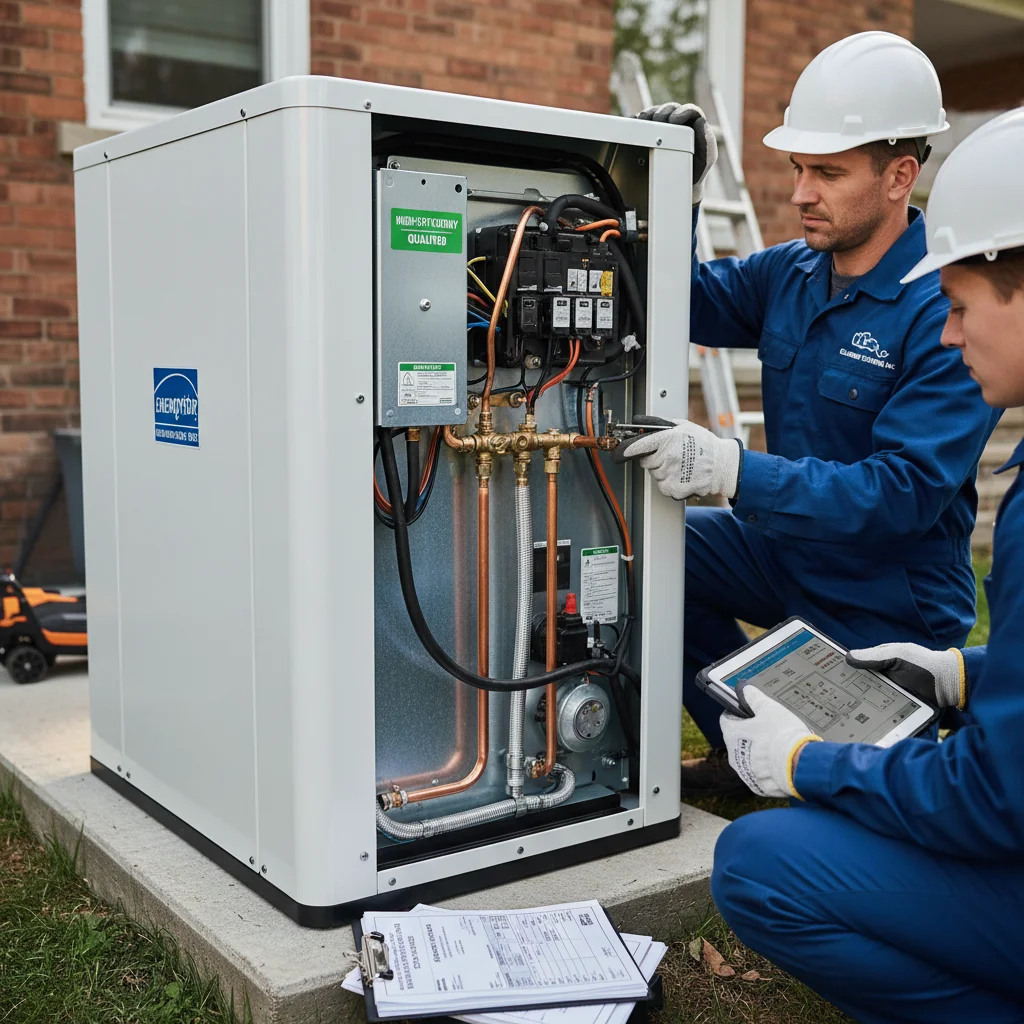
Qualifying expenditures: Navigating IRS guidelines
The Internal Revenue Service (IRS) maintains strict guidelines regarding what constitutes a qualified energy efficiency improvement under Section 25C. The property must be new, expected to remain in use for at least five years, and meet specific energy efficiency standards established by the Department of Energy (DOE) and the Environmental Protection Agency (EPA). Documentation, including manufacturer certification and receipts detailing the cost of the property and installation labor, is mandatory for audit purposes.
Specific attention must be paid to the Minimum Efficiency Requirements (MERs). For example, windows must meet specific Energy Star performance criteria, often related to the U-factor (rate of heat loss) and Solar Heat Gain Coefficient (SHGC). Failure to meet these technical specifications, even if the window is advertised as “energy-efficient,” invalidates the credit claim. Homeowners must verify the specific ratings before purchase.
Key categories of qualified property
The eligible improvements span structural components and mechanical systems, targeting the home’s thermal envelope and primary energy consumers. The most commonly claimed items fall into three groups:
- Building Envelope Components: Insulation materials (fiberglass, cellulose, foam), air-sealing materials (caulking, weather stripping), exterior windows, skylights, and exterior doors. These upgrades are crucial for reducing thermal transfer and are subject to the $1,200 annual cap.
- High-Efficiency Systems: Non-fossil fuel heating and cooling systems, specifically electric or natural gas heat pumps, central air conditioners, and water heaters. These qualify for the higher $2,000 annual cap.
- Home Energy Audits: The cost of a professional home energy audit, which identifies specific energy saving opportunities, is eligible for a credit of up to $150. This small initial investment can guide subsequent, more costly upgrades to ensure maximum ROI.
It is important to note that the credit applies only to the taxpayer’s principal residence in the United States. Rental properties and second homes do not qualify under Section 25C, though other commercial energy credits may apply to business-owned rental units. The emphasis here is on owner-occupied housing stock improvement, aligning with the IRA’s goal of enhancing residential energy independence and reducing the national carbon footprint.
Financial synergies: Combining federal, state, and utility incentives
While the federal tax credit is the largest single incentive, sophisticated financial planning involves stacking this benefit with state tax credits, local property tax exemptions, and utility company rebates. The layering of these incentives can dramatically reduce the net cost of the upgrade, often bringing the effective expense below 50% of the gross cost.
Many state governments offer parallel tax credits or deductions for energy efficiency. For instance, states like Massachusetts and New York provide significant rebates for heat pump installations, often administered through state energy agencies or local utilities. These rebates typically reduce the initial purchase price, while the federal tax credit reduces the final tax bill. The crucial distinction is that federal tax credits are based on the cost after any utility or state rebates are applied, meaning the rebate reduces the basis on which the 30% federal credit is calculated.
The role of utility rebates in capital expenditure reduction
Utility companies, motivated by mandated energy savings goals, frequently offer instant rebates or cash-back programs for the purchase of high-efficiency appliances like heat pumps, smart thermostats, and insulation. These rebates are generally non-taxable income and are immediately factored into the purchase price, easing the upfront capital outlay. For example, a homeowner purchasing a $7,000 qualified heat pump might receive a $1,500 utility rebate, lowering the out-of-pocket cost to $5,500. The federal tax credit would then be 30% of $5,500, or $1,650, leading to a net cost of $3,850. The total savings ($1,500 rebate + $1,650 credit) is $3,150, representing a 45% reduction from the initial $7,000 cost.

Long-term economic analysis: Beyond the immediate tax benefit
The economic justification for energy efficient home upgrades extends far beyond the immediate tax credit. The primary long-term financial benefit is realized through reduced operational expenses, specifically lower utility bills. The Department of Energy estimates that comprehensive retrofits can reduce residential energy consumption by 25% to 50%, depending on the age and initial condition of the home.
In a volatile energy market environment, where natural gas and electricity prices have experienced significant fluctuations due to geopolitical events and supply chain disruptions, reducing consumption acts as a hedge against future price spikes. For a typical American household spending approximately $2,000 annually on energy, a 30% reduction translates to $600 in savings per year. When capitalized over the typical 15-year lifespan of a new HVAC system, this operational saving alone can exceed the initial net investment cost, even before factoring in the tax credit.
Impact on mortgage financing and debt service
Lenders are increasingly recognizing the financial stability associated with energy-efficient homes. Mortgage products like Energy Efficient Mortgages (EEMs) allow borrowers to finance the cost of energy efficiency improvements into their mortgage, often with more favorable terms, recognizing the lower default risk associated with reduced monthly overhead. By lowering utility costs, homeowners improve their debt-to-income (DTI) ratio, a key metric used in mortgage underwriting, potentially allowing them to qualify for better loan terms or a higher principal amount.
- Improved Cash Flow: Reduced monthly utility payments enhance household cash flow, freeing up capital for other investments or necessities.
- Lower Maintenance Costs: New, high-efficiency equipment typically comes with multi-year warranties and lower maintenance requirements compared to aging, inefficient systems.
- Resale Advantage: As demand for sustainable housing grows, the energy efficiency rating becomes a critical market differentiator, accelerating sales velocity and achieving higher sale prices, as noted by researchers at the Lawrence Berkeley National Laboratory.
The combined effect of immediate tax savings, utility rebates, and persistent operational cost reductions creates a powerful financial case for undertaking these capital expenditures prior to the full expiration or modification of the current incentive structure.
The administrative process: Filing Form 5695 correctly
Claiming the Energy Efficient Home Improvement Tax Credit requires the completion and submission of IRS Form 5695, Residential Energy Credits, along with the taxpayer’s Form 1040. Accurate documentation is paramount to withstand potential IRS scrutiny. The form requires taxpayers to break down qualifying expenses by category, ensuring adherence to the specific sub-limits ($600 for windows, $2,000 for heat pumps, etc.).
Taxpayers must retain detailed records for at least three years from the filing date. These records must include:
- Invoices and receipts showing the cost of the property and installation labor.
- The manufacturer’s statement certifying that the property meets the required energy efficiency standards (often available on the manufacturer’s website or from the installer).
- The date the property was placed in service (when installation was complete and the item was ready for use).
Misclassification of expenses is a common error. For instance, the cost of a new roof is generally not a qualified energy efficiency improvement unless the sole purpose is to hold solar panels or the roofing material itself meets specific insulation standards, which is rare. Installation labor costs are generally includible only for the high-efficiency systems (like heat pumps) and for building envelope components, not general installation labor for items like doors or windows.
The distinction between credit and deduction
It is vital to reiterate that this is a non-refundable tax credit. A non-refundable credit means it can reduce the tax liability to zero, but any excess credit cannot be refunded to the taxpayer. This contrasts with refundable credits, like the Earned Income Tax Credit, where the taxpayer receives the remainder as a refund. Therefore, the financial benefit is capped by the taxpayer’s annual tax liability. High-income earners or those with substantial tax obligations are best positioned to fully utilize the maximum $3,200 annual credit.
Future outlook and monitoring legislative changes
While the Inflation Reduction Act secured these credits through 2032, the specific parameters, caps, and eligibility requirements are subject to potential legislative review and modification, particularly as the 2025 election cycle approaches. Financial analysts and policymakers often discuss the potential for future adjustments based on the effectiveness of the current incentives in achieving national energy goals and reducing carbon emissions.
One area of ongoing legislative discussion concerns the integration of these credits with the High-Efficiency Electric Home Rebate Program (HEEHRP), which offers direct, point-of-sale rebates for low- and moderate-income households. While the tax credit (Section 25C) and the HEEHRP rebates generally cannot be claimed for the same expenditure, homeowners must monitor IRS guidance on how the interaction between these two powerful IRA provisions evolves, ensuring they choose the most financially advantageous path based on their income level and project scope. The current window, defined by the clear $3,200 annual cap, offers certainty, making immediate action a fiscally prudent choice.
| Key Factor/Metric | Market Implication/Analysis |
|---|---|
| $3,200 Annual Cap | Encourages multi-year project segmentation to maximize total claimed credit (up to $6,400 over two years). |
| 30% Credit Rate | Directly reduces tax liability, offering a more immediate ROI compared to standard deductions. |
| Non-Refundable Status | Benefit is limited by the taxpayer’s annual tax burden; highest benefit accrues to those with significant tax liability. |
| Utility Bill Reduction (25%-50%) | Provides a persistent hedge against energy price volatility, improving long-term household cash flow and DTI ratios. |
Frequently Asked Questions about the Energy Efficient Home Upgrades Tax Credit
The $3,200 limit resets every January 1st, allowing taxpayers to claim the full amount annually through 2032. To maximize the benefit, homeowners should phase large projects, claiming up to $3,200 in one calendar year and deferring remaining eligible expenses, such as a heat pump installation, until the subsequent year to claim the credit again.
Yes, installation labor costs are generally included for high-efficiency systems like heat pumps and biomass stoves, as well as for certain building envelope components like insulation. However, for items like windows and doors, only the cost of the property itself usually qualifies, reinforcing the need to delineate expenses on Form 5695.
Yes, but the federal tax credit is calculated on the net cost after deducting the utility rebate. If a $5,000 heat pump receives a $1,000 rebate, the tax credit is calculated on the remaining $4,000. Utility rebates are usually non-taxable and reduce the basis for the federal credit calculation, according to IRS guidance.
Taxpayers must retain the manufacturer’s certification statement confirming the property meets DOE/EPA efficiency standards, along with detailed invoices separating the cost of the property from installation labor. This documentation is essential for completing IRS Form 5695 and substantiating the claim in case of an audit.
No, the Energy Efficient Home Improvement Tax Credit (Section 25C) applies exclusively to qualified improvements made to the taxpayer’s principal residence in the United States. Investment properties, second homes, and rentals are ineligible for this specific credit, though they may qualify for other commercial energy tax incentives.
The Bottom Line
The expanded energy efficient tax credit provides a potent, fiscally sound mechanism for homeowners to hedge against rising energy costs, improve home equity, and contribute to national energy goals. With the $3,200 annual maximum resetting each year, the window of opportunity before 2025 requires strategic execution, particularly involving high-cost items like heat pumps, to maximize the total credit claimed. Financial analysis confirms that the combination of the 30% tax credit, utility rebates, and persistent operational savings yields a strong return on investment, mitigating the initial capital expenditure risk. Homeowners should consult certified tax professionals and energy auditors immediately to structure their retrofits, ensuring adherence to IRS Form 5695 requirements and technical specifications before the current legislative certainty potentially shifts.
