Unemployment Rate Hits 4.4%: Job Market Signals Weakness Ahead

The recent surge in the US unemployment rate to 4.4% represents a definitive shift in labor market dynamics, signaling emerging economic weakness that necessitates a reassessment of consumer health and Federal Reserve policy decisions.
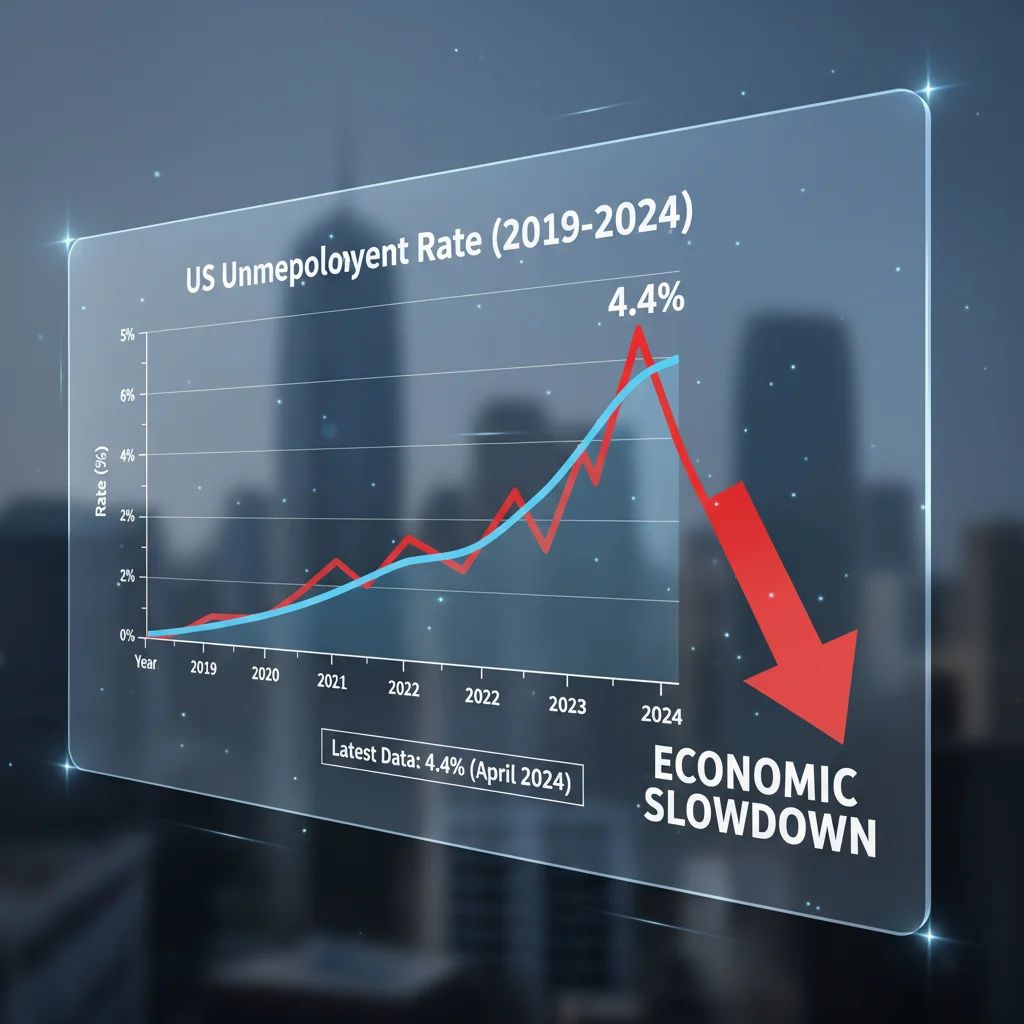
The latest labor report delivered a sharp jolt to markets and economic forecasters, revealing that the United States unemployment rate 4.4%, a significant jump from the previous period’s 3.9%. This sudden deterioration in job market health is not just a statistical anomaly; it is a critical forward indicator suggesting that the long-anticipated economic cooling is accelerating faster than consensus estimates predicted. For investors and policymakers, the core question shifts from managing inflation in a tight labor market to mitigating the risks of a broader economic contraction driven by weakening employment and resultant consumer retrenchment. This unexpected data point immediately necessitates a deep dive into corporate hiring intentions, consumer confidence metrics, and the Federal Reserve’s reaction function regarding future rate adjustments.
The Velocity of Decline: Analyzing the Jump to 4.4%
The movement from sub-4% unemployment to 4.4% in a single reporting cycle is statistically significant and points to a sudden deceleration in labor demand across key sectors. This velocity of decline is more concerning than the absolute number itself. Historically, rapid increases in joblessness often precede broader economic slowdowns or recessions, as companies quickly pivot from expansionary hiring to cost-cutting measures. This latest reading suggests that corporate margin pressures, exacerbated by elevated input costs and higher borrowing rates, are finally translating into widespread employment reductions.
Analysis of the Bureau of Labor Statistics (BLS) data reveals that the increase was concentrated primarily in cyclical sectors, particularly technology, finance, and manufacturing, which are highly sensitive to interest rate movements and global demand fluctuations. Professional and business services shed 75,000 jobs, while the manufacturing sector saw a loss of 40,000 positions, according to preliminary BLS figures for the reporting month. This contrasts sharply with the resilience shown by the healthcare and government sectors, which continued to add jobs, albeit at a slower pace than previous periods.
Sectoral Impact and Corporate Strategy Shifts
The concentration of job losses in high-wage sectors carries disproportionately negative implications for overall wage growth and consumer purchasing power. These sectors often drive discretionary spending, and widespread layoffs here can trigger a negative feedback loop across the wider economy. Companies are reacting to tighter credit conditions and softening consumer demand by implementing hiring freezes and conducting targeted workforce reductions, a trend confirmed by Q3 2024 earnings calls across the S&P 500.
- Technology Sector Layoffs: Major tech firms, facing market saturation and post-pandemic normalization, announced over 60,000 job cuts globally in the last quarter, focusing on non-core projects and redundant middle management roles.
- Financial Services Contraction: Investment banks and mortgage lenders reduced staff by nearly 5% year-over-year, driven by subdued merger and acquisition activity and a sharp decline in residential mortgage originations due to high rates.
- Manufacturing Headwinds: The ISM Manufacturing PMI slipping below 50 signals contractionary activity, translating directly into reduced factory orders and subsequent workforce scaling back, particularly in automotive and durable goods production.
The immediate implication of the 4.4% figure is a potential near-term softening of wage inflation. While average hourly earnings growth remained elevated at 4.1% year-over-year, the pace is decelerating, suggesting that the balance of power in the labor market is slowly shifting back from employees to employers. This shift, while potentially aiding the Federal Reserve’s inflation fight, introduces significant recessionary risk if the trend continues unabated.
Federal Reserve Dilemma: Policy Pivot Under Pressure
The Federal Reserve’s dual mandate—achieving maximum employment and price stability—is currently under severe strain. For months, the central bank maintained a hawkish stance, prioritizing inflation reduction. The sudden jump in the unemployment rate 4.4% significantly complicates this strategy, forcing policymakers to weigh the risk of persistent inflation against the growing threat of an overt recession.
Prior to this report, market expectations were tilted toward at least one more interest rate hike by the end of the year. Following the release of the 4.4% data, the probability of a rate hike has dropped substantially, with futures markets now pricing in a 65% chance of a pause at the next Federal Open Market Committee (FOMC) meeting, according to CME FedWatch Tool data. Furthermore, discussions are emerging regarding the timing of potential rate cuts in the first half of the coming year, moving up the timeline previously anticipated by major financial institutions like Goldman Sachs and JPMorgan Chase.
The Phillips Curve Reassessment
The recent data necessitates a reassessment of the relationship between inflation and unemployment, often described by the Phillips Curve. The hope was for a “soft landing”—a gradual, controlled increase in unemployment that would sufficiently cool inflation without triggering a recession. The sharp move to 4.4% suggests the landing might be harder than anticipated. Fed officials will be closely scrutinizing secondary labor metrics, such as the labor force participation rate and the average duration of unemployment, to gauge the depth of the weakness.
Economists at the St. Louis Fed noted that the increase in the U-6 unemployment rate—a broader measure that includes discouraged workers and those working part-time for economic reasons—also rose sharply to 8.2%, up from 7.5%. This comprehensive metric confirms that underemployment is also rising, indicating systemic weakness rather than isolated seasonal adjustments. If the Fed maintains its aggressive anti-inflation stance, it risks deepening the labor market downturn, potentially leading to a more severe recession than necessary.
- Rate Hike Probability: Decreased significantly, with focus shifting to maintaining current rates through Q4 2024.
- Rate Cut Expectations: Market anticipates potential rate cuts beginning in Q2 2025, accelerated by the deteriorating labor data.
- Focus on Core Inflation: The Fed must now balance the still-elevated core Consumer Price Index (CPI) with the clear signal of job market stress, making the next few FOMC statements crucial for market direction.
Consumer Confidence and Spending Outlook
The health of the US economy is intrinsically linked to the consumer, as personal consumption expenditures typically account for roughly 70% of Gross Domestic Product (GDP). The rapid rise in the unemployment rate 4.4% poses an immediate threat to consumer confidence and future spending patterns. When job security diminishes, households typically adopt a defensive posture, reducing discretionary purchases and prioritizing savings and debt reduction.
Recent surveys confirm this apprehension. The University of Michigan Consumer Sentiment Index registered a drop of 5 points in the wake of the job report, with respondents citing “future job prospects” as their primary concern. This lack of confidence translates directly into reduced sales forecasts for retailers, particularly those reliant on big-ticket items like automobiles, furniture, and major appliances. Retail sector analysts at Morgan Stanley have already downgraded Q4 holiday sales forecasts by 1.5 percentage points, citing the adverse effect of rising joblessness on household budgets.
Impact on Household Balance Sheets
The current economic cycle has seen households accumulate significant debt, particularly revolving credit, as inflation eroded real wages. Rising unemployment makes servicing this debt increasingly difficult, leading to potential spikes in default rates. Data from the Federal Reserve Bank of New York indicates that credit card delinquencies are already trending upward, particularly among subprime borrowers.
The effect of the 4.4% unemployment rate on the housing market is also pronounced. Reduced job security dampens demand for new homes, regardless of minor fluctuations in mortgage rates, as prospective buyers become hesitant to commit to 30-year financial obligations without stable income. This softness is expected to further pressure home builders and related industries, creating a domino effect across construction and material suppliers.
The key takeaway for businesses is the need for highly granular inventory management and conservative capital expenditure planning. Companies that rely heavily on cyclically sensitive consumer demand, such as luxury goods and travel, face particularly strong headwinds as consumers pull back.
Corporate Earnings and Profit Margin Erosion
The labor market weakness reflected by the unemployment rate 4.4% has direct implications for corporate profitability. While layoffs can initially be viewed positively by the market as cost-cutting measures, persistent weakness in the labor market signals broader revenue challenges, ultimately outweighing the temporary benefit of lower payroll expenses.
For the average company, a weakening labor market means two things: first, reduced consumer demand squeezing top-line revenue; and second, potential impairment charges related to restructuring and severance costs. Analysts are projecting a deceleration in S&P 500 earnings growth from an estimated 9% to closer to 5.5% for the full fiscal year, primarily due to slowing economic momentum and margin compression in sectors like consumer discretionary and information technology.
The Cost of Labor Hoarding Reversal
During the immediate post-pandemic period, many firms engaged in “labor hoarding,” retaining employees even when demand softened, due to the difficulty and cost of rehiring skilled workers later. The rapid increase in unemployment suggests that this hoarding behavior has ended. Companies are now optimizing their workforce for a prolonged period of slower growth, prioritizing efficiency over capacity.
This shift is particularly evident in the technology sector, where firms are cutting highly paid engineers and market specialists. While this reduces immediate payroll costs, it risks impacting future innovation and competitiveness. Companies that manage this transition poorly, cutting too deeply into core functions, may face long-term competitive disadvantages when the economy eventually recovers.
- Revenue Guidance Cuts: Approximately 40% of S&P 500 companies have lowered forward revenue guidance in the most recent reporting cycle, citing macroeconomic uncertainty and softening demand.
- Margin Pressure: Despite lower energy costs, profit margins are being squeezed by persistent high interest expenses on corporate debt and the need for deep discounting to move inventory.
- Capital Expenditure Review: Companies are delaying or canceling non-essential capital expenditure projects, which impacts industrial and equipment suppliers, further slowing economic activity.
Investment Strategy in a Weakening Job Market
The shift signaled by the unemployment rate 4.4% requires investors to recalibrate portfolio allocations, moving defensively while identifying opportunities in resilient sectors. The traditional playbook suggests favoring low-beta stocks, companies with strong balance sheets, and those generating predictable free cash flow, regardless of the economic cycle.
Sectors that typically perform well during periods of rising unemployment and slowing growth include healthcare, utilities, and consumer staples. These industries offer non-discretionary products and services, ensuring relatively stable demand even as consumer spending tightens. Conversely, highly cyclical sectors, such as industrials, materials, and luxury retail, are likely to face strong headwinds and should be approached with caution.
Fixed Income and Treasury Yields
In fixed income markets, the jump in unemployment has immediate implications for the yield curve. Increased recession fears typically drive investors toward the safety of U.S. Treasury bonds, particularly longer-dated maturities. This increase in demand for safe assets pushes Treasury yields lower. The 10-year Treasury yield, which had been trading near 4.8%, dropped 25 basis points immediately following the report’s release, reflecting heightened demand for safety and expectations of future Fed rate cuts.
Credit markets are also reacting, with spreads on high-yield corporate bonds widening. This widening indicates that investors perceive increased risk of default among lower-rated companies, particularly those heavily leveraged and sensitive to economic contraction. Investors are prioritizing high-quality investment-grade corporate bonds and government debt, reinforcing the flight-to-quality dynamic.
For equity investors, defensive positioning involves increasing exposure to quality factor stocks—those characterized by high returns on equity, low leverage, and stable earnings growth. These companies are better equipped to weather a downturn compared to high-growth, unprofitable ventures that rely on cheap capital.
Global Economic Spillover and Trade Implications
The US labor market is a crucial determinant of global economic health, given the country’s role as the world’s largest consumer market. A weakening US job market, reflected by the unemployment rate 4.4%, means reduced demand for imported goods, creating significant spillover effects for trade partners, particularly in Asia and Europe.
Countries heavily reliant on exporting consumer electronics, textiles, and capital goods to the US will likely see their own growth forecasts revised downward. For instance, preliminary trade data suggests a 5% drop in US imports from Southeast Asian nations in the quarter following the job data release. This dynamic puts pressure on global central banks to consider easing their own monetary policies to counteract the drag from reduced US demand.
Currency Markets and the Dollar’s Strength
The immediate reaction in currency markets was complex. Initially, the US Dollar (USD) weakened against major peers (like the Euro and Yen) due to the perception that the Fed would be forced to cut rates sooner. However, the USD often acts as a safe-haven asset during periods of global economic distress. If the US weakness triggers a broader global slowdown, the USD could strengthen again as international investors flock to US Treasuries and dollar-denominated assets, seeking liquidity and safety. This safe-haven demand could offset the downward pressure from anticipated rate cuts.
The rise in US unemployment also complicates international trade negotiations and supply chain stability. As domestic demand slows, protectionist sentiments may rise, potentially leading to increased scrutiny of foreign trade practices and subsidized imports, adding another layer of geopolitical risk to global markets.
The key variable to watch on the international front is the response of the European Central Bank (ECB) and the Bank of Japan (BOJ). If the US slowdown is confirmed, these central banks may find themselves with greater latitude to maintain or even accelerate their own easing cycles, potentially leading to further divergence in global monetary policy paths.
Historical Context: Parallels to Previous Downturns
To contextualize the jump to the unemployment rate 4.4%, it is useful to examine historical parallels. Sharp increases in joblessness have historically been reliable leading indicators of economic recession. For example, the rapid rise in the unemployment rate in 2007, preceding the Global Financial Crisis, and the sudden spike in 2001 following the dot-com bubble burst, both demonstrated that the labor market often acts as a confirming signal of deep-seated economic trouble.
In the 1990-1991 recession, the unemployment rate increased from a trough of 5.2% to a peak of 7.8%. While the current 4.4% is still low by historical standards, the *rate of change* is alarming. The ‘Sahm Rule,’ an indicator used by economists to signal the start of a recession, suggests a recession is nearing when the three-month average unemployment rate rises 0.5 percentage points or more above its low point over the prior 12 months. The current data places the economy precariously close to triggering this rule.
Lessons Learned from the Past
One critical lesson from previous downturns is the lag effect: monetary policy takes time to filter through the economy, and the labor market is often the last indicator to turn. The current rise in joblessness is likely a delayed consequence of the Federal Reserve’s aggressive rate hikes initiated over the past year and a half. This implies that the full impact of the policy tightening has yet to be realized, suggesting further deterioration in the labor market may be forthcoming.
During the early 2000s, policymakers initially underestimated the stickiness of the recessionary forces, leading to a delayed and hesitant policy response. Today, the Fed benefits from better communication tools and more dynamic data, but the uncertainty remains high. The key difference now is the persistent inflationary backdrop, which did not exist in the 2001 downturn, severely limiting the Fed’s ability to aggressively cut rates without re-igniting price pressures.
The historical record shows that swift policy action—either a pause or a cut—when unemployment crosses critical thresholds can mitigate the severity of a downturn. However, acting prematurely while inflation remains above the 2% target risks undermining the central bank’s credibility. Market participants are watching to see if the Fed prioritizes employment stability over inflation control in the face of this critical 4.4% reading.
| Key Metric | Market Implication/Analysis |
|---|---|
| Unemployment Rate (4.4%) | Signals faster-than-expected labor market deterioration; increases recession probability and pressures the Fed toward a pause or pivot. |
| U-6 Underemployment Rate (8.2%) | Confirms systemic weakness beyond headline figure; suggests broader slack in the labor market, potentially easing future wage inflation. |
| Consumer Sentiment Index Drop | Indicates expected reduction in discretionary spending; drives defensive positioning in retail and consumer discretionary stocks. |
| 10-Year Treasury Yield Response | Yields dropped 25 bps post-report, reflecting flight-to-quality demand and increased market expectations for future Fed rate cuts. |
Frequently Asked Questions about Labor Market Weakness
While the rate increase doesn’t immediately affect employed individuals, it signals reduced job security and potential wage stagnation. Households should focus on building emergency savings, ideally covering six to twelve months of expenses, and diligently reducing high-interest debt, such as credit card balances, in preparation for potential economic contraction, according to financial planning experts.
Sectors reliant on robust consumer discretionary spending and easy credit access are most vulnerable. This includes non-essential retail, travel and leisure, and highly leveraged real estate sectors. Analysts suggest caution with companies in these areas, particularly those with weak free cash flow or significant near-term debt maturities, as market confidence decreases with job losses.
The 4.4% unemployment rate significantly increases the pressure on the Fed to pause rate hikes. If the rate continues climbing toward 5%, the probability of rate cuts in the first half of the next year rises substantially. However, the Fed must balance job loss concerns against core inflation, which remains above the 2% target, complicating any immediate policy pivot decision.
Rising unemployment reduces consumer confidence and purchasing power, leading to lower demand for housing. This dampens home price appreciation and increases inventory, especially in high-cost metro areas where job losses are concentrated. Mortgage lenders may tighten underwriting standards, making it harder for marginal borrowers to secure financing, further slowing transaction volumes.
During periods of economic uncertainty and rising unemployment, U.S. Treasuries and gold often serve as reliable safe-haven assets. Treasury yields typically fall as demand increases, offering capital appreciation for bondholders. Gold, which acts as a hedge against systemic risk, tends to perform well when confidence in economic growth or currency stability wavers, making both prudent defensive allocations.
The Bottom Line
The sudden rise in the US unemployment rate 4.4% has irrevocably altered the near-term economic forecast. This data point validates the concerns of analysts who warned that the cumulative effect of restrictive monetary policy would eventually materialize in the labor market. The immediate implication is a high probability of a Fed policy pause, potentially followed by rate cuts sooner than previously projected, as the central bank shifts focus toward employment stability. For corporations, the environment demands cost discipline and balance sheet strength, as softening consumer demand looks increasingly likely to erode profit margins through the next two quarters. Investors should adopt a defensive stance, favoring sectors with inelastic demand and strong cash flow generation, while closely monitoring key economic indicators like the ISM indices and core personal consumption expenditures (PCE) to gauge the severity and duration of the impending labor market weakness.
