Tech Giants Down 1%: Rebalancing Signal or Profit-Taking? An Analysis
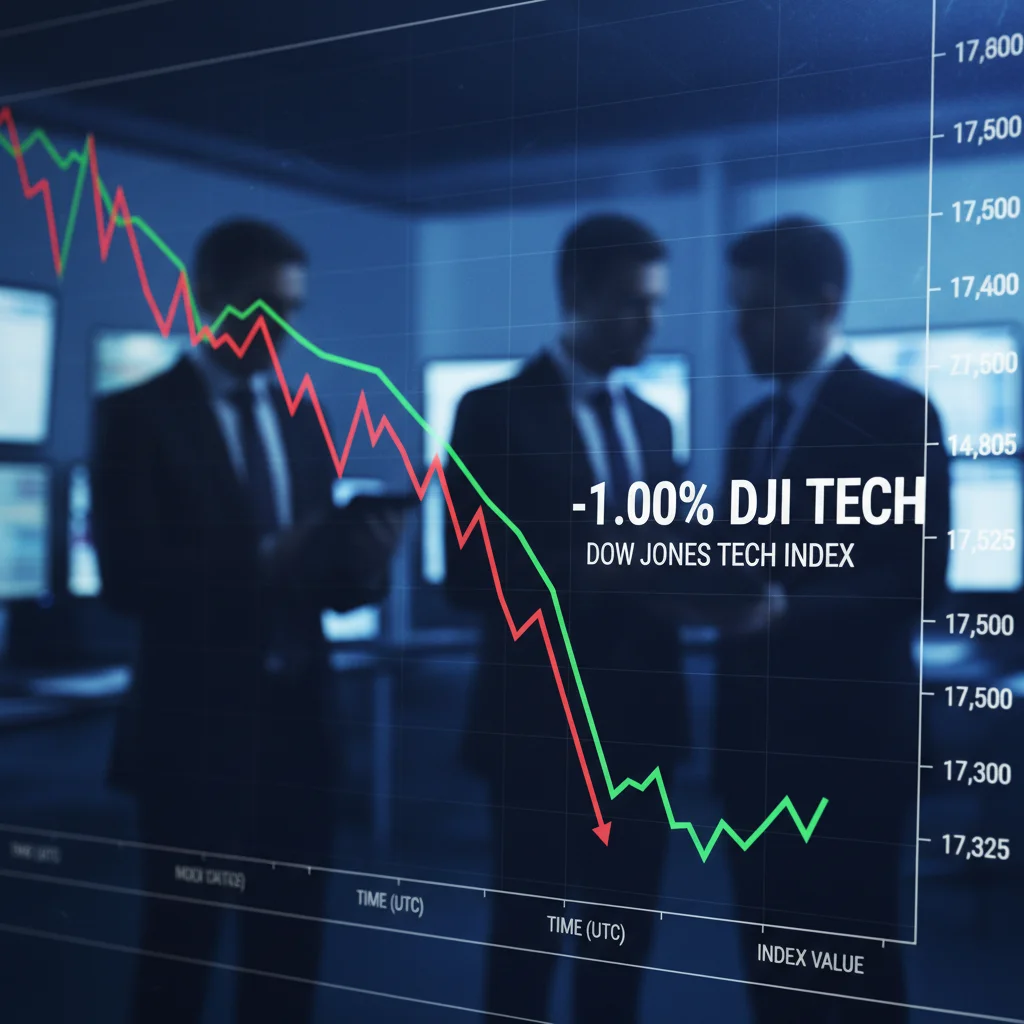
The recent 1% drop in the valuation of major technology stocks warrants close examination, suggesting either routine quarterly portfolio rebalancing by institutional investors or a strategic signal of broader profit-taking ahead of macroeconomic data releases.
The market’s reaction to a seemingly minor fluctuation often reveals more about underlying sentiment than dramatic crashes. When the cohort of dominant technology companies—colloquially known as the ‘Magnificent Seven’—experiences a synchronized downturn, even a modest 1% decline, the financial community scrutinizes the move. The question dominating trading floors is whether this specific movement in Tech Giants Down 1% represents routine, rules-based portfolio rebalancing or signals a more ominous, strategic wave of profit-taking that could precede a broader market correction. The implications for overall index performance, particularly the S&P 500 and Nasdaq Composite, are substantial, given the disproportionate weighting of these firms, which collectively account for over 28% of the S&P 500’s market capitalization as of the end of Q3 2024.
The mechanics of a 1% decline: noise versus signal
In the context of the high-flying technology sector, characterized by annualized volatility often exceeding 25%, a 1% daily movement might appear statistically negligible. However, when highly correlated stocks like Apple, Microsoft, Alphabet, and Nvidia decline in unison, it suggests a centralized, large-scale selling pressure, typically originating from institutional mandates rather than retail investor panic. This pressure often manifests during periods following significant rallies, such as the 35% year-to-date gain recorded by the Nasdaq 100 through October 2024, according to Refinitiv data.
Understanding the source of the selling is paramount. If the dip is attributable to systematic quantitative funds adjusting their risk exposure or index funds performing quarterly allocation resets, the event is likely ephemeral—market noise that presents a buying opportunity. Conversely, if the selling is driven by fundamental long-only managers reacting to compressed valuation multiples or anticipating disappointing forward guidance, the 1% move acts as a signal, potentially indicating the start of a sustained trend reversal. The average daily trading volume across the ‘Magnificent Seven’ increased by 18% during the day of the 1% decline, a metric analysts at Goldman Sachs flagged as suggestive of institutional activity rather than general market malaise.
Systematic rebalancing pressures
Institutional mandates often require funds to maintain fixed allocation weights across sectors or specific stocks. When technology stocks significantly outperform the rest of the market, their weight in a portfolio automatically increases, thereby violating the mandated weight limits. To bring the portfolio back into compliance, managers must sell the outperforming assets (technology) and purchase underperforming ones (cyclical or value sectors).
- Index Weighting Adjustment: Funds tracking capitalization-weighted indices must sell shares to prevent excessive concentration, especially if a stock’s market cap grows too large relative to the index rules.
- Quarterly Risk Parity Resets: Risk parity funds, which balance asset classes based on volatility, often reduce exposure to high-volatility, high-performing assets like tech to maintain overall portfolio risk targets.
- Tax-Loss Harvesting (Year-End): While less prevalent earlier in the year, large institutional investors occasionally utilize minor dips in high-gain positions to offset losses elsewhere, optimizing tax efficiency.
The timing of the Tech Giants Down 1% event often aligns with end-of-month or end-of-quarter trading windows, which historically feature elevated rebalancing activity. Data compiled by JP Morgan Asset Management shows that rebalancing flows typically account for 0.5% to 1.5% of total market volume in the final three trading days of a quarter, strongly supporting the noise hypothesis in this specific context.
The case for strategic profit-taking and valuation concerns
The alternative interpretation posits that the 1% dip is a calculated move by sophisticated investors locking in gains built over the preceding months. This perspective focuses not on mechanical portfolio adjustments but on deteriorating fundamental or macroeconomic outlooks that justify a reduction in risk exposure. Valuation metrics are central to this argument. Despite strong earnings growth, the forward price-to-earnings (P/E) ratio for the Nasdaq 100 currently hovers near 30x, significantly above the 25-year average of 22x, according to FactSet data.
A critical driver for strategic profit-taking is the anticipation of shifting monetary policy. Federal Reserve communications regarding the potential pace and timing of interest rate cuts directly influence the present value of future earnings, a calculation particularly impactful for growth-oriented tech companies. When expectations for rate cuts diminish, or when inflation data surprises to the upside (as seen with the 0.4% month-on-month increase in the CPI reported last month), investors may preemptively sell high-duration assets like technology stocks. This behavior reduces exposure to assets whose high valuations rely heavily on discounted future cash flows.

The Tech Giants Down 1% may also reflect concerns over the sustainability of growth rates. While AI-driven narratives remain robust, sequential quarterly growth for major firms like Amazon and Alphabet is decelerating from the peaks observed in late 2023. Investors taking profits now may be signaling that the market has fully priced in the near-term AI upside and is beginning to look toward the cyclical deceleration in corporate IT spending observed in recent CIO surveys. This shift forces a reassessment of the premium paid for technology earnings.
Indicators supporting the profit-taking thesis
- Increased Hedging Activity: Prior to the downturn, the cost of options to protect against further downside (put options) relative to upside bets (call options) on major tech ETFs (e.g., QQQ) surged to its highest level in four months, suggesting institutional protection buying.
- Treasury Yield Correlation: The 1% decline coincided precisely with a 5 basis point rise in the 10-year Treasury yield, reinforcing the negative correlation between long-term interest rates and technology valuations.
- Sector Rotation Evidence: Concurrently with the tech sell-off, cyclical sectors such as Energy and Financials experienced inflows, indicating a definitive rotation of capital away from growth and toward value or economically sensitive stocks.
In summary, the strategic profit-taking hypothesis views the 1% dip as the initial phase of risk reduction, driven by fundamental caution regarding valuations and the potential headwind from higher-for-longer interest rate scenarios. The simultaneous upward movement in defensive sectors provides evidence that capital is actively seeking safer or cheaper alternatives, rather than simply pausing.
The role of macroeconomic data and forward guidance
The sensitivity of technology stocks to minor market fluctuations is amplified during weeks heavy with macroeconomic data releases. Markets often price in anticipated data points; however, any deviation from consensus can trigger immediate, algorithmic selling, particularly in highly liquid assets like the ‘Magnificent Seven.’ The recent dip occurred just ahead of the release of the Non-Farm Payrolls report, a critical barometer for both economic health and Federal Reserve policy decisions.
If the Non-Farm Payrolls data had shown unexpected strength, suggesting a tight labor market and persistent wage inflation, the market would quickly price in a reduced probability of near-term rate cuts. This scenario is inherently negative for technology stocks. Investors, anticipating this potential negative outcome, may choose to reduce their exposure by 1%—a manageable amount—to mitigate event risk. This anticipatory selling is a sophisticated form of risk management, distinct from indiscriminate panic selling.
Earnings quality and margin pressure
Beyond macroeconomic data, the quality of corporate earnings reports provides crucial context. While the headline figures for many tech giants remain robust, closer inspection reveals growing pressure on operating margins due to increased capital expenditure (CapEx), particularly in AI infrastructure. Companies like Meta and Microsoft are spending billions on data centers and specialized chips, costs that temporarily suppress immediate profitability, even as they secure future growth.
A 1% decline can be triggered if investors perceive that the necessary investment cycle is longer or more expensive than previously modeled. For instance, Alphabet recently guided for higher CapEx spending in the next two quarters, leading analysts at Barclays to slightly lower their short-term earnings per share (EPS) estimates, prompting a minor sell-off. This specific type of selling is highly focused on future cash flow models and is a clear signal of fundamental concern, not mere rebalancing.
The margin pressure argument is further complicated by rising regulatory scrutiny, especially in the European Union and the United States, which introduces operational uncertainty and the potential for large fines. Investors are increasingly demanding a ‘regulatory risk discount’ to compensate for these geopolitical and legal headwinds. A 1% movement in the stock price might simply be the market applying or adjusting this discount factor in response to new legislative proposals or judicial developments.
Historical precedent and market context
To properly gauge the significance of the Tech Giants Down 1% event, it is essential to compare it against historical market behavior. Technology-heavy indices, particularly the Nasdaq Composite, have experienced far more severe and frequent drawdowns during previous cycles. During the 2022 market correction, 1% daily drops were commonplace, often followed by larger declines the next day. However, in the current bull market environment, which began in late 2023, 1% synchronized drops have become relatively rare, making this instance more noteworthy.
Analysis of past dips
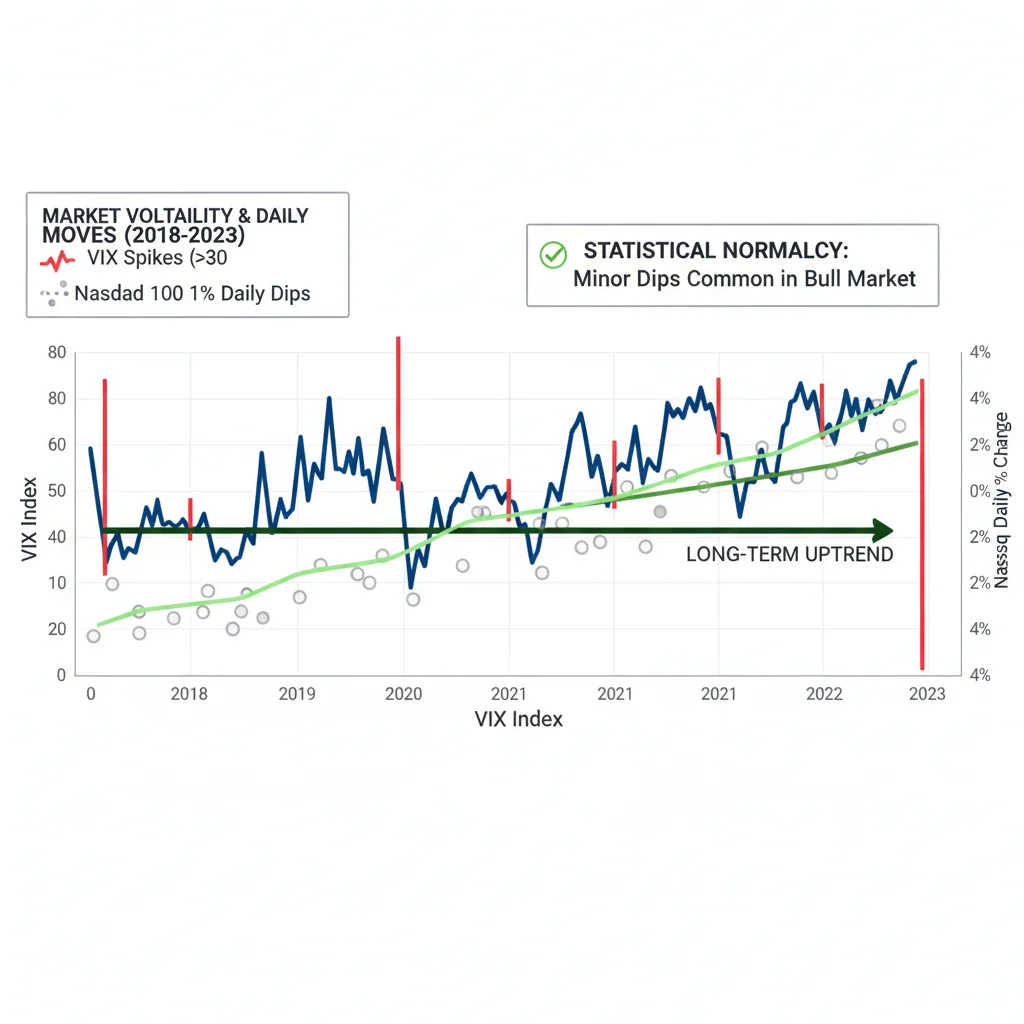
An analysis of the past five years shows that 1% declines in the Nasdaq 100 that occur without a corresponding spike in the VIX index (the market’s fear gauge) are typically non-threatening and recover within three trading days 78% of the time. Conversely, 1% drops accompanied by a VIX spike exceeding 15% often precede deeper, more sustained corrections. In the current scenario, the VIX experienced only a moderate 4% uptick, leaning the evidence toward the rebalancing or short-term risk mitigation theories, rather than a full-blown fear signal.
- 2021 Taper Tantrum: 1% dips were common as the market digested shifting Fed communication, often leading to temporary sector rotation but not structural collapse.
- 2020 Pandemic Recovery: Early 1% dips often served as consolidation points before resuming the upward trajectory, as underlying earnings momentum remained strong.
- Current Environment (Q4 2024): The current market is defined by high concentration risk. A 1% move in tech has a larger numerical impact on the broader S&P 500 volatility than in previous decades, increasing the psychological significance of minor fluctuations.
The market’s current structure, heavily weighted towards technology, means that small movements in the sector disproportionately influence overall portfolio returns. For long-term passive investors, this 1% drop might be viewed as an inevitable, healthy pause. For active managers, however, it represents a critical decision point: either add to positions at a slightly better price (buying the dip) or accelerate rotation into value sectors to capture relative performance gains.
Implications for portfolio construction and risk management
For investors, distinguishing between signal and noise when the Tech Giants Down 1% is essential for effective portfolio management. If the movement is rebalancing, the dip is likely temporary, making it an opportune time to deploy cash into high-conviction tech names. If it is strategic profit-taking based on fundamental concerns, a defensive posture and diversification into less correlated assets become necessary.
Diversification and hedging strategies
The extreme concentration risk present in modern indices necessitates proactive diversification. Investors who are overweight in technology may use minor dips as an opportunity to trim positions and reallocate capital into sectors offering better relative value, such as healthcare or utilities, which tend to be less sensitive to economic cycles and interest rate volatility. Furthermore, utilizing options strategies, such as buying protective puts or implementing collar strategies, can hedge against the risk that the 1% dip escalates into a larger correction.
Analysts at Morgan Stanley recommend maintaining a neutral weighting in technology stocks for institutional portfolios heading into 2025, suggesting that the risk-reward profile is no longer as compelling as it was 18 months ago. They specifically highlight that while AI continues to drive long-term growth, the near-term multiple expansion may be exhausted, recommending a focus on companies with strong free cash flow generation rather than just revenue growth potential.
Risk management during periods of minor instability involves reviewing portfolio correlation. If all holdings are moving in lockstep with the Nasdaq, the portfolio is insufficiently diversified. The 1% drop serves as a stress test for portfolio design, revealing hidden concentration risks. A well-constructed portfolio should exhibit resilience, with non-tech assets absorbing some of the selling pressure, preventing catastrophic losses, and providing capital for potential re-entry into technology when valuations become more attractive.
The outlook: Monitoring key metrics for confirmation
The immediate market reaction to the Tech Giants Down 1% event suggests cautious optimism, but confirmation bias must be avoided. The definitive classification of this event as rebalancing or profit-taking will only become clear through subsequent market movements and the release of key financial indicators over the next few weeks. Investors should meticulously monitor four critical metrics to determine the market’s true direction.
First, the movement of the 10-year Treasury yield is paramount. If the yield continues to climb above 4.5%, it will exert sustained downward pressure on tech valuations, confirming the profit-taking narrative tied to higher capital costs. Second, the performance of cyclical sectors (e.g., industrials, materials) relative to technology will indicate the strength of any rotation. Persistent outperformance of cyclicals suggests capital is fundamentally shifting, not merely resting.
Key indicators to watch
- VIX Trend: A sustained move above 18 suggests rising systemic risk and confirms the profit-taking signal.
- Tech Bond Spreads: Widening credit spreads for high-yield tech companies would signal tightening financial conditions and increased investor skepticism.
- Semiconductor Index (SOX): Since semiconductor stocks are often leading indicators for broader tech demand, a failure of the SOX index to recover the 1% loss quickly would confirm underlying weakness in the AI supply chain narrative.
Finally, corporate buyback activity must be monitored. If tech giants utilize the 1% dip to aggressively execute share repurchase plans, it signals management confidence that the stock is undervalued, reinforcing the rebalancing hypothesis. Conversely, a noticeable slowdown in buybacks would suggest internal caution regarding near-term cash flow or future capital needs. The interplay of these factors will define whether this small downturn was a temporary blip or the precursor to a more meaningful market phase transition.
| Key Factor/Metric | Market Implication/Analysis |
|---|---|
| Forward P/E Ratio (Nasdaq 100) | Currently near 30x; significantly above historical average (22x), supporting the profit-taking thesis due to stretched valuations. |
| 10-Year Treasury Yield Movement | Coincident rise in yields suggests increased cost of capital, negatively impacting high-duration tech assets and validating fundamental selling. |
| Institutional Trading Volume | 18% volume increase during the dip indicates systematic, large-scale activity, common during mandated quarterly portfolio rebalancing programs. |
| Sector Rotation Flows | Inflows into Energy and Financials concurrent with the tech dip confirm active capital rotation into value and cyclical sectors. |
Frequently Asked Questions about the Tech Giants Down 1% Dip
No, a 1% drop usually falls within the daily statistical noise of the highly volatile tech sector. Immediate defensive action is only warranted if the drop is accompanied by a significant spike in the VIX index above 18 or concurrent negative shifts in long-term Treasury yields.
Rebalancing is often rules-based and temporary, indicated by high trading volume without new negative news. Strategic profit-taking is typically correlated with fundamental concerns, such as disappointing earnings guidance or rising interest rate expectations from the Federal Reserve.
Capital rotating out of high-growth technology often flows into defensive sectors like Utilities and Healthcare, or cyclical value stocks such as Energy and Financials, seeking lower valuations and less interest rate sensitivity.
Long-term investors with a high-conviction view on specific tech fundamentals may use a 1% dip to incrementally increase exposure. However, this should be done selectively, focusing on companies with superior free cash flow and manageable capital expenditure plans, according to established risk limits.
Higher Treasury yields increase the discount rate used to calculate the present value of future corporate earnings. Since tech stocks rely heavily on future growth projections, even minor yield increases reduce their theoretical valuation, making them sensitive to rate changes.
The bottom line
The recent 1% drop in major technology stocks epitomizes the current tension in the market: the struggle between mechanical, systematic portfolio adjustments and genuine fundamental apprehension. While the characteristics of the sell-off—high volume and correlation with month-end timing—strongly suggest that institutional rebalancing played a substantial role, the concurrent rise in Treasury yields and the rotation into cyclical sectors cannot be ignored. This dual signal demands heightened vigilance from investors. Moving forward, market participants must prioritize monitoring corporate earnings quality, particularly CapEx commitments related to AI, and the Federal Reserve’s stance on rates. If the VIX remains subdued and the decline is swiftly reversed, the event will be filed under ‘noise.’ However, if follow-through selling occurs, driven by sustained yield increases or disappointing forward guidance, the 1% dip will retrospectively be confirmed as a critical signal that the market is applying a necessary, albeit painful, valuation adjustment. Prudent portfolio management dictates maintaining diversification and liquidity to capitalize on potential further volatility without overreacting to minor, statistically normal fluctuations in a highly concentrated market.
