Holiday Sales Growth Hits 4% in 2025: The Low-Income Drag
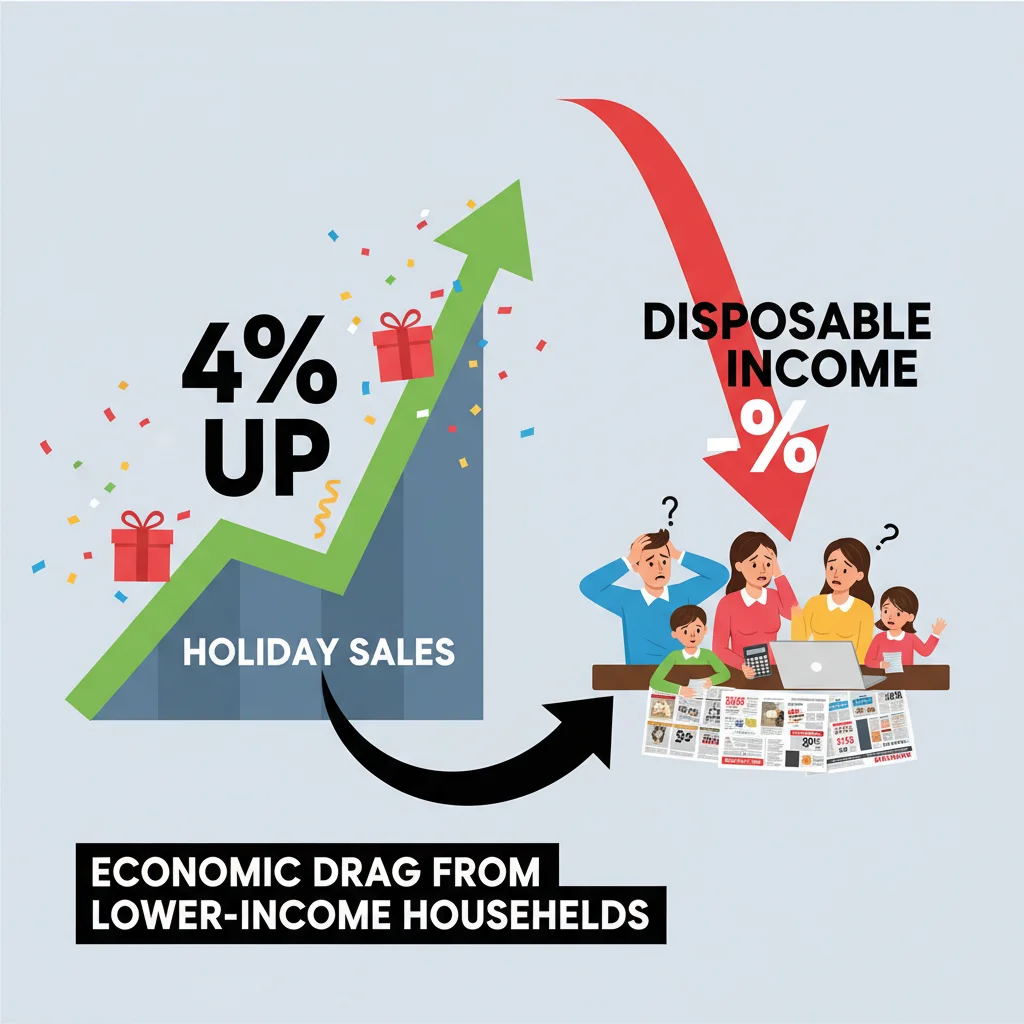
While projections indicate a 4% increase in 2025 holiday sales, this aggregate growth masks a critical divergence, with high-income spending offsetting deepening financial constraints and rising revolving debt among the lower-income households, impacting the breadth of the retail recovery.
The consensus forecast for 2025 holiday sales suggests growth of approximately 4%, positioning the retail sector for a modest but firm expansion following uneven performances in prior periods. However, a deeper analysis reveals that this headline figure obscures a significant structural challenge: the pronounced pullback by holiday sales growth among lower-income households. This bifurcation, driven by persistent inflation eroding real wages and a heavy reliance on high-interest consumer debt, threatens the overall health and sustainability of the retail sector, demanding granular attention from investors and corporate strategists.
The 2025 Retail Forecast: Aggregate Growth, Underlying Strain
The macroeconomic environment heading into the 2025 holiday season is characterized by a resilient labor market, particularly at the higher end of the wage spectrum, coupled with inflation that, while cooling from peak levels, remains sticky in essential categories like food, shelter, and energy. According to the National Retail Federation (NRF) and numerous independent banking forecasts, the projected 4% year-over-year increase in holiday sales—spanning November and December—is primarily predicated on continued strength in affluent consumer segments and price increases rather than volume expansion across all demographics. This means that while total dollar sales rise, the average American consumer may not be purchasing more, but simply paying higher prices for the same basket of goods.
Economists at JPMorgan Chase noted in their Q3 2025 economic outlook that the top quartile of earners continued to exhibit robust spending patterns, largely insulated from the Federal Reserve’s restrictive monetary policy. This group, benefitting from appreciating asset values and stabilized labor income, is expected to drive demand for premium and discretionary items. Conversely, the bottom two quartiles face a persistent erosion of purchasing power. The crucial question for retail executives is not merely the size of the 4% increase, but the distribution of that spending, a factor that determines which subsectors, from luxury to deep discount, will capture the majority of the wallet share.
Inflation’s Asymmetric Impact on Consumer Budgets
Inflation, measured by the Consumer Price Index (CPI), showed a 3.5% annualized rate as of September 2025, but the costs of necessities like groceries (up 5.1%) and rent (up 6.2%) far outpaced the average wage gains for lower-income workers, which averaged around 3.8% over the same period. This discrepancy forces these households to dedicate a disproportionately large share of their budget to non-discretionary spending, leaving minimal residual funds for holiday purchases. This phenomenon is often referred to as the ‘inflation tax’ on the poor, as essential goods consume a greater portion of their fixed income base.
- Real Wage Declines: For the lowest quintile of earners, inflation-adjusted (real) wages have declined by an estimated 1.5% since the beginning of 2024, according to proprietary data from the Federal Reserve Bank of New York.
- Essential Goods Pressure: The percentage of disposable income spent on food and housing by the lowest 20% of earners reached a five-year high of 58% in mid-2025, severely limiting holiday discretionary capacity.
- Trade-Down Effect: Lower-income consumers are actively trading down from national brands to private labels, and from mid-tier retailers to dollar stores, shifting sales volume away from traditional department stores and mass merchants like Target and Walmart, which rely on broader demographic participation for robust holiday results.
The implication is clear: the 4% growth figure for 2025 retail sales is fundamentally a dollar-value growth story, not a volume-based recovery. Retailers focusing on value and essential items, such as Costco and certain grocery chains, are likely to outperform those dependent on high-margin discretionary items aimed at the middle and lower-middle classes, who are currently the most squeezed by the current economic dynamics.
The Debt Burden: Revolving Credit and Financial Fragility
A primary indicator of the financial stress among lower-income households is the dramatic increase in consumer debt, especially high-interest revolving credit. As of Q3 2025, total U.S. consumer credit card debt surpassed $1.4 trillion, a record high. More critically, the delinquency rate for credit cards among subprime borrowers (those with FICO scores below 620) surged to 9.5%, according to the latest data from the American Bankers Association (ABA), marking the highest level since 2010.
This reliance on credit card financing is a double-edged sword for the holiday season. While some spending is pulled forward, artificially boosting near-term sales figures, the subsequent interest payments compound the financial strain, often leading to a sharp drop-off in discretionary spending immediately following the holidays. For the lower-income segment, using credit to finance holiday gifts is not a choice of convenience but a necessity, effectively mortgaging future consumption at interest rates that often exceed 25% APR, trapping them in a cycle of debt.
The Cost of Capital and Rising Minimum Payments
The Federal Reserve’s prolonged campaign of quantitative tightening and high federal funds rates has pushed the average credit card interest rate near 22%. For financially fragile households, this high cost of capital means a significantly larger portion of their monthly payment goes toward interest, rather than principal reduction. This reduces their effective disposable income further, creating a structural headwind against robust consumption growth.
- Debt Service Ratio: The household debt service ratio for the bottom quartile of incomes has risen by an estimated 150 basis points over the past two years, reflecting higher interest costs and diminishing capacity to take on new credit.
- Buy Now, Pay Later (BNPL) Risk: While BNPL services initially offered an alternative to traditional credit, default rates in this sector have also climbed sharply, particularly among lower-income users, suggesting that even short-term, interest-free financing is becoming unsustainable for many.
- Savings Depletion: Pandemic-era excess savings, which briefly cushioned consumer spending, are now largely depleted for the majority of lower-income households. The median checking account balance for the bottom 50% of earners is now below pre-pandemic levels in real terms, according to Bank of America transaction data.

The sustained elevation of debt servicing costs acts as a direct headwind to the realization of the 4% holiday sales growth forecast. If a significant percentage of lower-income consumers hit a credit ceiling or face debt restructuring issues, the expected spending momentum could decelerate rapidly in December, impacting late-season retail earnings.
Retail Strategy Shift: Targeting Affluence and Value
In response to this deepening consumer divide, major retailers have fundamentally adjusted their strategies for the 2025 holiday season. The focus has consolidated into two extreme poles: catering to the high-end consumer who remains financially liquid, and optimizing value and efficiency for the cash-strapped shopper. The shrinking middle ground, traditionally the engine of mass retail, is proving increasingly difficult to navigate.
Luxury retailers, including LVMH and Richemont, have reported continued strong demand, demonstrating that the top 10% of earners are largely immune to current economic anxieties. Their holiday strategies focus on exclusive product drops, experiential shopping, and personalized services, aiming for high average transaction values (ATVs) rather than broad volume. This segment contributes disproportionately to the dollar-value growth in the overall 4% projection.
The Discount Sector’s Competitive Advantage
Conversely, retailers specializing in extreme value, such as dollar stores and discount grocery chains, are aggressively expanding their footprint and product offerings. These companies benefit directly from the trade-down effect, capturing consumers who previously shopped at traditional supermarkets or mid-tier department stores. Their operational leverage allows them to maintain profitability despite fierce price competition, a critical factor when lower-income budgets prioritize cost above all else.
- Inventory Management: Value retailers are prioritizing inventory depth in non-discretionary holiday items (e.g., specific toys, basic electronics) while limiting exposure to fashion and trend-sensitive goods, reducing markdowns later in the season.
- Promotional Timing: Promotions are becoming deeper but shorter, focusing on driving traffic early in the season to capture the limited disposable funds before other retailers exhaust the consumer wallet.
- Loyalty Programs: Enhanced loyalty programs, offering immediate discounts and personalized coupons, are crucial for retaining lower-income customers who are highly price-sensitive and prone to switching brands based on weekly promotions.
The success of the 2025 holiday season for specific retailers will hinge on their ability to accurately segment their customer base and deploy tailored marketing. Companies that fail to recognize the immense financial pressure on the bottom half of the income distribution risk overestimating demand and suffering margin compression from unexpected markdowns early in January 2026.
Macroeconomic Headwinds: Student Loans and Fiscal Policy
Beyond inflation and interest rates, two significant policy-driven factors are exerting downward pressure specifically on the consumption capacity of younger and lower-middle-income segments: the resumption of student loan payments and the cooling effect of reduced fiscal stimulus. The restart of federal student loan payments in late 2024 removed an estimated $10 billion per month from collective household spending capacity, a reduction that disproportionately affects those who are already struggling with high living costs.
For millions of Americans, the monthly loan payment, averaging around $350, represents a direct reduction in the budget available for discretionary items, including holiday gifts. This financial obligation acts as a structural impediment to achieving broad-based holiday sales growth exceeding the 4% forecast. If this money were available for retail spending, the growth forecast would likely be closer to 5.5% or 6%.
The Retreat of Fiscal Support
Furthermore, the absence of pandemic-era stimulus checks, enhanced unemployment benefits, and refundable child tax credits means that lower-income families no longer have the temporary cash infusions that fueled previous periods of unexpected retail strength. This return to pre-pandemic fiscal norms, while economically necessary for long-term budget stability, creates immediate consumption challenges.
- Student Debt Impact: Approximately 22 million households resumed student loan payments, with the largest impact felt by individuals aged 25-45, a key demographic for mid-tier retail spending.
- Government Transfer Payments: Real government transfer payments to households have declined by approximately 4% year-over-year as of Q3 2025, according to Bureau of Economic Analysis (BEA) data, removing a crucial safety net for discretionary spending.
- Labor Market Quality: While job growth remains positive, much of the recent job creation for lower-skilled workers has been concentrated in lower-wage sectors (e.g., leisure and hospitality), offering insufficient income gains to offset inflation and debt service costs.
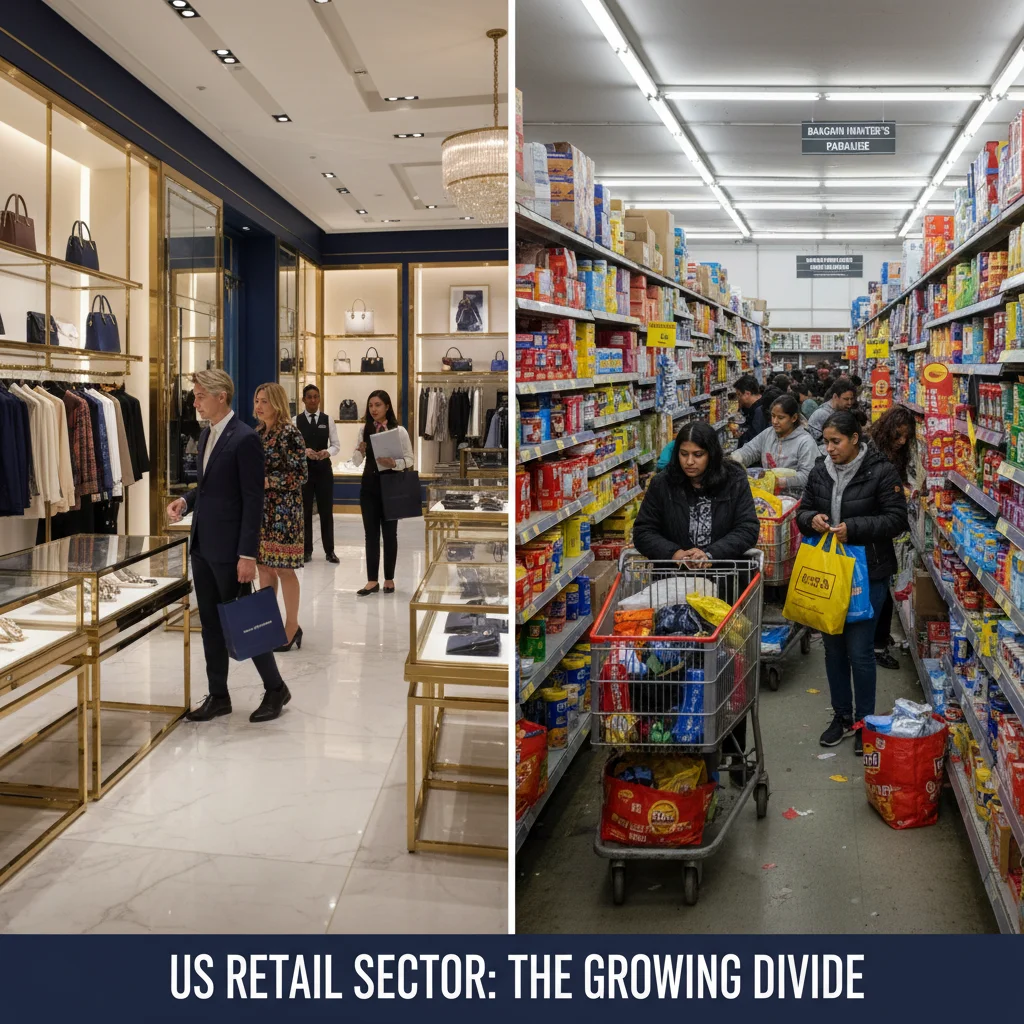
These macro-level pressures confirm that the lower-income cohort is not simply being cautious; they are facing mandated budget cuts due to fixed obligations. This reality dictates that retailers must compete fiercely for a smaller, more constrained wallet, making price points and promotional strategies paramount.
The Inventory and Margin Challenge for Retailers
The projected 4% growth figure presents a dilemma for retail inventory management. Overstocking based on the aggregate number, without accounting for the underlying weakness in the lower-income segment, could lead to excessive markdowns in Q1 2026, severely damaging operating margins. Conversely, understocking popular items, particularly those driven by affluent demand, risks leaving money on the table.
Retailers are utilizing sophisticated machine learning models to differentiate between demand signals generated by high-income versus low-income zip codes, adjusting inventory allocations accordingly. Companies like Nordstrom and Saks are focusing on fewer, higher-priced items, while those like Dollar General and Family Dollar are emphasizing bulk purchases and low unit prices.
Margin Pressure and Promotional Intensity
The competitive environment, exacerbated by the lower-income consumer’s high price sensitivity, ensures that promotional intensity will remain high. While the 4% growth is expected, achieving it without sacrificing profitability will be the main challenge for retail CFOs. Analysts at Goldman Sachs project that average gross margins for non-luxury general merchandise retailers could decline by 50 to 75 basis points year-over-year during the 2025 holiday quarter due to aggressive discounting necessary to clear inventory and attract the value-conscious shopper.
- Supply Chain Optimization: Companies that successfully mitigated supply chain bottlenecks and locked in favorable freight rates earlier in the year are in a better position to absorb margin pressure from promotions.
- Private Label Growth: Retailers are pushing private-label penetration aggressively, as these products offer higher margins compared to national brands and appeal directly to the value shopper seeking cost savings.
- E-commerce Dynamics: While e-commerce continues to grow, accounting for an estimated 18% of total holiday sales, the cost of customer acquisition (CAC) remains high, further squeezing margins, especially when free shipping is offered to compete with Amazon.
The margin challenge underscores the fragility of the 4% growth forecast. Should promotional activity exceed expectations, the resulting earnings reports for Q4 2025 could disappoint investors, even if the top-line sales figure is met.
Outlook for 2026: Persistence of the Two-Tier Economy
Looking beyond the immediate holiday season, the structural factors hindering the lower-income consumer suggest that the two-tier economy—where wealth dictates consumption patterns—is likely to persist well into 2026. Unless there is a significant, sustained decline in core inflation (e.g., below 2.5%) or a substantial increase in real minimum wages, discretionary spending capacity for the bottom half of the income distribution will remain constrained.
This prognosis has critical implications for long-term investment strategies. Companies that rely heavily on cyclically sensitive, middle-market consumer discretionary spending face continued risk. Conversely, businesses positioned in the value sector, or those serving the high-net-worth individual, are better insulated from the macroeconomic headwinds currently affecting the majority of American households. The market will increasingly reward retailers demonstrating resilience and discipline in managing inventory and pricing in this bifurcated environment.
The key metric to monitor in early 2026 will be the trend in consumer loan delinquencies and credit utilization rates. Any further deterioration here would signal a deeper, more systemic problem than just a soft holiday season for specific retailers, potentially portending a broader economic slowdown driven by consumer retrenchment.
| Key Factor/Metric | Market Implication/Analysis |
|---|---|
| 4% Holiday Sales Forecast (2025) | Primarily driven by high-income spending and inflationary price increases; volume growth is muted across the broader consumer base. |
| Subprime Credit Card Delinquency Rate (Q3 2025) | Reached 9.5%, indicating severe financial stress and limited capacity for lower-income households to use debt for holiday spending. |
| Student Loan Payment Resumption | Removes estimated $10 billion monthly from discretionary spending pool, directly affecting younger, mid-to-lower-income consumer budgets. |
| Retail Gross Margin Outlook (Q4 2025) | Expected to compress by 50-75 bps for non-luxury retailers due to high promotional intensity required to attract value-conscious shoppers. |
Frequently Asked Questions about Holiday Sales Growing 4% in 2025: Why Lower-Income Households Are Holding Back
The 4% growth is generally priced in for most major retailers. However, valuations will hinge on margin performance, not just top-line growth. Companies that achieve the 4% with minimal promotional damage (e.g., luxury and value leaders) may see positive momentum, while those reliant on heavy discounting could face downgrades despite hitting the sales target.
The primary constraint is the persistent gap between core inflation, especially in housing and food (5%+ annual increases), and real wage growth, which is marginal or negative for the lowest quintile of earners. This erosion of purchasing power is compounded by high-interest consumer debt obligations, leaving little residual income for discretionary holiday items.
In a bifurcated consumer environment, analysts generally favor companies positioned at the extremes. Discount retailers benefit from the trade-down effect, securing volume. Luxury brands maintain pricing power and margin integrity due to resilient affluent demand. Mid-market general retailers face the highest risk of margin compression and volume weakness.
High rates (average credit card APR near 22%) increase debt servicing costs, effectively reducing disposable income for households carrying revolving balances. This leads to reduced spending capacity and higher delinquency risks, acting as a direct fiscal drag that limits the potential upside of the 4% sales forecast.
Key metrics include January retail earnings reports, particularly guidance for Q1 2026, consumer credit card utilization rates, and the trend in subprime auto and credit card loan delinquencies. A sharp rise in delinquencies would signal that debt used to finance holiday spending is becoming unsustainable for many households.
The Bottom Line
The projected 4% holiday sales growth for 2025 serves as a compelling headline, indicative of the American economy’s overall resilience, yet it simultaneously masks deep underlying stresses. This growth is predominantly a function of price increases and robust spending by high-income consumers, while the lower-income segment is fundamentally holding back due to the cumulative weight of persistent inflation in necessities, high-interest consumer debt, and the resumption of student loan payments. For investors and financial strategists, the critical takeaway is the increasing importance of retail segmentation. The market will reward companies that have either successfully catered to the financially secure top quartile or optimized their operations for the value-driven, cash-constrained bottom half. Monitoring consumer credit quality and real wage trends in Q1 2026 will be paramount, as sustained financial fragility among lower-income households poses the single largest structural risk to achieving broad-based, sustainable consumption growth beyond the holiday quarter.
