Trump’s Tariffs: 0.5% Inflation Impact on US Wallets
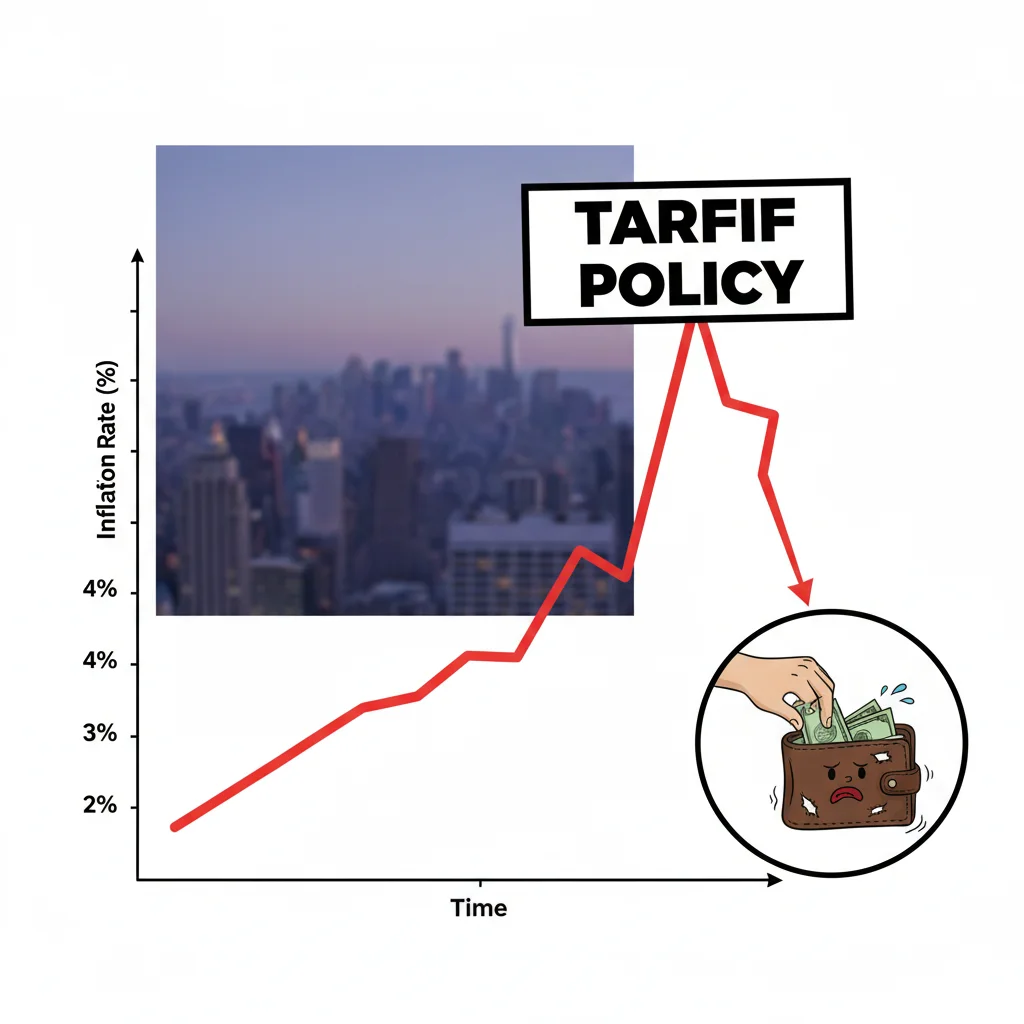
Proposed trade policies, specifically substantial tariff increases advocated by former President Trump, are widely projected by economic models to add approximately 0.5 percentage points to the core US inflation rate, directly eroding household purchasing power and complicating the Federal Reserve’s monetary policy path.
The prospect of a new, sweeping trade policy targeting all imported goods has introduced a significant layer of uncertainty into macroeconomic forecasts. Analyzing the potential impact of tariffs adding 0.5% to inflation: how Trump policy impacts your wallet requires a rigorous examination of cost pass-through mechanisms, supply chain adjustments, and the subsequent response from the Federal Reserve. For American households, this projected inflation increase is not theoretical; it represents a tangible reduction in real wages and purchasing power, particularly affecting lower and middle-income families.
The mechanics of tariff-induced inflation
Tariffs operate as a tax on imported goods, levied at the border before products enter the domestic market. When the US government imposes a tariff, the immediate effect is an increase in the cost of those goods for the importing company. The critical economic question is how much of that increased cost is absorbed by the importer or foreign exporter, and how much is passed directly to the American consumer. Historical data and modeling from institutions like the Peterson Institute for International Economics (PIIE) suggest that the vast majority—often exceeding 90%—of the cost of tariffs is borne by domestic purchasers.
The specific proposal for a 10% universal tariff, and potentially higher punitive tariffs on specific countries, is what drives the consensus estimate of a 0.5 percentage point addition to the core Personal Consumption Expenditures (PCE) index. This metric, favored by the Federal Reserve, excludes volatile food and energy prices, focusing on underlying price trends. The pass-through effect is complex, involving direct costs on finished goods and indirect costs on intermediate inputs used by American manufacturers. For instance, if US companies import raw materials or components subject to the 10% tariff, their final production costs rise, forcing them to increase prices for domestically manufactured items, a process known as price substitution.
Analyzing the cost pass-through rate
The speed and completeness of the tariff pass-through depend heavily on market concentration and competition. In highly competitive sectors, importers might absorb a larger share initially to maintain market share, but sustained, broad-based tariffs make absorption economically unfeasible. Research conducted during the 2018-2019 trade disputes confirmed that US consumers and businesses paid nearly all of the tariff costs imposed on Chinese imports. This historical precedent informs current projections.
- Direct Consumer Impact: Tariffs on finished consumer goods (e.g., electronics, apparel) translate almost immediately into higher retail prices.
- Intermediate Input Costs: Tariffs on machinery, steel, and components raise the cost structure for US manufacturing, leading to secondary price increases across various sectors.
- Exchange Rate Effects: If tariffs lead to a stronger US dollar, this could partially offset import costs, but the primary inflationary force remains the tax itself.
- Substitution Limits: While companies can attempt to shift sourcing away from tariffed countries, the capacity to rapidly replace established, specialized supply chains is limited, especially in the short term.
Economists at Goldman Sachs estimate that a 10% blanket tariff on all imports could raise the price level by roughly 1.5% overall, translating to the widely cited 0.5% impact on the year-over-year inflation rate, given the timing and implementation schedule. This increase would push the inflation rate further away from the Federal Reserve’s long-term 2% target, presenting a significant policy challenge.
Impact on Federal Reserve policy and interest rates
The introduction of a new structural inflationary force, such as universal tariffs, fundamentally complicates the Federal Reserve’s dual mandate of maximizing employment and maintaining stable prices. Since late 2022, the Fed has aggressively raised the federal funds rate to combat inflation that peaked above 9%. By Q3 2024, inflation had moderated, but the threat of renewed price pressure stemming from trade policy necessitates a re-evaluation of the monetary tightening cycle.
If tariffs add a sustained 0.5% to inflation, the Fed faces a difficult choice. Standard monetary policy—raising interest rates—is designed to cool demand-driven inflation. However, tariffs represent cost-push inflation, where prices rise due to increased production costs, not necessarily excessive demand. Hiking rates to combat cost-push inflation risks triggering an unnecessary economic slowdown or recession while failing to fully neutralize the tariff effect, as the underlying cost structure remains elevated.
The monetary policy dilemma
The Fed’s reaction function would depend on whether policymakers view the tariff surge as a temporary shock or a permanent structural shift. A permanent 10% tariff regime would likely force the Fed to maintain a higher-for-longer interest rate environment than currently projected. This sustained high rate environment impacts everything from mortgage rates to corporate borrowing costs, slowing investment and hiring.
During the 2018-2019 tariff rounds, the Fed initially viewed the price increases as temporary noise. However, a blanket tariff proposal is far more systemic. Analysts at JPMorgan Chase suggest that the Fed would need to raise its projection for the neutral rate (R-star), the rate consistent with full employment and stable inflation, if tariffs become standard policy. The consequence for consumers is higher borrowing costs for cars, homes, and credit card debt, directly offsetting any perceived benefits of the trade policy.
- Higher Terminal Rate: The peak federal funds rate required to achieve the 2% target would likely increase, potentially by 25 to 50 basis points.
- Delayed Rate Cuts: Expectations for the timing and magnitude of future rate cuts would be pushed back, maintaining pressure on long-term bond yields.
- Increased Volatility: Uncertainty over trade policy and its inflationary consequences could inject greater volatility into fixed income markets, particularly Treasury bonds.
- Stagflation Risk: The combination of higher prices (inflation) and slower economic growth (due to higher interest rates and trade friction) raises the specter of stagflation, although most models predict a slowdown rather than a full recession based solely on the 10% tariff.
The market consensus, as reflected in the CME FedWatch Tool, would immediately adjust to fewer expected rate cuts in the following 12 months upon confirmation of a broad tariff implementation, reinforcing the link between trade policy and domestic borrowing costs.
Sectoral analysis: winners and losers in a tariff regime
While the overall economy experiences higher inflation and potentially slower growth, the impact of significant tariff increases is highly uneven across different sectors. Domestic producers competing directly with imports would theoretically benefit from the reduced price competitiveness of foreign goods, potentially allowing them to raise prices and capture greater market share. However, this benefit is often muted by the higher cost of imported components.
Industries facing margin compression
Sectors heavily reliant on global supply chains and foreign components face immediate margin compression. The automotive industry, electronics manufacturers, and retailers sourcing large volumes of goods from abroad (especially Asia and Europe) are particularly vulnerable. Companies must choose between absorbing the tariff cost, thereby reducing profitability, or passing the cost to consumers, risking sales volumes.
For example, a major US electronics retailer sourcing 60% of its inventory from overseas might see a 6% increase in its cost of goods sold (COGS) under a 10% universal tariff, assuming near-complete pass-through. If the retailer’s typical net profit margin is 5%, this COGS increase could effectively wipe out profitability unless prices are raised significantly. Data from the Bureau of Economic Analysis (BEA) shows that imports constitute about 15% of total US GDP, illustrating the vast exposure.
- Retail Sector: Faces higher inventory costs and reduced consumer demand due to diminished purchasing power.
- Manufacturing (Inputs): Companies using imported steel, aluminum, or specialized machinery components see immediate operational expense increases.
- Agriculture: While US agricultural exports are not directly tariffed by the US, retaliatory tariffs from trade partners (as seen in 2018) can severely depress commodity prices and farm incomes.
Conversely, sectors with minimal reliance on imports, such as domestic services, might be less affected initially, though they will still feel the secondary effects of reduced overall economic activity and higher labor costs resulting from general inflation. The long-term macroeconomic effect is a less efficient allocation of resources, moving capital away from globally competitive areas toward protected domestic industries, leading to lower overall productivity growth.
The specific burden on the American household budget
The projected tariffs adding 0.5% to inflation directly translate into reduced financial flexibility for the average American household. If the baseline inflation rate is 3.0%, a tariff-induced increase to 3.5% means that a family needing $50,000 annually for essential goods and services will see their purchasing power erode by an additional $250 per year, compounding over time. This effect is disproportionately felt by lower-income households, which spend a larger fraction of their income on essential goods that are often imported or contain imported components.
The impact is not uniform across all spending categories. Goods that rely heavily on complex global supply chains, such as automobiles, appliances, and certain types of apparel, would see the highest relative price increases. Services, which make up a growing share of the economy (healthcare, housing, education), are less directly affected by import tariffs, but their costs often rise indirectly due to general wage inflation and increased costs for imported equipment used in service provision.
Erosion of real wages
Real wages—wages adjusted for inflation—are the primary measure of household financial health. If nominal wages rise by 4.0% but inflation rises by 3.5% (including the tariff effect), the real wage increase is only 0.5%. Without the tariff, if inflation had remained at 3.0%, the real wage increase would have been 1.0%. The tariff effectively halves the gains in purchasing power, tightening budgets and potentially increasing reliance on consumer debt.
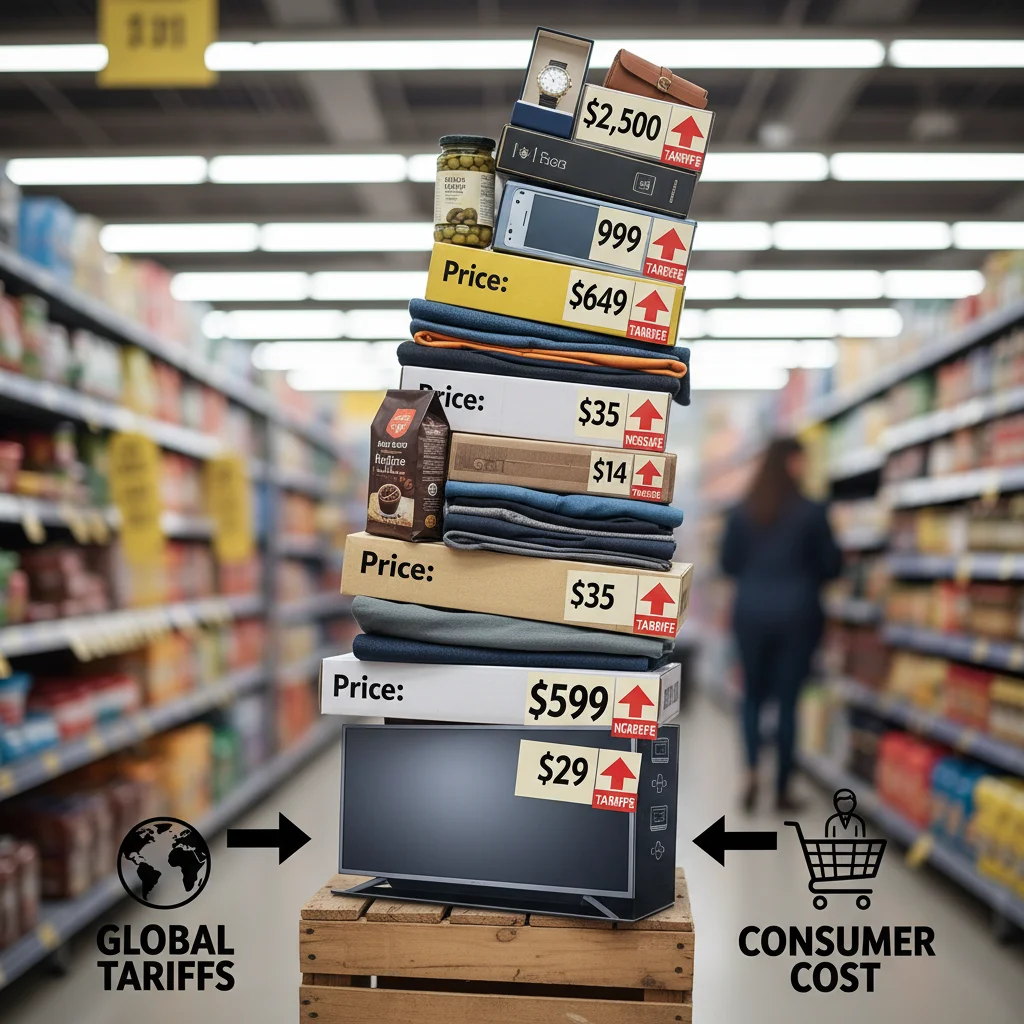
Data from the Bureau of Labor Statistics (BLS) consistently shows that while nominal wages have been growing, sustained inflation has made real wage growth fragile. The tariff policy introduces a structural headwind to real income improvement. Moreover, households that rely on imported goods for their small businesses, such as parts suppliers or specialized retailers, face higher operating costs, which can jeopardize solvency.
- Food Prices: While raw food imports are complex, processing equipment and packaging materials are often imported, causing indirect food price inflation.
- Durable Goods: Automobiles and major appliances, which have high import content, would see price increases potentially exceeding the 0.5% average, depending on the specific tariff rates applied to components.
- Savings Rate: Higher mandatory spending on necessities due to inflation often forces households to reduce discretionary spending and lower their personal savings rate, undermining long-term financial security.
Financial planners must adjust household budgeting strategies to account for persistently higher costs in manufactured goods and potential increases in interest payments due to the Fed’s reaction to the tariff-induced inflation.
Historical precedent and long-term economic friction
While the proposal of a 10% universal tariff is unprecedented in modern US trade history, previous targeted tariffs offer clear empirical evidence of the inflationary mechanism. The 2018 tariffs on steel and aluminum, and the subsequent tariffs on Chinese goods, led to quantifiable price increases for US consumers and manufacturers. A study by the National Bureau of Economic Research (NBER) found that the 2018 tariffs resulted in almost complete pass-through to US domestic prices, with the overall economic effect being a small net negative on US welfare.
The core difference between the 2018 tariffs and the proposed universal tariff is scale. The 2018 tariffs were targeted, affecting specific goods and countries. The proposed policy affects all imports, drastically limiting the ability of US companies to shift sourcing to non-tariffed regions. This broad application ensures a more immediate and systemic inflationary impact across the entire economy, validating the 0.5% inflation projection.
The risk of global trade instability
Beyond domestic inflation, the policy introduces significant global economic friction. International trade agreements are based on reciprocal access. The imposition of a universal 10% tariff would almost certainly trigger widespread retaliation from major trading partners—the European Union, Japan, Canada, and others. Retaliatory tariffs primarily target US exports, particularly agricultural products and high-value manufactured goods, diminishing the competitiveness of these sectors.
Economic models suggest that this trade friction could lead to a global slowdown, reducing demand for US exports and potentially offsetting any gains made by protected domestic industries. The long-term risk is the fragmentation of global supply chains, increasing structural costs worldwide and permanently raising the baseline level of global inflation, a phenomenon economists refer to as de-globalization premium.
The analytical consensus among international financial bodies, including the International Monetary Fund (IMF), is that while tariffs may achieve short-term political goals, they serve as a tax on domestic innovation and consumption, ultimately resulting in slower long-run GDP growth and persistent structural inflation.
Corporate strategy adjustments and capital allocation
US corporations are already factoring the risk of significant tariff implementation into their long-term capital allocation strategies. The primary response involves aggressive supply chain re-engineering—moving production or sourcing away from high-tariff jurisdictions, even if it means higher operational costs in the short term. This shift, often termed “friend-shoring” or “near-shoring,” is expensive and time-consuming, but necessary to mitigate trade policy risk.
For publicly traded companies, the uncertainty surrounding trade policy translates into higher risk premiums required by investors. Companies with high exposure to international trade and long, complex supply chains may see their stock valuations depressed relative to domestic-focused peers, reflecting the potential for sudden margin shocks. Corporate financial officers are prioritizing liquidity and flexibility to pivot rapidly in response to policy changes.
Financial implications for investors
Investors must recognize that a tariff regime shifts the fundamental risk profile of several sectors. Defensive positioning might favor companies with strong domestic revenue streams and minimal reliance on imported inputs. Conversely, companies that benefit from globalization (large multinational retailers, technology hardware firms) face increased regulatory and cost uncertainty.
- Equity Markets: Potential underperformance in sectors heavily reliant on imported goods (e.g., consumer discretionary, technology hardware) and potential outperformance in protected domestic sectors (e.g., certain domestic manufacturing, raw materials).
- Fixed Income: Increased inflation risk puts downward pressure on bond prices, particularly long-duration US Treasuries, requiring a higher yield to compensate for reduced real returns.
- Commodities: Prices for globally traded commodities (oil, industrial metals) could face downward pressure from reduced global demand due to trade friction, while domestic prices for tariffed inputs (like steel) could rise sharply.
The key takeaway for portfolio managers is that trade policy is now a critical input variable for inflation forecasting, alongside Federal Reserve guidance and labor market data. A policy that adds tariffs adding 0.5% to inflation requires a substantial re-evaluation of expected real returns across asset classes, favoring inflation-protected securities and sectors with strong pricing power.
Risk management and consumer adaptation strategies
For consumers, adapting to a persistently higher cost environment requires proactive financial management. Since the tariff impact is focused on goods, consumers can mitigate the erosion of their purchasing power by altering consumption patterns—prioritizing essential purchases, seeking durable goods alternatives, and increasing reliance on second-hand markets or repair services.
Financial risk management also extends to debt. If the tariff policy forces the Federal Reserve to keep interest rates higher for longer, variable-rate debt becomes more expensive. Households should prioritize paying down high-interest consumer debt, such as credit cards and adjustable-rate mortgages, to insulate their budgets from potential monetary policy tightening induced by structural inflation.
Mitigating the inflationary shock
The most direct way households can counter the effect of tariffs adding 0.5% to inflation is by maximizing real income growth. This involves strategies like investing in skills that command higher wages (human capital investment) and seeking out employers with strong pricing power who are better able to pass through cost increases without resorting to layoffs or wage stagnation. Diversification of income sources also provides a buffer against sector-specific trade shocks.
Furthermore, recognizing that the tariff shock is systemic, investment portfolios should include assets that historically perform well in inflationary environments, such as real estate, commodities, and Treasury Inflation-Protected Securities (TIPS). This tactical allocation helps preserve capital against the erosion of purchasing power caused by persistent cost-push inflation.
- Debt Strategy: Lock in fixed, long-term debt rates now, anticipating potentially higher interest rates driven by Fed response to tariffs.
- Budgeting: Re-evaluate spending on tariff-sensitive categories (new cars, electronics) and consider extending the lifecycle of existing durable goods.
- Investment Focus: Increase allocation to inflation hedges (TIPS, certain infrastructure and energy equities) to protect the real value of savings against the persistent 0.5% inflationary drag.
The economic reality is that tariffs are a trade-off: perceived protection for domestic industries versus higher prices and reduced purchasing power for the vast majority of consumers. Understanding this mechanism is crucial for sound financial decision-making in a shifting trade landscape.
| Key Economic Channel | Market Implication/Analysis |
|---|---|
| Core Inflation Increase (PCE) | Projected 0.5 percentage point addition to annual inflation, primarily due to full cost pass-through from importers to consumers. |
| Federal Reserve Rate Policy | Higher-for-longer interest rate environment becomes more probable; delayed rate cuts to combat structural cost-push inflation. |
| Corporate Profit Margins | Margin compression for retailers and manufacturers reliant on imported intermediate goods; increased capital spending on supply chain re-shoring. |
| Household Purchasing Power | Erosion of real wages, disproportionately affecting lower-income groups who spend a greater share on tariff-sensitive goods. |
Frequently asked questions about tariffs and inflation
The impact will appear rapidly, within one to two quarters of implementation. Retailers often raise prices as soon as new, higher-cost inventory arrives, reflecting the immediate pass-through of the tariff tax. Durable goods and electronics may show the quickest response, followed by broader supply chain effects.
While some absorption occurs initially, especially in highly competitive markets, sustained, broad-based tariffs prevent long-term absorption. Economic studies show domestic importers typically bear over 90% of the cost, meaning corporate margin compression is limited, and consumers ultimately pay the tax through higher prices.
Investors should favor inflation-hedging assets, including Treasury Inflation-Protected Securities (TIPS), real estate investment trusts (REITs), and equities of companies with strong domestic revenue streams and low reliance on imported components. Avoid companies with high foreign sourcing risk.
Tariffs can initially strengthen the US dollar by discouraging imports and potentially encouraging capital repatriation. However, the subsequent reduction in global trade and increased economic uncertainty could offset these gains, leading to volatility rather than sustained appreciation.
Yes, the risk increases. Stagflation is characterized by high inflation and stagnant growth. Tariffs cause cost-push inflation and slow growth by raising input costs and interest rates, creating the conditions for a difficult economic environment that reduces household financial security.
The bottom line
The economic analysis surrounding the proposed universal tariff policy decisively points to higher domestic costs, with the consensus projection of tariffs adding 0.5% to inflation serving as a critical metric for policymakers and households alike. This structural inflationary input forces the Federal Reserve into a tighter monetary policy stance, translating into higher borrowing costs for consumers and businesses throughout the economy. While the policy aims to protect certain domestic industries, the immediate and quantifiable cost is borne by the American consumer through diminished purchasing power and higher prices for nearly all goods.
For investors and financial managers, the key is recognizing that trade policy has become a primary driver of macroeconomic risk. Companies must strategically re-engineer supply chains, acknowledging the inherent volatility. Households must prioritize debt reduction and adjust consumption patterns to mitigate the erosion of real income. Monitoring the implementation timeline and the subsequent official inflation reports, particularly the PCE index, will be crucial in forecasting the trajectory of US interest rates and the broader economic health through 2025 and beyond. The shift represents a fundamental re-pricing of risk and cost in the US economy.
