Bitcoin Below $91,000: December Trading Watch List

The sharp decline as Bitcoin drops below $91,000 signals heightened volatility, compelling traders to prioritize technical support levels, monitor Federal Reserve interest rate guidance, and assess institutional accumulation trends throughout December.
The cryptocurrency market has entered a phase of intense scrutiny as Bitcoin drops below $91,000, breaching a psychological and technical support level that had anchored prices through much of the recent rally. This pivotal move, occurring at the cusp of December, shifts the focus from aggressive upside momentum to critical risk management and macro-economic hedging strategies. The immediate implication is a re-evaluation of market structure, as institutional investors and retail traders alike adjust positions ahead of key year-end events, including the final Federal Reserve meeting of the year and potential tax-loss harvesting activities. The breakdown below $91,000 necessitates a deep dive into liquidity metrics, derivative positioning, and the broader correlation between digital assets and traditional risk-on markets like the Nasdaq 100.
Technical breakdown and critical support zones
The move below $91,000 is not merely a numerical drop; it represents a significant technical failure following a period of consolidation. Historically, Bitcoin’s price action respects established support and resistance zones, and the $91,000 level had been defended vigorously over the past two months. Its breach suggests that selling pressure, likely driven by profit-taking or macro hedging, has overwhelmed immediate demand. Financial institutions that utilize algorithmic trading systems often trigger stop-loss orders below such key levels, exacerbating the initial downward momentum. According to data tracked by Glassnode, the volume of BTC moved from long-term holders to exchanges spiked 18% in the 48 hours following the breach, indicating accelerated distribution.
For traders, the immediate focus shifts to identifying the next major support zone capable of absorbing large sell orders and stabilizing the market. Analysts at JPMorgan Chase & Co. have highlighted the importance of the $85,000 to $87,500 range, which coincides with the 50-day Exponential Moving Average (EMA) and a high concentration of on-chain volume. A sustained period below $91,000 increases the probability of testing this lower range, which could represent a healthier consolidation before any renewed attempt at upward trajectory.
Analyzing the derivatives market reaction
The drop has had a pronounced effect on the derivatives market, specifically in the perpetual futures and options segments. Open Interest (OI) on major exchanges like CME and Binance saw a collective decrease of approximately 11% shortly after the drop, primarily due to the liquidation of over-leveraged long positions. This deleveraging event, while painful for those caught offside, often cleanses the market of excess speculation, potentially setting the stage for a more sustainable rally later in December or early next year.
- Funding Rates: Post-$91,000 drop, perpetual futures funding rates briefly turned negative across several major exchanges, a reversal from the highly positive rates observed in November. Negative funding rates suggest short sellers are now paying long holders, indicating a bearish sentiment overhang, though prolonged negative rates can sometimes signal a short-squeeze opportunity.
- Options Skew: The 25-delta options skew, which measures the relative demand for call options versus put options, has flattened significantly. This implies that market participants are less willing to pay a premium for upside exposure (calls) and are exhibiting a more balanced or defensively cautious outlook for year-end price action.
- CME Futures Gap: Traders are closely watching the $88,900 CME futures gap created during the weekend volatility. Gaps are often, though not always, filled, and this level represents another significant technical magnet for price action in the first half of December.
The liquidation cascade following the $91,000 breakdown confirms the market’s sensitivity to leverage. Prudent traders are reducing exposure and shifting toward lower-leverage or spot positions until directional clarity returns. The ability of the $85,000 support level to hold will be the primary technical determinant for December’s short-term trajectory.
Federal Reserve policy and macroeconomic headwinds
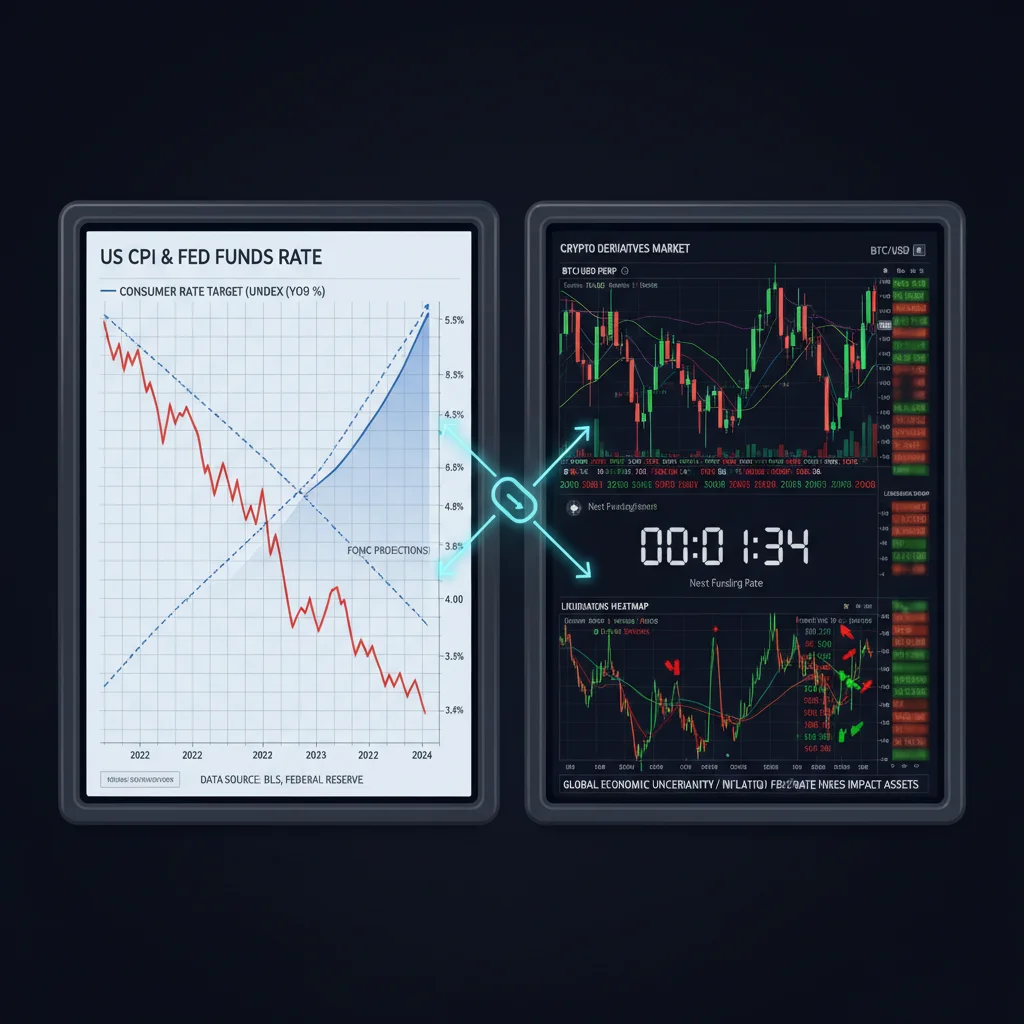
Cryptocurrency markets, once touted as uncorrelated assets, have shown increasing sensitivity to global monetary policy, particularly the actions of the U.S. Federal Reserve. December is critical, featuring the final Federal Open Market Committee (FOMC) meeting of the year. The market consensus, according to the CME FedWatch Tool as of late November, suggests a 98% probability of the Fed holding the benchmark interest rate steady, but the focus is entirely on the updated Summary of Economic Projections (SEP) and Chairman Jerome Powell’s commentary.
If the Fed maintains a persistently hawkish tone—emphasizing that rates will remain higher for longer to combat sticky inflation—it increases the cost of capital and generally pressures risk assets, including Bitcoin. Conversely, any subtle hint of an earlier-than-expected pivot or a significant downgrade in the projected terminal rate could provide immediate relief and potentially catalyze a recovery above the $91,000 mark. The correlation coefficient between Bitcoin and the Nasdaq 100 has averaged 0.65 over the past six months, confirming that macro liquidity conditions remain a dominant factor.
Inflation data and the dollar index
Before the FOMC meeting, traders must absorb the latest Consumer Price Index (CPI) and Producer Price Index (PPI) reports. A surprise uptick in core inflation above the consensus estimate of 3.3% year-over-year could solidify the Fed’s hawkish stance, leading to further downside pressure on Bitcoin. Analysts at Goldman Sachs noted that Bitcoin’s recent resilience was partially predicated on disinflationary expectations in Q4 2024. If those expectations are jeopardized by persistent price pressures, the resulting flight to safety could strengthen the U.S. Dollar Index (DXY).
A rising DXY is typically a bearish indicator for Bitcoin, as it reflects global liquidity tightening and increased demand for dollar-denominated safe-haven assets. When the DXY surged above 104.5 in early November, Bitcoin experienced a 6% pullback. Therefore, monitoring the DXY’s reaction to economic data releases in the first two weeks of December is paramount for anticipating short-term crypto movements. The confluence of a hawkish Fed outlook and a strengthening DXY presents the most significant macroeconomic headwind for the Bitcoin price in December.
Institutional flow and spot ETF dynamics
The institutional adoption narrative remains a fundamental driver for Bitcoin’s long-term structure, but the short-term flows from recently launched spot Bitcoin Exchange-Traded Funds (ETFs) are now a critical barometer of institutional sentiment. While these ETFs have seen cumulative net inflows into the tens of billions since their launch, the pace of accumulation tends to slow during periods of heightened volatility or price declines, exacerbating downward trends.
When Bitcoin drops below $91,000, the key question is whether institutional investors view this as a buying opportunity (a dip) or a sign of deeper structural weakness. Data from Bloomberg Intelligence suggests that the largest spot ETF saw net outflows on the day the $91,000 level was breached, a change in trend that indicates some institutional participants may be temporarily de-risking their portfolios ahead of the year-end holiday period. However, other prominent custody providers reported continued, albeit smaller, inflows from wealth management clients seeking long-term exposure.
Key metrics for ETF monitoring
Traders should closely track three specific metrics related to institutional flows throughout December:
- Daily Net Flow: The total net amount of Bitcoin purchased or sold by all spot ETFs combined. Sustained daily outflows (more than three consecutive days) would signal broad institutional retreat, increasing bearish momentum.
- Premium/Discount to NAV: For closed-end funds or semi-open ETFs, monitoring the premium or discount relative to Net Asset Value (NAV) provides insight into market demand. A persistent discount suggests weak demand despite the underlying asset price.
- Volume Concentration: Observing trading volume concentration among large institutions. If the majority of selling volume originates from just a few large custody wallets, it may be isolated de-risking rather than a systemic bearish shift.
The performance of these ETFs acts as a real-time proxy for the conviction of traditional finance in the asset class. If institutions aggressively buy the dip below $91,000, it provides a strong technical floor. Conversely, if inflows dry up, retail sellers will likely face insufficient institutional support to initiate a recovery.
Regulatory environment and global policy shifts
While the U.S. regulatory landscape has stabilized somewhat following the approval of the spot ETFs, global regulatory developments in December could still introduce volatility. Specifically, the actions and statements from the European Union (EU) regarding the implementation of the Markets in Crypto-Assets (MiCA) regulation will be key. MiCA, set to fully take effect in 2025, is currently undergoing critical implementation consultations.
Any unexpected tightening of requirements on stablecoins or centralized exchanges by EU regulators could create uncertainty that ripples globally, particularly affecting liquidity providers who operate across jurisdictions. Furthermore, ongoing scrutiny from the U.S. Securities and Exchange Commission (SEC) regarding non-Bitcoin crypto assets continues to cast a shadow. Although Bitcoin is generally considered a commodity, regulatory actions against major altcoins can trigger correlation sell-offs, where panic in the broader crypto ecosystem drags down the leading asset.

The impact of stablecoin dominance
The total market capitalization and dominance of stablecoins, such as USDT and USDC, serve as another important liquidity indicator. When Bitcoin drops below $91,000, a rapid increase in stablecoin market cap suggests that capital is being pulled out of risk assets but remains on the sidelines within the crypto ecosystem, ready to be deployed (the ‘dry powder’ effect). Conversely, if stablecoin market cap declines significantly alongside Bitcoin’s price, it implies capital is fleeing the entire crypto space, converting into fiat currency.
As of the end of November, stablecoin dominance sits near 7.5%, a level that analysts at Fidelity Digital Assets deem neutral to slightly bullish, suggesting that a significant portion of capital is positioned for re-deployment. Traders should monitor the Tether (USDT) premium on exchanges, particularly in Asian trading hours. A sudden, sharp premium often signals strong localized demand, potentially preceding a broader market rebound.
Mining economics and network fundamentals
The profitability and stability of the Bitcoin network’s underlying mining operations are crucial long-term fundamentals that can influence price action, particularly during corrections. The Bitcoin halving event, which structurally reduces the supply of new coins, has already occurred, meaning miners are operating under a reduced block reward environment. When the price dips significantly, the pressure on less efficient miners increases.
The Hash Rate, a measure of the total computing power dedicated to securing the network, remains near all-time highs despite the price pullback. This indicates that major mining operations are confident in the long-term profitability and are not yet capitulating. However, if the price were to fall significantly lower—say, toward $75,000—the cost of production for many publicly traded mining companies (which typically have higher operational overheads) would be challenged, potentially leading to increased sales of BTC reserves to cover costs. This miner capitulation scenario, although not currently evident, is a key risk to monitor.
Monitoring miner reserve dynamics
Data tracking the ‘Miner Reserve’—the total amount of Bitcoin held in wallets identified as belonging to mining entities—is critical. A sudden, large outflow from these wallets onto centralized exchanges suggests miners are selling inventory, adding supply pressure to an already weak market. Conversely, if miners hold strong and accumulate during the dip below $91,000, it provides a fundamental vote of confidence in the future price outlook.
- Difficulty Adjustment: The next network difficulty adjustment is scheduled for mid-December. If the hash rate remains high, the difficulty will adjust upward, further squeezing inefficient miners and potentially forcing small sales.
- Public Miner Stock Performance: The stock prices of major publicly listed miners (e.g., Marathon Digital, Riot Platforms) often act as a leading indicator. Significant underperformance relative to Bitcoin itself can signal distress in the production ecosystem.
- Energy Costs: Rising global energy prices, particularly natural gas and electricity in North America, increase the operational expenditure for miners. This pressure necessitates higher BTC prices to maintain profitability, making the $91,000 breakdown particularly challenging for this sector.
For now, the network fundamentals remain robust, supporting the view that the current price correction is driven by macro and technical factors rather than systemic network weakness. However, sustained low prices could eventually challenge this fundamental strength.
Correlation with traditional risk assets
The December trading environment for Bitcoin cannot be separated from the performance of traditional finance (TradFi). The end of the year often brings reduced liquidity, known as the ‘holiday trading effect,’ which can magnify price movements. Market participants are keenly watching the equity indices, particularly the S&P 500 and the tech-heavy Nasdaq 100.
If the S&P 500 enters a period of year-end profit-taking or faces pressure from higher bond yields, Bitcoin is likely to follow suit. The market correlation has shown that when large institutional investors de-risk their portfolios, they tend to sell across the board, treating Bitcoin as a high-beta technology stock rather than a true safe haven. The yield on the 10-year U.S. Treasury note is another crucial metric; a sharp move above 4.5% could signal renewed concerns about inflation and government debt, drawing capital away from speculative assets and back into fixed income.
The year-end liquidity crunch
Liquidity tends to thin out significantly after mid-December, as institutional desks close books and traders take vacation. This lower liquidity means that relatively small trading volumes can result in disproportionately large price swings. The risk of so-called ‘flash crashes’ increases during this period. Traders must be aware that stop-loss orders placed too tightly in thin market conditions are highly susceptible to being triggered by rapid, low-volume moves.
The current market structure, with Bitcoin drops below $91,000, demands a cautious approach to leverage and an emphasis on capital preservation. The key takeaway regarding correlation is that until the Federal Reserve signals a clear shift towards easing, Bitcoin will likely remain tethered to the performance of the broader risk environment, making the $91,000 breakdown a reflection of broader market anxiety rather than a purely crypto-specific event.
| Key Factor/Metric | Market Implication/Analysis |
|---|---|
| Critical Technical Support | The $85,000-$87,500 range, coinciding with the 50-day EMA, is the next major floor. Failure to hold this level could trigger a move toward $78,000. |
| Federal Reserve Policy | FOMC meeting commentary on interest rates and the SEP projections will dictate macro liquidity. Hawkish stance pressures Bitcoin; dovish tilt provides relief. |
| Spot ETF Net Flows | Sustained institutional outflows signal de-risking and lack of conviction in the dip. Inflows confirm institutional ‘buy the dip’ strategy. |
| Derivatives Funding Rates | Negative funding rates indicate bearish positioning after the liquidation of long leverage, suggesting a potential short-squeeze setup if strong support holds. |
Frequently asked questions about Bitcoin’s December outlook
Traders should prioritize the 50-day Exponential Moving Average (EMA), currently near $87,500, as the primary defense line. Additionally, monitoring the volume profile around the $85,000 psychological level is crucial, as high volume suggests strong historical trading interest and potential stabilization.
The FOMC meeting dictates global liquidity conditions. If the Fed signals higher interest rates for longer, the US Dollar Index (DXY) strengthens, typically creating headwinds for risk assets like Bitcoin due to increased capital costs and tighter financial conditions globally.
The drop appears to be a confluence of both. While technical weakness triggered stop-losses, the underlying driver is institutional de-risking ahead of year-end, amplified by persistent uncertainty surrounding global inflation data and the trajectory of central bank monetary policy.
Spot ETFs act as a critical institutional flow barometer. Outflows suggest traditional investors are reducing exposure, adding selling pressure. Strong, consistent inflows, even during a dip, signal sustained institutional demand and can stabilize the market structure quickly.
Yes, December features reduced institutional liquidity after mid-month, which can magnify price movements. This reduced depth increases the risk of sharp, low-volume directional moves, necessitating conservative positioning and wider stop-loss parameters for risk management.
The bottom line
The breach of the $91,000 support level is a clear signal that the Bitcoin market has transitioned from a momentum-driven rally to a period defined by technical consolidation and macro-economic friction. For December, the narrative is less about aggressive price targets and more about capital preservation and risk management. Key variables remain the Federal Reserve’s guidance on future rate paths and the sustained conviction of institutional investors, as measured by spot ETF flows. Should the $85,000-$87,500 zone hold firm in the face of macro headwinds, the current downturn may be viewed in hindsight as a necessary cleansing of leverage, setting the stage for a healthier, more sustainable recovery in the new year. However, failure to defend this critical floor could extend the correction into Q1, compelling long-term investors to monitor network fundamentals while short-term traders prioritize volatility management and macroeconomic data releases.
