
House Prices Rose 2.2%: States Still Offering Value for Buyers
The US housing market saw a 2.2% year-over-year price increase, signaling persistent demand; however, regional disparities mean that states in the Midwest and parts of the South continue to offer strategic value for both first-time buyers and seasoned investors.

Remote Work Still Reshaping Housing: Tech Migration Trends
The enduring shift towards remote work is fundamentally altering US housing dynamics, driving significant capital and demand from traditional coastal tech hubs to Sun Belt and Mountain West metros, accelerating localized inflation and reshaping investment strategies.

Home Prices Up 0.1% Year-Over-Year: Housing Market Cooling Analysis
The deceleration of U.S. home price appreciation to a mere 0.1% year-over-year signals a significant shift, raising critical questions about the depth of the current housing market cooling driven by elevated mortgage rates and persistent supply issues.

Property Taxes Rose 10.4%: How to Challenge Assessments
Property taxes across the United States have increased by an average of 10.4% since 2021, forcing homeowners to confront rapidly escalating valuations; understanding the appeal process is crucial for mitigating this significant financial burden.

Inflation at 3%: Impact on Home Purchase Budgets and Mortgage Strategy
The persistent 3% inflation rate is not merely a headline; it is a structural headwind significantly eroding the purchasing power allocated for housing, mandating strategic shifts in mortgage planning and budget allocation for prospective homeowners in the US.

Gen Z Credit Card Usage Surpasses Debit: Financial Shift Alert
The shift in Gen Z's financial behavior, prioritizing credit over debit, signals deeper macroeconomic pressures and a reliance on revolving debt, impacting future credit risk profiles and the financial services sector, according to Q3 2024 data.

S&P 500 rotation away from AI stocks: December market shift impact
The S&P 500 experienced a significant rotation away from artificial intelligence stocks in December 2025, shifting investor capital toward value and defensive sectors amid concerns over AI valuation sustainability and macroeconomic headwinds.

Healthcare stocks surge 9.3% as tech retreats: what’s driving the sector rotation
Healthcare stocks rallied 9.3% amid a sector rotation out of technology, which declined 4.8%, reflecting investor reassessment of valuations, interest rates, and defensive positioning in a shifting economic environment.

AI electricity inflation: how data center demand is spiking your power bills
Electricity inflation is accelerating as artificial intelligence data centers demand record amounts of power, pushing grid strain and household energy bills higher. Industry analysts project energy-intensive AI workloads could increase U.S. electricity consumption by 10-15% within five years, creating significant cost pressures for both consumers and utilities.

Healthcare Led Markets with 9.29% Gain in November While Tech Slipped 4.81%
Healthcare equities delivered a 9.29% gain in November as investors rotated into defensive sectors, while technology stocks retreated 4.81%, signaling a significant shift in market leadership and investor risk appetite.
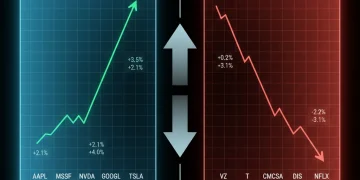
Tech communications divergence: why market split shocked investors
The technology sector's significant outperformance against communications stocks in 2025 reflects structural shifts in AI adoption, valuation dynamics, and interest rate sensitivity rather than temporary market noise.

Surprise Employment Data Shakes Markets: Key Analysis
This week's unexpectedly strong employment report showed 312,000 new jobs versus 180,000 forecast, triggering Treasury yield spikes and equity sell-offs. We analyze the data sources, sector anomalies, and revised Fed rate expectations driving market turbulence.