Emerging Markets Up 30% YTD: Why 2026 is a Breakout Year

The significant 30% YTD rally in Emerging Markets (EM) equity indices signals a potential regime shift, driven by anticipated Federal Reserve rate cuts, stabilizing commodity prices, and improving fiscal balances across key developing economies.
The remarkable surge in developing world assets, evidenced by the MSCI Emerging Markets Index climbing approximately 30% year-to-date (YTD) through Q4 2025, forces serious consideration of a structural shift in global capital allocation. This strong performance underpins the argument that Emerging Markets Breakout Year dynamics are accelerating, positioning 2026 as a potentially pivotal period internationally. This sustained momentum suggests that the confluence of external macroeconomic factors and internal structural improvements is finally providing the long-awaited catalyst for sustained outperformance against developed markets.
The weakening dollar and the end of the Fed tightening cycle
Emerging market performance is notoriously sensitive to United States monetary policy, specifically the strength of the dollar and the Federal Reserve’s interest rate trajectory. The current environment, characterized by the anticipated conclusion of the Fed’s tightening cycle and projections for rate normalization beginning in early 2026, significantly reduces funding costs and alleviates pressure on dollar-denominated debt held by EM governments and corporations.
The US Dollar Index (DXY) has depreciated by over 7% since its peak in mid-2025 as inflation moderation allows the Federal Open Market Committee (FOMC) to signal a dovish pivot. This depreciation directly benefits emerging economies by making their exports cheaper on the global stage and improving their terms of trade. Furthermore, a weaker dollar encourages capital flows back into higher-yielding emerging market debt and equity assets, reversing the flight-to-safety trend observed between 2022 and 2024. Analysts at Goldman Sachs project that a sustained 10% decline in the DXY could translate into an approximately 15% increase in EM equity valuations over a 12-month period, based on historical correlations.
The role of interest rate differentials
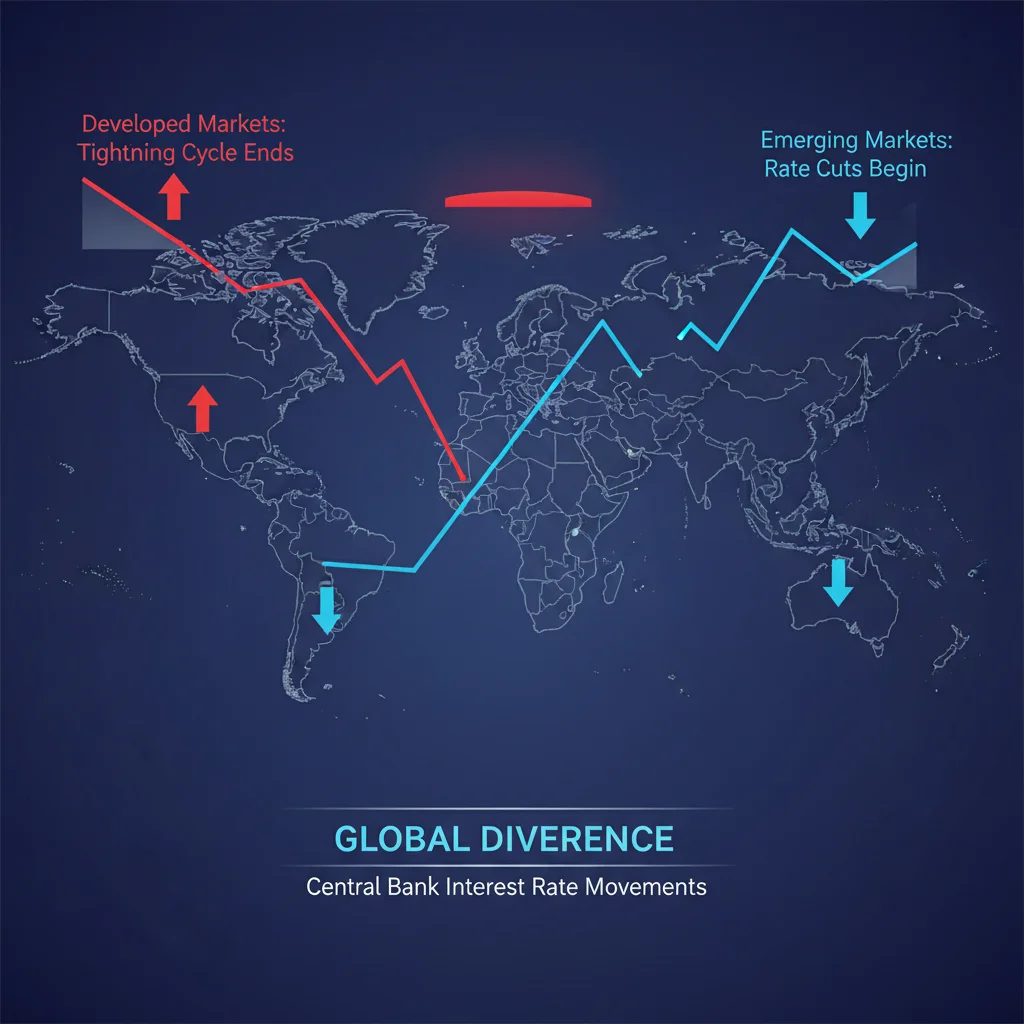
Many emerging market central banks, particularly in Latin America (e.g., Brazil, Mexico) and parts of Eastern Europe, aggressively front-loaded rate hikes in 2021-2023 to combat domestic inflation, often moving faster and more decisively than their developed market counterparts. This policy foresight has created significant positive real interest rate differentials. As inflation stabilizes—for example, Brazil’s IPCA index falling from a peak of 12% to below 4.5% by late 2025, according to Banco Central do Brasil data—these central banks now possess the latitude to execute substantial rate cuts, stimulating domestic consumption and investment without igniting inflationary pressures. This policy divergence is a critical component of the 2026 breakout thesis.
- Policy Lead: EM central banks started rate cuts earlier, granting them a head start in stimulating growth.
- Real Yields: High real interest rates in countries like Mexico and India attract yield-seeking international fixed-income investors.
- Debt Servicing: Lower US interest rates reduce the refinancing risk and interest burden for EM sovereign and corporate borrowers.
- Capital Inflow: The search for yield outside of stagnating developed markets drives significant portfolio inflows into EM assets.
The convergence of a weaker dollar and proactive EM monetary policy creates a powerful tailwind. This dynamic suggests that the 30% YTD gain is not merely a cyclical rebound but potentially the beginning of a multi-year secular trend. The key metric to watch is the spread between the US 10-year Treasury yield and the average 10-year sovereign bond yield of the major EM economies (Brazil, South Korea, India, Mexico). As of Q4 2025, this spread remains historically attractive, fueling current capital rotation.
Structural reforms and improved fiscal stability across key EM nations
Beyond the favorable external environment, the sustainability of the Emerging Markets Breakout Year hinges on internal improvements. Several major emerging economies have undertaken significant structural and fiscal reforms over the past few years, enhancing their resilience to external shocks and improving their long-term growth potential. These reforms range from addressing chronic current account deficits to implementing complex privatization programs aimed at boosting efficiency and reducing state debt burdens.
Mexico, for instance, has benefited from the accelerating trend of nearshoring, driven by geopolitical tensions and the desire for supply chain resilience. This has led to substantial foreign direct investment (FDI) inflows, particularly in manufacturing and logistics sectors near the US border. FDI into Mexico reached a record high of $35.3 billion in 2025, according to Mexico’s Ministry of Economy, largely driven by US and Asian companies adopting ‘China Plus One’ strategies. This investment influx supports a stronger peso and provides stable, long-term economic stimulus.
Fiscal discipline and debt management
Governments in countries like India and Indonesia have demonstrated increased commitment to fiscal prudence. India’s general government fiscal deficit, while still elevated, is projected by the International Monetary Fund (IMF) to narrow from 9.4% in 2023 to 7.8% by 2026, supported by digital infrastructure initiatives that broaden the tax base and reduce leakages. Indonesia has maintained a relatively low debt-to-GDP ratio (around 40%), providing substantial fiscal headroom compared to many developed economies struggling with post-pandemic debt accumulation.
The improved fiscal stability means that these nations are less reliant on external financing, making them less vulnerable to sudden shifts in global risk appetite. This institutional strength lowers the perceived risk premium associated with EM assets, attracting conservative, long-horizon investors, such as sovereign wealth funds and large pension funds, who historically favored developed market stability. The transition from high-risk, high-reward assets to structurally sound growth engines is paramount for sustaining the current momentum.
Commodity prices, energy transition, and EM beneficiaries
Commodity markets play an outsized role in the economic health of most emerging nations, whether as exporters (e.g., Brazil, Saudi Arabia, Chile) or importers (e.g., Turkey, India). The current environment of stabilizing, yet elevated, commodity prices—particularly industrial metals and energy—provides a robust revenue stream for exporters while remaining manageable for importers, contributing to overall macroeconomic equilibrium.
The global energy transition, specifically the accelerating demand for critical minerals required for electric vehicle batteries and renewable energy infrastructure, presents a unique long-term tailwind for resource-rich emerging markets. Countries like Chile (copper, lithium) and the Democratic Republic of Congo (cobalt) are strategically positioned to capture significant value from this structural shift. The sustained high price of copper, trading near $4.50 per pound as of late 2025, significantly boosts the current accounts of major South American exporters, providing capital for domestic infrastructure and social spending.
Diversification away from traditional energy
While traditional energy exporters like Saudi Arabia and the UAE remain important, many emerging economies are actively diversifying their revenue streams. Saudi Arabia’s Vision 2030, for example, targets substantial non-oil revenue growth through technology, tourism, and financial services. This diversification reduces their exposure to volatile oil price fluctuations, improving the reliability of their fiscal forecasts. For commodity importers like India, the moderate decline in global oil prices from their 2022 peaks has been a crucial factor in bringing down imported inflation, allowing the Reserve Bank of India to maintain a supportive monetary stance.
The combination of stable commodity revenues for exporters and manageable import costs for consumers creates a positive feedback loop. Higher export revenues strengthen local currencies, further insulating the economies from external debt pressures and supporting the thesis that sustained performance in 2026 will be driven by broad economic health, not just speculative inflows. This balanced commodity environment reinforces the fundamental strength necessary for a true Emerging Markets Breakout Year.
Technological leapfrogging and digital adoption rates
A key difference between the current EM cycle and previous ones (e.g., the early 2010s) is the rapid adoption of digital infrastructure, allowing many developing economies to ‘leapfrog’ traditional stages of development. Mobile banking, digital payments, and e-commerce penetration rates in regions like Southeast Asia and Sub-Saharan Africa are rapidly approaching or even exceeding those in established developed markets.
India’s UPI (Unified Payments Interface) system processes billions of transactions monthly, significantly boosting financial inclusion and reducing the friction costs of commerce. This digital revolution translates directly into higher productivity, more efficient capital allocation, and the rapid growth of a consumer class that is digitally native. Companies capitalizing on this digital transformation, particularly in Fintech and health technology, are driving significant localized equity market gains, often decoupled from global industrial cycles.

The demographic dividend advantage
While developed nations grapple with aging populations and shrinking workforces, many emerging economies, particularly in Asia and Africa, possess a substantial demographic dividend—a large, young, and increasingly educated workforce entering peak earning and spending years. For example, the median age in India is projected to remain below 30 until 2035, contrasting sharply with the median age of over 40 in the US and Western Europe.
This demographic advantage provides a structural underpinning for long-term consumption growth. As this young cohort enters the middle class, demand for goods, services, and infrastructure will skyrocket, creating persistent investment opportunities. This internal demand resilience acts as a crucial buffer against potential external market slowdowns. The investment theme for 2026 is therefore shifting from purely export-driven growth to domestically fueled consumption narratives in countries with favorable demographics.
- Consumer Power: Rising middle-class populations in Asia (e.g., Vietnam, Philippines) drive discretionary spending growth.
- Labor Pool: Abundant, cost-competitive, and increasingly skilled labor attracts multinational manufacturing investment (nearshoring/friendshoring).
- Productivity Gains: Digital adoption accelerates the pace at which new workers become economically productive.
- Infrastructure Spending: Governments are prioritizing investment in both physical (roads, ports) and digital (5G, fiber optics) infrastructure to support future growth.
The combination of technological leapfrogging and demographic tailwinds provides a compelling, structural argument for the sustained outperformance of EM assets well beyond the cyclical recovery of 2025. This sets the stage for 2026 to be the year where this structural story dominates market narratives.
Geopolitical shifts and the rise of local market dominance
Geopolitical fragmentation, while presenting risks, is paradoxically creating opportunities for certain emerging market blocs. The shift toward regionalized trade and manufacturing corridors—often termed ‘friendshoring’ or ‘nearshoring’—is diverting capital and production capacity away from highly centralized locations, most notably China, benefiting countries perceived as politically stable allies or geographically advantageous neighbors.
Mexico’s nearshoring appeal is well-documented, but similar trends are emerging in Southeast Asia, with nations like Vietnam and Thailand gaining significant multinational investment in electronics and automotive supply chains. This regionalization strengthens local financial markets by embedding global companies more deeply into the domestic economy, thereby increasing currency stability and tax revenues. Furthermore, the development of robust intra-EM trade blocs (e.g., ASEAN, Mercosur) reduces reliance on US and European demand cycles, making these economies more self-sufficient and resilient.
De-dollarization and local currency resilience
While the dollar remains the dominant global reserve currency, discussions around de-dollarization and increased use of local currencies in bilateral trade are gaining traction among major EM players. Although unlikely to replace the dollar soon, the increased use of local currencies—such as the Chinese Yuan in trade with Russia and Brazil, or the Indian Rupee in trade with Gulf nations—reduces exchange rate volatility risk for participating economies. This trend, supported by central bank agreements and digital currency exploration, enhances the stability of local financial markets, a prerequisite for attracting long-term foreign institutional investment.
The increasing prominence of local financial markets means that future returns in emerging markets may be less reliant on the performance of the US dollar and more dependent on domestic corporate earnings growth and the depth of local capital markets. Investors must therefore increasingly focus on local equity indices and domestic bond markets rather than solely tracking dollar-denominated proxies for EM exposure. This localization of financial dominance is a key feature of the anticipated 2026 breakout.
Risks and challenges: The path to sustained growth
Despite the compelling bullish case, the path for emerging markets is fraught with historical volatility and contingent risks. The primary external risk remains the trajectory of US inflation and the Federal Reserve’s response. If US inflation proves stickier than anticipated, forcing the Fed to delay rate cuts or, worse, reintroduce tightening measures, the resulting dollar strength and global liquidity squeeze would immediately pressure EM currencies and increase debt servicing costs, potentially derailing the 2026 growth thesis.
Internally, political instability, regulatory uncertainty, and inconsistent policy execution remain perennial concerns. For example, while structural reforms in Brazil have been positive, political risk ahead of future elections always introduces market uncertainty. Similarly, while China is technically an EM, its significant economic slowdown and geopolitical tensions pose systemic risks that affect the entire EM complex, particularly those economies heavily integrated into its supply chains.
Managing geopolitical and idiosyncratic risk
Investors must approach the Emerging Markets Breakout Year with a highly selective strategy, differentiating between countries with strong fiscal discipline and those prone to policy reversals. The risk of sudden capital flight remains elevated, particularly in smaller, frontier markets. Analysts at JPMorgan Chase emphasize the need for active management, focusing on nations with robust external balances (high foreign exchange reserves) and manageable short-term debt obligations, rather than broad index tracking.
Furthermore, commodity price volatility, while currently benign, could resurface. A sharp global slowdown, for instance, would depress demand for industrial metals and energy, hurting exporters. Conversely, a sudden spike due to geopolitical conflict could reignite inflation in importer nations, forcing their central banks to revert to restrictive policy. Navigating these risks requires careful monitoring of trade balances, inflation expectations, and political developments in key jurisdictions throughout 2026.
The 30% YTD performance confirms investor conviction, but sustained success depends on emerging market governments delivering on their reform agendas and maintaining macroeconomic stability as global liquidity conditions evolve. The breakout year of 2026 is contingent on disciplined execution.
| Key Market Driver | Market Implication/Analysis |
|---|---|
| US Dollar Weakness (DXY -7%) | Reduces EM debt burden and stimulates capital flows, historically correlating with 15% EM equity upside. |
| EM Rate Cut Cycle | Central banks (e.g., Brazil, Mexico) cutting rates stimulate domestic growth while maintaining attractive real yields for foreign investors. |
| Nearshoring/FDI Influx | Record FDI into nations like Mexico ($35.3B in 2025) provides stable, long-term economic stimulus and structural strength. |
| Demographic Dividend | Young, growing workforces in Asia and Africa underpin long-term domestic consumption, diversifying growth drivers away from exports. |
Frequently Asked Questions about the Emerging Markets Breakout Year
A weakening US dollar makes it cheaper for EM governments and corporations to service their dollar-denominated debt, reducing financial stress. Historically, periods of sustained dollar weakness correlate directly with increased capital inflows and stronger performance in EM assets, often by 15% or more over a year.
Economists point to Latin America (Mexico, Brazil) due to nearshoring and high real interest rates, and parts of Asia (India, Indonesia, Vietnam) benefiting from favorable demographics, digital adoption, and supply chain diversification. These nations exhibit stronger fiscal and current account balances.
‘China Plus One’ refers to multinational companies diversifying production outside China, directing massive Foreign Direct Investment (FDI) towards countries like Vietnam and Mexico. This influx boosts manufacturing capacity, job creation, and export growth, structurally lifting equity valuations in recipient nations.
The main risks include a resurgence of US inflation forcing the Federal Reserve to maintain tight policy, leading to a strong dollar and global liquidity contraction. Internal risks like political instability, policy inconsistency, and a deeper-than-expected economic slowdown in China also pose significant threats to the outlook.
Significant opportunities exist in local-currency sovereign debt, particularly in nations where central banks have high real interest rates and improving fiscal profiles, such as Brazil and Mexico. Additionally, private credit markets and infrastructure investment related to the energy transition are seeing increased institutional interest.
The bottom line: sustained momentum requires policy discipline
The 30% YTD performance of the MSCI Emerging Markets Index through late 2025 is a compelling signal that a cyclical recovery is underway, underpinned by favorable shifts in global monetary policy and liquidity. The confluence of a weakening dollar, early rate cuts by EM central banks, and structural gains from nearshoring and digital adoption strongly positions 2026 as a potential Emerging Markets Breakout Year. However, this transition from cyclical recovery to secular outperformance is not guaranteed. Investors must maintain a high degree of selectivity, prioritizing nations that demonstrate unwavering commitment to fiscal discipline and institutional reform. The key metric to watch moving forward will be the pace of disinflation in the US and the stability of commodity prices. Should these external factors remain supportive, and should governments in nations like India, Mexico, and Indonesia continue to capitalize on their demographic and technological advantages, the 2026 narrative of international outperformance will solidify, rewarding patient and discerning capital allocators.
