
Credit Card Rates Exceed 20%: When Debt Consolidation Actually Works
As average credit card annual percentage rates (APR) consistently exceed 20%, debt consolidation becomes a viable strategy only when coupled with a lower, fixed interest rate and stringent behavioral changes to prevent future reliance on high-interest credit.

AI Stocks Rally 27% YTD: Bubble or Genuine Growth?
The remarkable 27% year-to-date surge in the AI stocks sector is driven by tangible revenue growth in infrastructure providers and software licensing, forcing investors to scrutinize whether current valuations reflect genuine technological transformation or speculative overheating.
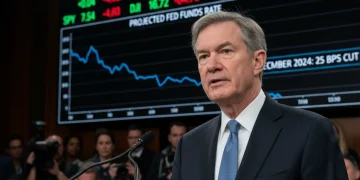
December FOMC Meeting: 87% Probability of 25 Basis Point Rate Cut
The high probability (87%) of a 25 basis point rate cut at the December FOMC Meeting reflects slowing inflation momentum and increasing labor market deceleration, signaling a pivotal shift in Federal Reserve monetary policy strategy.

Nasdaq Correction: Tech Opportunity Amid 0.3% Weekly Fall
The marginal 0.3% weekly fall in the Nasdaq Composite is analyzed not as a major market downturn, but as a potential technical correction, offering institutional and retail investors a calculated entry point into fundamentally strong technology stocks, particularly those demonstrating robust free cash flow generation and high recurring revenue models.

Holiday Sales Exceed $1 Trillion: Retail Stocks and Economic Impact
Surpassing a critical benchmark, record holiday sales exceeding $1 trillion signal robust consumer resilience and shifting spending patterns, necessitating a sharp focus on targeted retail sectors—specifically digital-first and discount chains—for investors evaluating post-holiday market adjustments.

S&P 500 at 6821: Investment Strategy Before Year-End
The S&P 500's ascent to 6821 points reflects robust corporate earnings and persistent disinflationary trends, prompting investors to scrutinize current valuations against projected Q4 2025 GDP growth and Federal Reserve forward guidance.
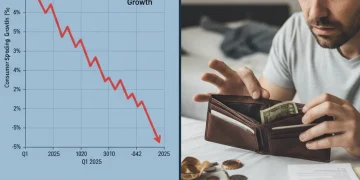
Consumer Spending Growth Slows 2025: Weakness Signals
Forecasters project a deceleration in US consumer spending growth in 2025, largely due to the exhaustion of pandemic-era excess savings and the sustained pressure of high interest rates, translating directly into dampened GDP forecasts.

Tech Giants Down 1%: Rebalancing Signal or Profit-Taking? An Analysis
The recent 1% drop in the valuation of major technology stocks warrants close examination, suggesting either routine quarterly portfolio rebalancing by institutional investors or a strategic signal of broader profit-taking ahead of macroeconomic data releases.

Mortgage Rates at 6.23%: December Refinancing Analysis
With 30-year fixed mortgage rates at 6.23%, homeowners must rigorously analyze closing costs, break-even points, and the future trajectory of Federal Reserve policy before deciding if December is a strategically advantageous time to refinance.
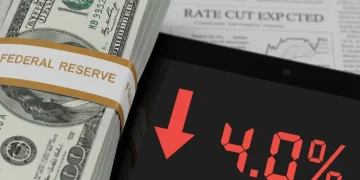
Fed Cuts Rates to 4.0%: What Happens to Your Savings Account Rate Now
Following the Federal Reserve's decision to cut the benchmark federal funds rate to 4.0%, consumers should anticipate immediate downward pressure on high-yield savings account annual percentage yields (APYs) and certificate of deposit (CD) rates, shifting market focus toward locking in current yields before further reductions.