
Personal Savings Rate at 4.6%: Are Americans Prepared for Emergencies?
With the personal savings rate hovering at 4.6%, financial analysts question whether American households have built sufficient emergency buffers to withstand unexpected financial shocks, especially given elevated consumer debt levels.

401(k) Limits to $24,500 in 2026: Maximize Retirement Savings
The projected increase in 401(k) contribution limits to $24,500 by 2026 offers a critical opportunity for high-earning American workers to accelerate tax-advantaged retirement savings, necessitating immediate review of current contribution strategies.

Small-Cap Valuations at 26% Discount: Opportunity or Warning?
The significant 26% discount in small-cap valuation discount relative to large-cap equities presents a critical juncture for investors, signaling either a historically cheap entry point driven by interest rate expectations or a necessary risk premium reflecting tighter credit conditions and potential economic deceleration.

10-Year Treasury Yield at 4.02%: Fixed Income Allocation Guide
With the 10-year Treasury yield stabilizing near 4.02%, investors face critical decisions regarding fixed income allocation, demanding a strategic reevaluation of duration exposure and credit quality amid evolving Federal Reserve policy expectations for the upcoming year.

Federal Deficit Hits $1.8 Trillion: Market Volatility and Long-Term Risks
The significant rise in the US federal deficit to $1.8 trillion is structurally embedding higher long-term interest rates and increasing market volatility, requiring investors to re-evaluate sovereign risk premiums and portfolio allocations.

Credit Card Delinquency Rates at 3.05%: Consumer Health Analysis
Despite persistent inflation and high interest rates, the fact that credit card delinquency rates remain low at 3.05% suggests surprising resilience in US consumer financial health, driven primarily by strong employment and accumulated pandemic-era savings.

PCE Inflation Data December 5: Why It Matters Most to the Fed
The upcoming PCE inflation data release on December 5 is the single most important economic metric for the Federal Reserve, directly shaping the trajectory of interest rates and determining the success of the current disinflationary cycle.
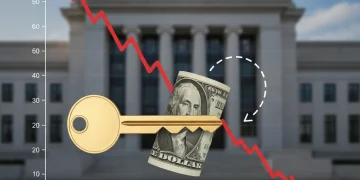
Fed December Rate Cut Odds at 80%: Mortgage Implications
The surging 80% market probability for a Fed rate cut mortgage rate adjustments, potentially offering significant relief to prospective homebuyers and current homeowners considering refinancing, impacting housing affordability across the US.

Consumer Confidence Falls to 88.7: Household Worry Analysis
The recent drop in consumer confidence to 88.7, driven primarily by persistent inflation fears and moderated job growth expectations, indicates a measured, yet growing, anxiety among American households regarding near-term economic stability and future purchasing power.

Black Friday 2025: $11.8B Online Sales Decoded
Black Friday 2025 established a new benchmark for U.S. e-commerce, with online sales reaching $11.8 billion, a 15% year-over-year increase, signaling unexpected consumer spending resilience amid elevated inflation and interest rates.