AI Investment Boom Continues: Tech Sector Outperformance Expected into 2026

The current wave of capital deployment into core artificial intelligence technologies is expected to drive the technology sector to exceed broader market returns, with analysts projecting continued valuation expansion for infrastructure providers and platform companies until at least the end of the 2026 fiscal year.
The pace of investment in artificial intelligence shows no signs of abatement. Data from venture capital trackers and corporate capital expenditure forecasts confirm that the AI investment boom continues, with projections from leading financial institutions suggesting that the technology sector is uniquely positioned for sustained outperformance well into 2026. This trend is not merely speculative; it is grounded in record capital deployment by hyperscalers and a fundamental shift in enterprise spending prioritizing AI integration, which collectively represents the most significant technological paradigm shift since the internet’s commercialization in the 1990s.
The foundation of outperformance: Hyperscaler capital expenditure
The primary driver sustaining the technology sector’s robust performance is the relentless capital expenditure (CapEx) allocated by major cloud and technology giants, often referred to as hyperscalers. These companies are engaged in an arms race to build the computational foundation necessary for advanced generative AI models. In the first half of fiscal year 2024, the top three US-based hyperscalers collectively announced CapEx guidance exceeding $180 billion for the full year, representing a year-over-year increase averaging 28%, according to SEC filings. This spending is overwhelmingly channeled into data center expansion, specialized AI accelerators, and high-bandwidth networking gear.
This massive allocation of capital has a direct, disproportionate impact on select segments of the tech ecosystem. Companies that manufacture the enabling hardware—specifically advanced semiconductors, high-end server components, and cooling solutions—are absorbing the bulk of this demand. The financial market implication is clear: earnings growth for these crucial suppliers is accelerating at a rate far exceeding the broader S&P 500 average, validating the premium valuations observed in the sector.
Semiconductors: The critical bottleneck and growth engine
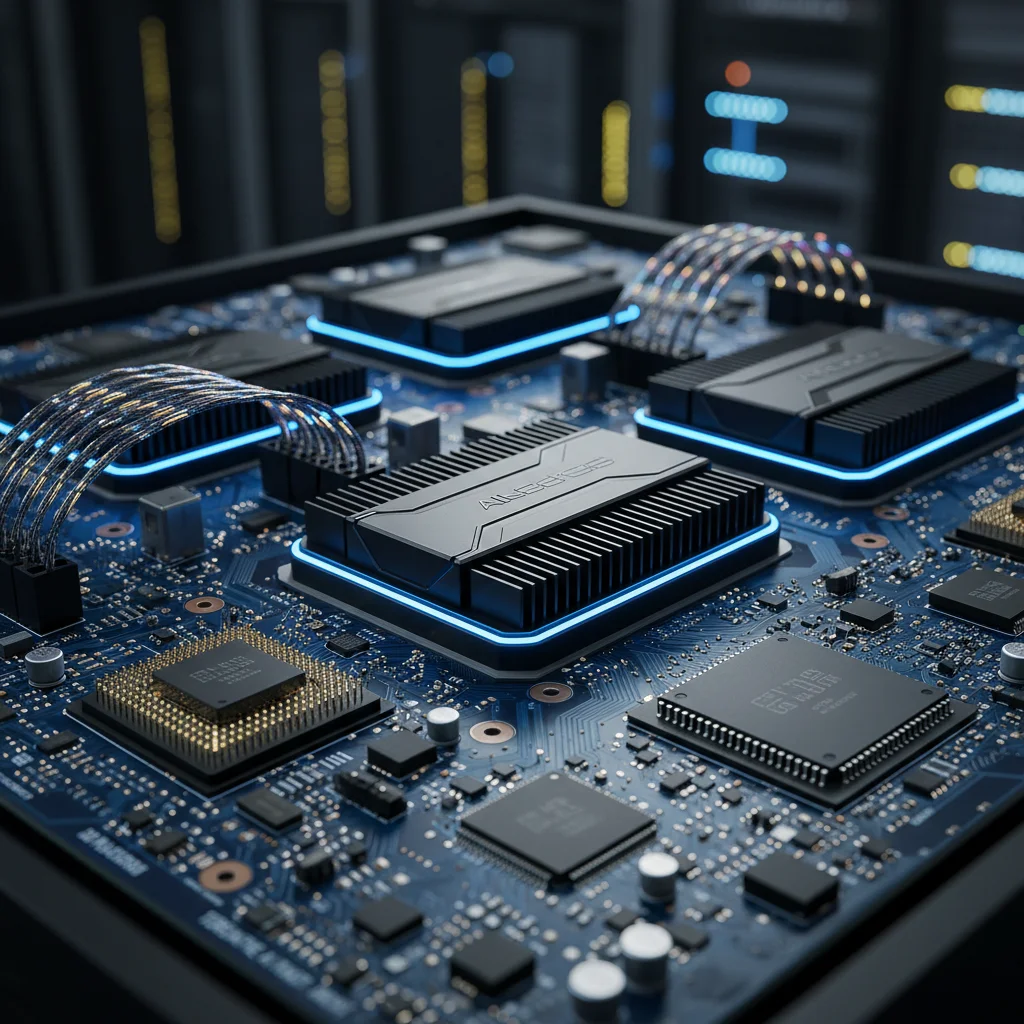
The most tangible evidence of the AI investment surge is found in the semiconductor industry. Specialized Graphics Processing Units (GPUs) and Application-Specific Integrated Circuits (ASICs) have become the new financial commodity. Demand currently outstrips supply, leading to high pricing power and expanded margins for leading chip designers and manufacturers. Morgan Stanley analysts estimate that the total available market (TAM) for AI-specific semiconductors could reach $200 billion by 2027, up from approximately $50 billion in 2023. This rapid expansion underpins the expected tech sector outperformance.
- Demand Acceleration: Orders for next-generation AI accelerators have a backlog extending into late 2025, signaling sustained revenue visibility for key suppliers.
- Pricing Power: Due to supply constraints and high performance requirements, average selling prices (ASPs) for premium AI chips have increased by over 40% since the start of 2023.
- R&D Intensity: Companies are reinvesting record profits into R&D to maintain technological leads, ensuring future competitive advantage and barrier to entry.
- Geopolitical Risk Mitigation: Increased CapEx is also being directed toward diversifying manufacturing footprints, driven by geopolitical considerations, which requires significant upfront investment.
The central macroeconomic takeaway is that this CapEx cycle is structurally different from past technology booms. Unlike the dot-com era, current spending is directly tied to measurable productivity gains (training large language models) and demonstrable enterprise value. This fundamental grounding provides a more sustainable foundation for the expected outperformance through 2026 than previous speculative cycles.
Enterprise adoption shift: Moving from pilot to production
While hyperscalers drive the supply side, the demand side is being rapidly fueled by enterprise adoption. Chief Information Officers (CIOs) globally are shifting budget allocations away from legacy IT systems toward AI infrastructure and software licenses. This transition represents the second phase of the AI investment boom. The initial phase focused on foundational model development; the current phase emphasizes commercial deployment and integration into core business functions, such as customer service, coding acceleration, and data analysis.
A recent survey by Gartner indicated that 75% of large enterprises plan to increase their spending on generative AI tools and platforms by at least 15% in the fiscal year 2025. This translates into significant revenue streams for software-as-a-service (SaaS) providers and AI platform companies that are successfully monetizing their models. Companies offering vertical-specific AI solutions, particularly in finance, healthcare, and legal sectors, are seeing accelerated contract values, often structured around usage-based pricing models that scale with enterprise size.
The shift from pilot programs to full-scale production requires substantial investment in talent, data governance, and specialized cloud resources. This expenditure ensures that the investment cycle remains robust, as enterprises cannot simply halt integration once core processes rely on AI-driven efficiency gains. This sticky demand contributes significantly to the sustained tech sector outperformance projected into 2026.
Monetization strategies and margin expansion
Successful AI companies are demonstrating superior operating leverage. Once a foundational model is developed and deployed, the marginal cost of serving millions of customers with inference (running the model) is relatively low compared to the revenue generated. This structural advantage leads to significant margin expansion, a key metric watched by institutional investors. For example, a leading AI platform company reported gross margins exceeding 75% in Q2 2024, significantly higher than the average software industry margin of 60%.
- Inference Economics: The cost per query is rapidly declining due to hardware efficiencies, boosting profitability as usage scales up.
- Subscription Model Resilience: Many AI tools are integrated via high-value annual subscriptions, providing predictable, recurring revenue streams.
- Talent Premium: While AI talent is expensive, the productivity gains generated by AI software often justify the cost, leading to positive ROI for adopting firms.
The combination of high revenue visibility from enterprise contracts and superior operating margins provides a compelling case for the continued premium valuation of AI-centric firms. This financial structure differentiates the current boom from earlier tech cycles, suggesting a more durable period of outperformance.
Macroeconomic alignment and monetary policy context
The macroeconomic environment, characterized by moderate inflation and a stabilizing interest rate outlook, is generally conducive to sustaining the AI investment cycle. While the Federal Reserve remains data-dependent, the consensus among economists is that the US economy is avoiding a deep recession, which provides large companies with the confidence to execute multi-year CapEx plans. Furthermore, the search for productivity growth in a tight labor market makes AI adoption an imperative, not a luxury.
Higher interest rates, while historically detrimental to growth stocks, have had a nuanced impact on the AI segment. The largest, most financially robust technology companies, those driving the AI investment boom, possess strong balance sheets and generate substantial free cash flow, insulating them from high borrowing costs. These firms are effectively self-funding their AI ambitions, minimizing reliance on external capital markets, which mitigates one of the traditional risks associated with high-growth sectors in a restrictive monetary environment.
The productivity imperative and GDP growth
The integration of generative AI is increasingly viewed as a crucial factor in accelerating long-term potential GDP growth. Goldman Sachs research suggests that widespread AI adoption could add roughly 1.5 percentage points to US annual productivity growth over the next decade. This potential for macroeconomic benefit further encourages governmental and private sector investment, creating a self-reinforcing cycle. Policymakers are keenly aware of the competitive advantage derived from leading in AI, which may translate into supportive regulatory environments and targeted subsidies.
Conversely, institutions like the Bank for International Settlements (BIS) caution that the full productivity effect may take longer to materialize than market valuations currently reflect. This divergence between immediate market enthusiasm and slower real-economy impact constitutes a key risk factor. Nevertheless, the market is pricing in future productivity gains, ensuring that AI-related stocks maintain their premium status for the foreseeable future, driving sector outperformance.
Venture capital and private market acceleration
The public market narrative is mirrored and amplified by activity in the private venture capital (VC) sphere. Despite a general slowdown in broader VC funding across sectors in 2023 and 2024, dedicated AI startups, particularly those focused on specialized models and application layers, have commanded record valuations and secured enormous funding rounds. This influx of private capital ensures a robust pipeline of innovation that will eventually feed into the public markets through initial public offerings (IPOs) or acquisitions.
Data compiled by PitchBook shows that global VC funding for generative AI companies reached $14.1 billion in the first three quarters of 2024, far outpacing the $9.5 billion recorded in the same period a year earlier. This concentrated flow of capital is targeting early-stage companies that promise disruptive capabilities, often focusing on niche applications that large hyperscalers may overlook. The key financial implication for public market investors is the high probability of strategic acquisitions by tech giants seeking to maintain their competitive edge, often at significant premiums to the startup’s last valuation.

The IPO pipeline and market liquidity
The successful execution of several high-profile AI-related IPOs is anticipated to reinvigorate the overall tech IPO market in late 2025 and 2026. These events will inject new, high-growth entities into the public sphere, providing fresh investment opportunities and validating the private market valuations. The liquidity generated by these exits is crucial for sustaining the VC ecosystem, ensuring capital continues to flow into the next generation of AI innovators. Strong public market performance of existing AI leaders is a prerequisite for a healthy IPO window.
- Acquisition Premiums: Strategic acquisitions of smaller AI firms often involve premiums of 30% to 50% over the last private funding round, signaling intense competition for talent and technology.
- Focus on Infrastructure: VC funding is increasingly favoring companies building specialized tools for model training, data preparation, and security, rather than just consumer-facing applications.
- Valuation Discipline: While valuations are high, investors are demanding clear revenue paths and demonstrable intellectual property, suggesting a degree of discipline not present in all previous tech bubbles.
The synergy between robust private funding and sustained public market interest confirms the deep structural nature of the AI investment boom. This parallel strength across capital markets is a strong indicator that the outperformance trajectory will hold firm into the medium term.
Navigating valuation risk and market concentration
While the fundamental drivers of the AI boom are robust, financial analysts must address the primary risk factor: elevated valuations and market concentration. The lion’s share of the tech sector’s recent gains has been concentrated in a handful of mega-cap companies, often referred to as the ‘Magnificent Seven,’ which are the primary beneficiaries and drivers of AI CapEx. This concentration creates inherent systemic risk for the broader indices.
The Forward Price-to-Earnings (P/E) ratio for the AI-enabling tech leaders currently trades at a multiple significantly higher than their historical averages and the broader S&P 500 (e.g., 30x vs. 19x, according to FactSet data as of Q3 2024). This premium is justified by higher expected growth rates, but it leaves these stocks vulnerable to any unexpected slowdown in CapEx, regulatory intervention, or competitive disruption. Analysts at Goldman Sachs advise that investors must distinguish between companies with genuine, sustainable AI-driven growth and those merely riding the narrative.
The threat of competitive and regulatory headwinds
Competition is intensifying rapidly. As the barrier to entry for developing powerful models falls—driven by open-source initiatives and standardized hardware—the competitive landscape for application providers will become more challenging. Margin pressure could emerge sooner than expected for firms that lack proprietary data moats or unique distribution channels. Furthermore, global regulatory scrutiny targeting large technology platforms, particularly concerning data privacy, monopolistic behavior, and the societal impact of AI, remains a persistent headwind.
Potential regulatory action, such as forced divestitures or stringent licensing requirements, could disrupt the operational models of hyperscalers and impact their willingness to maintain current CapEx levels. While regulatory uncertainty is difficult to quantify, it represents a non-trivial risk that could temper the expected outperformance, especially if it leads to fragmented global standards that complicate international deployment.
- Concentration Risk: The top five AI-centric stocks contribute over 50% of the S&P 500’s year-to-date return, highlighting the fragility of market-wide performance.
- Execution Risk: Companies must consistently deliver on ambitious product roadmaps and CapEx budgets to justify current valuations. Failure to execute on new chip generations or model releases could trigger significant corrections.
- Regulatory Uncertainty: Potential antitrust actions in the EU and US targeting cloud market dominance could indirectly affect the profitability of AI service offerings.
Investors must maintain a highly selective approach, focusing on firms with clear intellectual property advantages, strong pricing power, and diversified revenue streams that extend beyond a single AI application. The market rewards differentiation in this high-growth environment.
The global landscape: Beyond US technology dominance
While US-based firms currently dominate the infrastructure layer of the AI investment boom, significant capital is flowing globally, particularly into Asia and Europe. Governments in these regions recognize AI leadership as a strategic national priority and are implementing industrial policies designed to foster domestic champions. This includes substantial state-backed funding for research institutes and subsidies for domestic chip fabrication.
China, despite geopolitical tensions, continues to invest heavily in its domestic AI ecosystem, focusing on self-sufficiency in hardware and foundational models tailored to the massive domestic market. European initiatives, particularly those tied to the EU’s AI Act, are creating a unique regulatory framework that may spur innovation in areas like ethical AI and data governance, potentially leading to specialized software and consulting opportunities for European firms.
Investment opportunities in emerging markets
The global proliferation of AI also creates compelling opportunities in emerging markets. Companies in countries like India and Southeast Asia are rapidly adopting AI tools to leapfrog traditional industrial stages. This adoption is primarily driven by service providers leveraging AI for efficiency gains in outsourcing, software development, and digital financial services. Investors looking for diversified exposure might consider firms that are early movers in AI application within these rapidly growing economies, often trading at lower valuations than their US counterparts.
However, investment in non-US AI firms carries additional complexities, including currency volatility, differing regulatory regimes, and less transparent corporate governance structures. Due diligence requirements are significantly higher. Nevertheless, the sheer scale of global AI deployment suggests that the outperformance narrative is not exclusively confined to US mega-caps, offering diversification options for sophisticated investors.
The global competitive landscape confirms that AI is a secular trend, not a cyclical one. The continuous race for technological superiority across major economic blocs ensures sustained investment and, consequently, continued outperformance for the technology sector on a worldwide basis, extending the projected boom into 2026 and likely beyond.
| Key Financial Metric | Market Implication/Analysis |
|---|---|
| Hyperscaler CapEx Growth (YOY) | Averaging 28% increase in 2024 guidance; directly fuels demand and revenue visibility for semiconductor and hardware suppliers. |
| AI Semiconductor TAM (2027 Projection) | Projected to reach $200 billion; indicates massive structural growth in the core enabling technology for AI infrastructure. |
| Enterprise AI Spending Increase (2025) | 75% of large firms plan to increase AI budget by 15% or more; solidifying demand for SaaS platforms and application layers. |
| AI Sector Forward P/E Multiple | Trading at significant premium (e.g., 30x) over S&P 500 (19x); reflects high growth expectations but introduces higher valuation risk. |
Frequently asked questions about the AI investment boom
The primary beneficiaries are semiconductor designers and manufacturers specializing in AI accelerators (GPUs/ASICs), high-performance networking equipment providers, and specialized cloud infrastructure companies. These firms capture the vast majority of the hyperscaler CapEx, leading to superior revenue growth and margin expansion across the supply chain.
High market concentration, where a few mega-cap stocks drive sector returns, increases systemic risk. If any of these dominant players face regulatory setbacks or CapEx reductions, the broader technology index could experience disproportionately large volatility. Investors should seek diversified exposure beyond the largest names to mitigate this concentration risk.
The sustainability relies on continued execution. Since the largest AI drivers are self-funding their growth through massive free cash flow, they are less sensitive to high-interest-rate environments than typical growth firms. The premium is sustainable only if these companies can consistently deliver 20%+ revenue growth and demonstrate clear paths to new monetization, justifying the high P/E multiples.
Venture capital ensures a continuous pipeline of innovation, especially in application layers and specialized vertical AI solutions. Record VC funding rounds, particularly for generative AI startups, signal strong long-term conviction in the technology, providing future acquisition targets and fueling the next wave of public market entrants expected by 2026.
Investors should primarily monitor the quarterly capital expenditure announcements of the leading cloud providers and semiconductor backlog data. Any significant downward revision in CapEx guidance or a softening in advanced chip order backlogs would signal a deceleration in the fundamental investment cycle, warranting a reassessment of valuation premiums.
The bottom line: Structural opportunity meets execution risk
The evidence overwhelmingly supports the forecast for sustained technology sector outperformance driven by the AI investment boom extending into 2026. This is a structurally reinforced cycle, underpinned by non-discretionary capital spending directed at enabling fundamental productivity gains across the global economy. Hyperscalers are not merely upgrading existing systems; they are building entirely new computational infrastructure designed to handle the exponential complexity of modern AI models. This commitment ensures years of demand for specialized hardware and software.
However, investors must navigate this environment with precision. The market has already priced in aggressive growth rates, leaving little margin for error. The primary risk remains execution—will companies deliver the next-generation chips on time, and will enterprises successfully translate AI adoption into measurable profitability? Furthermore, the potential for regulatory fragmentation and geopolitical headwinds, particularly concerning semiconductor supply chains, cannot be ignored. The prudent approach involves selective investment in firms with durable competitive advantages, proprietary data, and proven operational efficiency, rather than broad-based exposure to the entire technology complex. The long-term trajectory remains upward, but the short-term path will continue to be characterized by volatility tied to earnings reports and CapEx revisions.
