30-Year Mortgage Rates Near 6.03%: Refinance Now or Wait for 2026?

30-year mortgage rates stabilized near 6.03% amid persistent but moderating core inflation, forcing homeowners to weigh the immediate cost savings of refinancing against the potential for significantly lower rates driven by anticipated Federal Reserve easing in late 2025 or early 2026.
The current stabilization of the 30-year mortgage rates near 6.03% presents a critical inflection point for millions of American homeowners who secured loans during the ultra-low rate environment of 2020-2021 or the high-rate peak of 2023. This rate, as reported by Freddie Mac’s Primary Mortgage Market Survey (PMMS) data, reflects a delicate balance in the bond market: reduced inflation fears are counterbalanced by the Federal Reserve’s commitment to maintaining a higher-for-longer stance on the federal funds rate. The central question for market participants and homeowners alike is whether the current rate environment represents a temporary pause before a significant decline, or if macroeconomic resilience will keep long-term borrowing costs elevated through 2026.
The macroeconomic backdrop: inflation, the Fed, and the 6.03% threshold
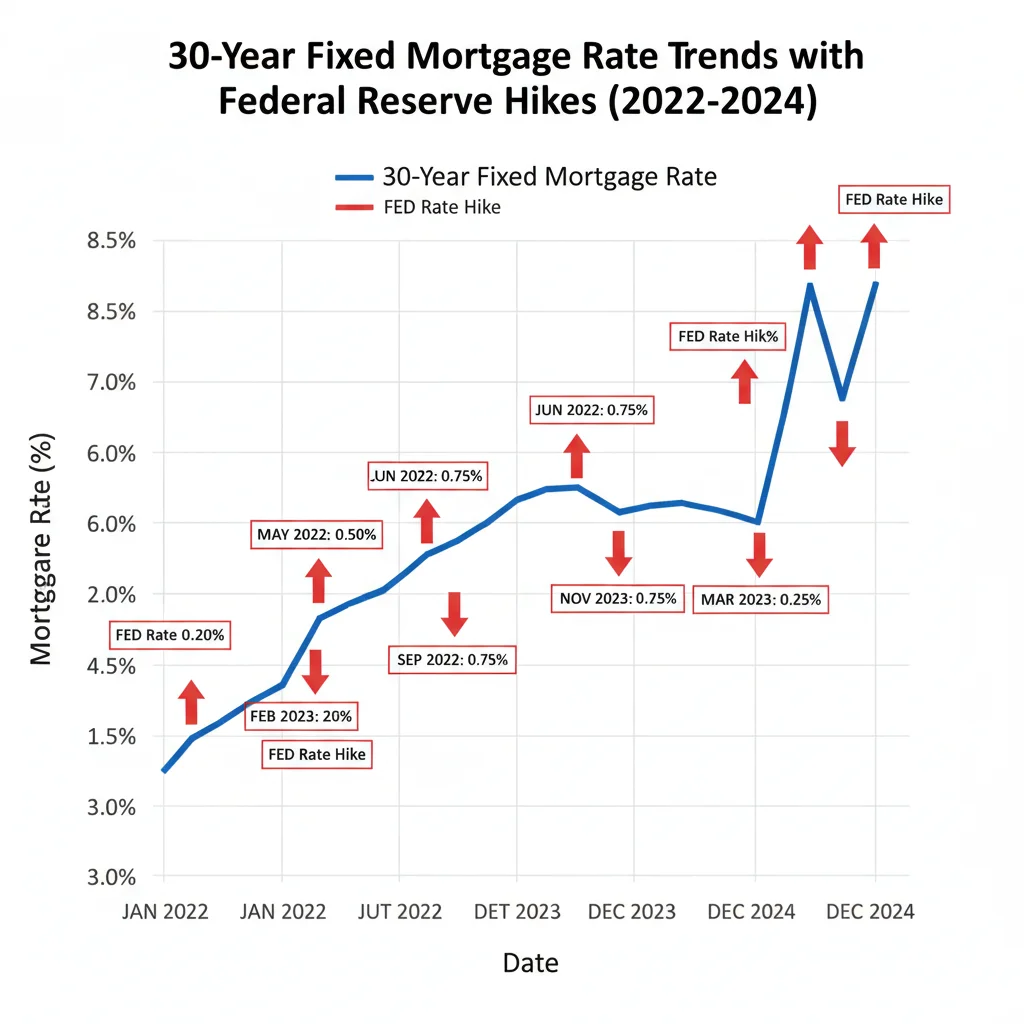
Understanding the 6.03% rate requires analyzing the current state of monetary policy and the yield curve dynamics. Unlike the federal funds rate, which the Federal Reserve directly controls, 30-year fixed mortgage rates are primarily correlated with the yield on the 10-year Treasury note. When the 10-year yield reflects expectations of future economic growth and inflation, or anticipated supply of government debt, mortgage rates follow suit. The current 6.03% level indicates that while the market has priced in some degree of future rate cuts by the Fed—likely starting in late 2025—it remains skeptical of a swift return to the sub-4% rates seen a decade ago.
In its most recent Summary of Economic Projections (SEP), the Federal Open Market Committee (FOMC) revised its long-run estimate for the federal funds rate higher, a move that provides upward pressure on long-term yields. This ‘higher-for-longer’ narrative is predicated on persistent services inflation and robust labor market data. For homeowners considering a refinance, the 6.03% rate is significant because it is marginally below the 6.5% peak seen in 2023 but remains substantially higher than the 3.5% average of the decade preceding the COVID-19 pandemic. The ‘nut paragraph’ here is simple: this rate level is a litmus test for those whose current mortgage rate is between 6.5% and 7.5%, offering tangible, though not transformative, savings, while forcing those with rates below 5.5% to wait.
The impact of quantitative tightening (QT) on long-term rates
The Federal Reserve’s ongoing quantitative tightening program (QT), where the central bank reduces its balance sheet by allowing Treasury and mortgage-backed securities (MBS) to mature without reinvestment, directly affects the supply and demand dynamics of the MBS market. Since mortgages are securitized into MBS, reduced Fed demand for these assets tends to increase their yield, translating to higher rates for consumers. While the pace of QT has been moderated, its cumulative effect continues to exert pressure on the 10-year yield and, consequently, on 30-year mortgage rates. Analysts at Goldman Sachs estimate that the current level of QT contributes approximately 20 to 30 basis points to the 10-year Treasury yield, suggesting that without QT, the 6.03% mortgage rate might be closer to 5.7%.
- Fed Funds Rate vs. Mortgage Rates: The correlation is strong but not direct; the 10-year Treasury yield acts as the primary intermediary for long-term fixed rates.
- Inflation Premium: The difference between the 10-year Treasury yield and the 30-year mortgage rate (the spread) remains elevated, reflecting lenders’ heightened risk perception and operational costs.
- Impact of QT: Reduced Fed purchases of MBS increase market yields, inherently limiting how low the 30-year mortgage rates can fall in the near term, even if the federal funds rate is cut.
In essence, the 6.03% rate is a product of conflicting forces: a market anticipating eventual Fed easing but simultaneously grappling with persistent inflation, a robust labor market, and the technical pressure of QT. This confluence of factors demands a calculated approach from any homeowner considering a refinance, focusing less on the absolute number and more on the probability distribution of future rates.
Refinance now: calculating the break-even point at 6.03%
The decision to refinance must be viewed through a quantitative lens, specifically by calculating the break-even point. This point determines how long it will take for the monthly savings generated by the lower interest rate to offset the total closing costs associated with the new loan. For a refinance to be financially viable at 6.03%, the homeowner must intend to stay in the property long enough to exceed this break-even threshold.
Consider a typical American homeowner with a remaining mortgage balance of $350,000 and a current rate of 7.25%. Refinancing to 6.03% would constitute a 122 basis point reduction. Assuming closing costs—including origination fees, appraisal, title insurance, and other charges—total $7,500 (or approximately 2.1% of the loan amount), the monthly principal and interest savings must be calculated precisely. If the monthly payment drops by $250, the break-even period is $7,500 / $250 = 30 months, or 2.5 years. If the homeowner plans to sell the property within two years, refinancing now would result in a net loss.
The case for immediate rate locking
The primary argument for locking in the 6.03% rate immediately, rather than waiting, is the mitigation of risk associated with potential economic surprises. While many economists forecast a gradual decline in rates, unexpected shifts—such as a reacceleration of inflation due to geopolitical instability or fiscal stimulus—could push rates back toward the 7.0% range. Locking in now secures a guaranteed reduction in housing costs and frees up capital immediately.
Furthermore, if a homeowner is currently paying mortgage insurance (PMI), refinancing may provide an opportunity to eliminate this expense if the new loan-to-value (LTV) ratio falls below 80% of the current appraised value, potentially adding hundreds of dollars in monthly savings beyond the interest rate reduction. This confluence of interest savings and PMI elimination makes the 6.03% rate highly attractive for a specific segment of the market.
- Risk Management: Securing 6.03% hedges against the risk of rate spikes if inflation proves sticker than expected in late 2025.
- Immediate Cash Flow: Monthly savings begin immediately, improving household liquidity and discretionary spending capacity.
- LTV Improvement: Refinancing allows for the potential elimination of Private Mortgage Insurance (PMI) if property values have appreciated significantly since the original purchase.
The immediate benefit of refinancing at 6.03% is quantifiable and certain. For those whose current rate is high and whose time horizon in the home exceeds three years, the decision is often mathematically sound, regardless of the speculative outlook for 2026.
The 2026 outlook: why waiting could yield substantial savings
The opposing argument—waiting for potential rate cuts in 2026—rests on the consensus view among major investment banks that the Federal Reserve will eventually achieve its 2% inflation target, necessitating a series of rate cuts to normalize monetary policy. Forecasts from institutions like Morgan Stanley and JPMorgan Chase generally project that by the end of 2026, the federal funds rate could settle between 3.0% and 3.5%, translating to a 10-year Treasury yield closer to 4.0% and, critically, 30-year mortgage rates potentially ranging from 4.75% to 5.25%.
A decline from 6.03% to 5.0% represents a 103 basis point drop, which, for the same $350,000 mortgage balance, could save an additional $200 per month compared to the current refinance rate. Over the life of the loan, these seemingly small differences compound into tens of thousands of dollars in interest savings. The trade-off is the opportunity cost: the borrower continues to pay the current, higher rate (e.g., 7.25%) for another 18 to 24 months, hoping for the forecast to materialize.
The ‘lock-and-drop’ strategy and its limitations
Some lenders offer a ‘lock-and-drop’ or ‘rate-recast’ feature, allowing borrowers who refinance now to secure the 6.03% rate but pay a fee for the option to refinance again at a potentially lower rate within a set period (e.g., 12 to 24 months) with reduced closing costs. While this strategy attempts to mitigate the risk of waiting, it often involves higher upfront costs or a slightly elevated initial interest rate compared to a standard, non-recast loan. Homeowners must carefully analyze the fine print, as the cost of the ‘drop’ option might erode the savings if the future rate drop is modest.
Furthermore, the economic path to lower rates is not guaranteed. If the U.S. economy avoids a recession and productivity remains unexpectedly high, the ‘neutral’ rate of interest—the rate that neither stimulates nor restricts economic growth—may be higher than previously assumed. If the structural neutral rate is 3.5% or 4.0%, then 30-year mortgage rates may stabilize permanently above 5.5%, making 6.03% a relatively good rate in retrospect.
- Economic Forecast Dependency: Waiting relies heavily on the accuracy of Fed projections and the market’s ability to price in future easing cycles.
- Opportunity Cost: The borrower sacrifices immediate savings by continuing to service a higher-rate loan for the duration of the wait.
- Risk of Higher Neutral Rate: Structural economic shifts could mean that the long-term equilibrium rate for mortgages is higher than historical averages, limiting the eventual rate floor.
Analyzing the risks: inflation persistence vs. recession risk
The primary driver of future mortgage rate movements is the ongoing tension between inflation persistence and the risk of an economic downturn. If inflation, particularly in shelter and non-housing services, remains stubbornly above the Fed’s 2% target into 2026, the central bank would likely delay or even reverse any planned cuts. This scenario, often referred to as ‘stagflation lite’ by some analysts, would keep long-term yields elevated, potentially pushing 30-year mortgage rates back toward 6.5%.
Conversely, a sharp and unexpected economic contraction—a severe recession—would trigger a flight to safety, causing Treasury yields to plummet rapidly. In this scenario, the Fed would be compelled to execute aggressive rate cuts, potentially driving mortgage rates down quickly into the 4.5% to 5.0% range, making the wait worthwhile. However, this outcome is tied to significant economic distress, including widespread job losses, which introduces its own set of financial vulnerabilities for the homeowner.
The role of the housing supply and home price appreciation
Even if mortgage rates decline in 2026, the affordability crisis in the U.S. housing market may not fully resolve due to chronic undersupply. Low rates typically spur demand, leading to further price appreciation. According to the National Association of Realtors (NAR), inventory levels remain historically low, especially for starter and mid-tier homes. If prices continue to rise at a pace exceeding 5% annually, the benefit of a lower interest rate may be offset by the increased principal balance required for a future home purchase or a cash-out refinance.
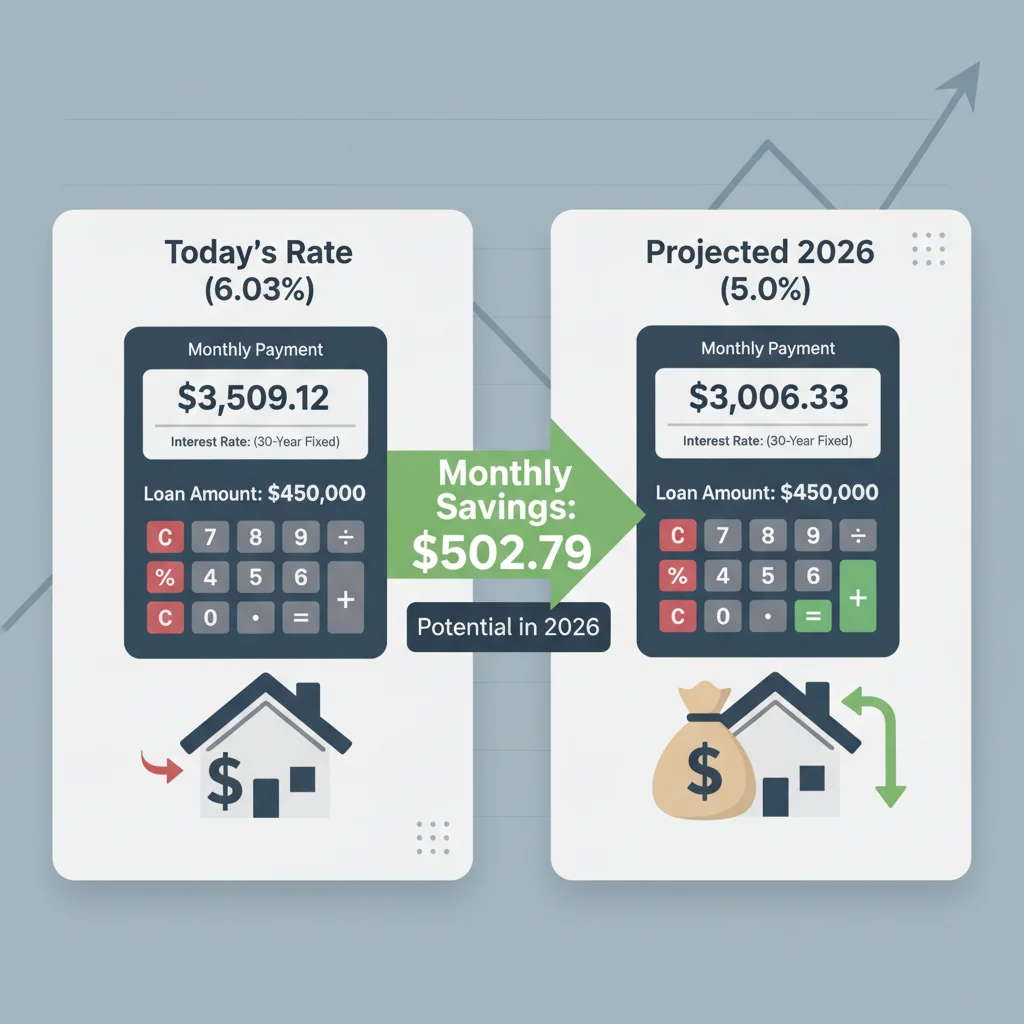
For homeowners considering a cash-out refinance at 6.03% to fund home improvements or debt consolidation, the current equity position is crucial. Using the current rate to tap into appreciated home equity for high-return investments or to pay off high-interest consumer debt (e.g., credit cards averaging 20% APR) can generate an immediate, guaranteed return on investment that far outweighs the potential interest savings from a lower rate in 2026. This tactical use of equity provides a strong argument for immediate action.
The marginal borrower and the importance of credit scores
The quoted 6.03% rate is typically an average for prime borrowers with excellent credit scores (FICO 740+) and a low loan-to-value ratio. For borrowers categorized as ‘marginal’—those with FICO scores between 680 and 720—the actual rate offered might be 50 to 100 basis points higher, significantly eroding the margin for savings. This factor fundamentally changes the calculation for refinancing.
A marginal borrower with a current rate of 6.5% might only be offered 7.0% if they refinance today, making the move financially illogical. However, if that borrower uses the next 18 months to aggressively improve their credit score and pay down consumer debt, they might qualify for the projected 5.25% rate in 2026, realizing substantial savings. Therefore, for marginal borrowers, the optimal strategy may be to wait, but only if that waiting period is dedicated to improving their financial profile.
The cost of waiting: calculating the ‘lost savings’
The decision to wait carries an explicit cost: the difference between the current monthly payment at the high rate and the payment at the available 6.03% rate, multiplied by the number of months waited. If a borrower with a $350,000 balance and a 7.25% rate saves $250 per month by refinancing to 6.03% now, waiting 18 months for a possible 5.0% rate means sacrificing $4,500 in potential savings. The future rate would need to be low enough to offset this immediate loss, plus the new closing costs in 2026.
Mathematically, if the cost of waiting is $4,500, and the new closing costs in 2026 are assumed to be $5,000 (total cost $9,500), the 2026 rate must provide a substantial enough monthly saving over the 6.03% rate to break even quickly. This highlights the risk: the economic benefit of waiting shrinks with every passing month that the high rate is maintained.
Assessing lender competition and refinancing fees
Lender competition is a critical, often overlooked, variable in the refinancing equation. As 30-year mortgage rates stabilize, lenders become more aggressive in offering incentives to capture market share. This competition often manifests in reduced origination fees or credits toward closing costs. Homeowners should solicit quotes from at least three different lenders—a large national bank, a regional credit union, and an online mortgage broker—to accurately assess the best available terms.
The structure of the closing costs can dramatically influence the break-even period. Some lenders offer a ‘no-closing-cost’ refinance, but these typically involve rolling the closing costs into the loan balance or accepting an interest rate slightly higher than the prevailing market rate (e.g., 6.25% instead of 6.03%). While this eliminates the upfront cash requirement, it adds to the total interest paid over the life of the loan. For borrowers prioritizing immediate cash flow, this trade-off may be acceptable, but it increases the overall cost of the debt.
The strategic use of discount points
Discount points, which are prepaid interest paid at closing to lower the permanent interest rate, become highly relevant when rates are near 6.03%. If a borrower is certain they will stay in the home for more than five years, buying down the rate from 6.03% to 5.75% might be a worthwhile investment. Each discount point typically costs 1% of the loan amount and reduces the rate by approximately 25 basis points. The decision to buy points should always be quantified by calculating a second, shorter break-even period—the time required for the monthly savings from the bought-down rate to recover the cost of the points.
- Lender Shopping: Comparing three or more quotes is essential to minimize closing costs and secure the most favorable spread over the 10-year Treasury yield.
- No-Closing-Cost Trade-off: Accepting a slightly higher rate (e.g., 6.25%) eliminates upfront cash costs but increases the total interest paid over the loan term.
- Discount Points Analysis: Buying points to lower the rate below 6.03% is only advisable for borrowers with a long-term commitment to the property (5+ years).
The impact of current rates on housing market liquidity
The current level of 30-year mortgage rates at 6.03% continues to constrain housing market liquidity. Many existing homeowners, often referred to as ‘rate-locked’ sellers, secured rates below 4.0% between 2012 and 2021. Moving now would require them to trade their low-rate mortgage for a new loan at 6.03%, significantly increasing their monthly housing expense, even if they downsize. This phenomenon, known as the ‘lock-in effect,’ reduces the supply of existing homes on the market.
This reduced inventory keeps home prices firm, even amidst elevated rates, creating a challenging environment for first-time buyers and those needing to move for professional reasons. If rates fall significantly in 2026, the lock-in effect would ease, potentially flooding the market with inventory and normalizing price appreciation. However, if rates stabilize around 6.0%, the housing market will continue to operate under reduced transaction volume and constrained supply, favoring cash buyers and institutional investors.
The current rate environment is fundamentally reshaping the American household’s perspective on debt management. For those with adjustable-rate mortgages (ARMs) or those who took out short-term, high-interest debt, refinancing into a fixed 6.03% rate offers stability and predictability, which can be as valuable as the absolute interest rate savings. Financial stability is a non-monetary benefit that must be weighed alongside the quantitative analysis of costs and savings.
| Key Factor/Metric | Market Implication/Analysis |
|---|---|
| Current Rate (6.03%) | Attractive for rates > 7.0%; break-even period must be calculated precisely against closing costs of ~2% of loan. |
| 2026 Rate Forecast (4.75%-5.25%) | Potential for significant savings, but relies on aggressive Fed easing and sustained inflation moderation. |
| Inflation Persistence Risk | If core PCE remains high, the Fed will delay cuts, keeping 30-year mortgage rates elevated or even pushing them higher. |
| Marginal Borrower Strategy | Waiting may be optimal for those with FICO scores < 720, provided they actively improve their credit profile to qualify for better future rates. |
Frequently Asked Questions about Refinancing at 6.03%
The historical average for the 30-year fixed mortgage rate since the 1970s is approximately 7.7%, according to Freddie Mac data. Therefore, 6.03% is below the long-term historical norm but remains significantly higher than the average of 4.0% seen in the decade preceding 2022, reflecting the current higher cost of capital.
Most financial advisors suggest a rate reduction of at least 75 to 100 basis points (0.75% to 1.00%) to justify the typical closing costs, which range from 2% to 5% of the loan amount. At 6.03%, a borrower currently paying 7.03% or higher should seriously evaluate refinancing based on their break-even period.
A 15-year mortgage typically offers a rate 50 to 75 basis points lower than the 30-year rate (e.g., around 5.3% instead of 6.03%). While the monthly payment will be significantly higher, the total interest paid is drastically reduced, making it a powerful wealth-building tool for borrowers prioritizing debt elimination over liquidity.
QT reduces the Fed’s presence in the mortgage-backed securities (MBS) market, increasing the supply of MBS available to private buyers. This reduced demand from the central bank puts upward pressure on MBS yields, effectively acting as a structural floor for 30-year mortgage rates, preventing them from falling sharply below 6.03% in the short term.
Key non-rate factors include the need for immediate cash-out for high-return purposes (like debt consolidation or major home repairs), the elimination of Private Mortgage Insurance (PMI), and the desire to convert an adjustable-rate mortgage (ARM) into a fixed-rate loan for long-term financial stability and predictability.
The bottom line: balancing certainty against speculation
The core dilemma facing homeowners regarding the 30-year mortgage rates near 6.03% is a classic financial trade-off: accepting a moderate, guaranteed benefit now versus speculating on a potentially larger, uncertain benefit later. For those whose current rate is 7.0% or higher and who plan to remain in their home for at least three years, the arithmetic strongly favors refinancing immediately. The guaranteed monthly savings, coupled with the mitigation of risk should inflation reaccelerate, provides a sound financial foundation. Securing 6.03% allows the homeowner to benefit from improved cash flow while retaining the option to perform a ‘second’ refinance in 2026 or 2027 if rates drop below the 5.0% threshold, provided the costs of the second transaction are low. The market consensus for lower rates in 2026 is persuasive, but it is a forecast, not a guarantee. Given the Federal Reserve’s demonstrated commitment to prioritizing inflation control over stimulating the housing market, waiting carries the explicit risk that the expected rate environment in 2026 may be 5.5% rather than 4.75%, making the opportunity cost of waiting substantial. Homeowners should use the current 6.03% rate as a benchmark, calculating their specific break-even point and aligning the decision with their personal financial timeline and risk tolerance, rather than relying solely on macroeconomic predictions.
